It is well-known footnote to history that after Orville and Wilbur Wright ended their first flights on December 17th, 1903, they ate their lunch, washed the dishes, and then walked over to the Kitty Hawk Weather Bureau, where they had telegraph operator Joseph J Dosher send that telegram to their father:
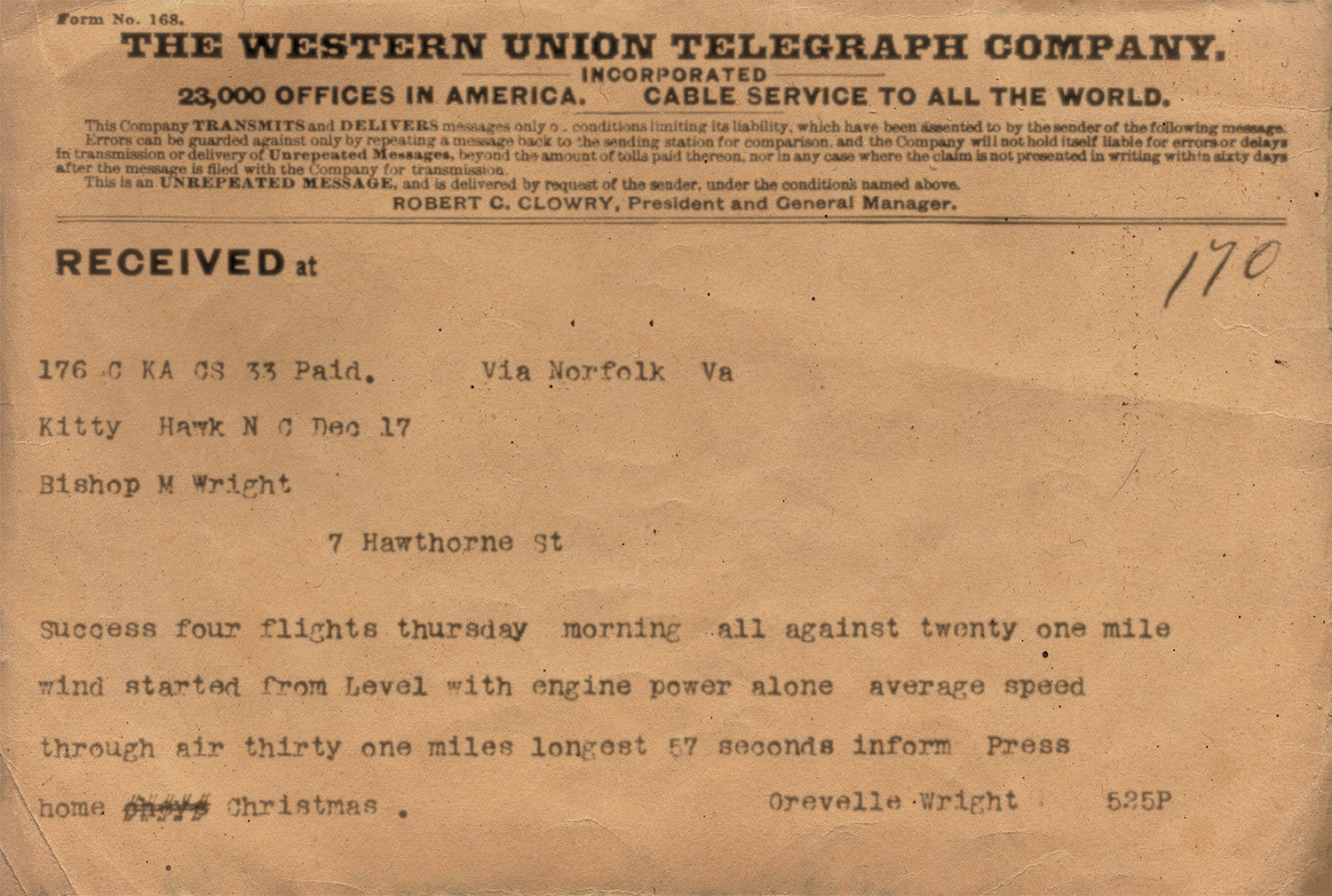
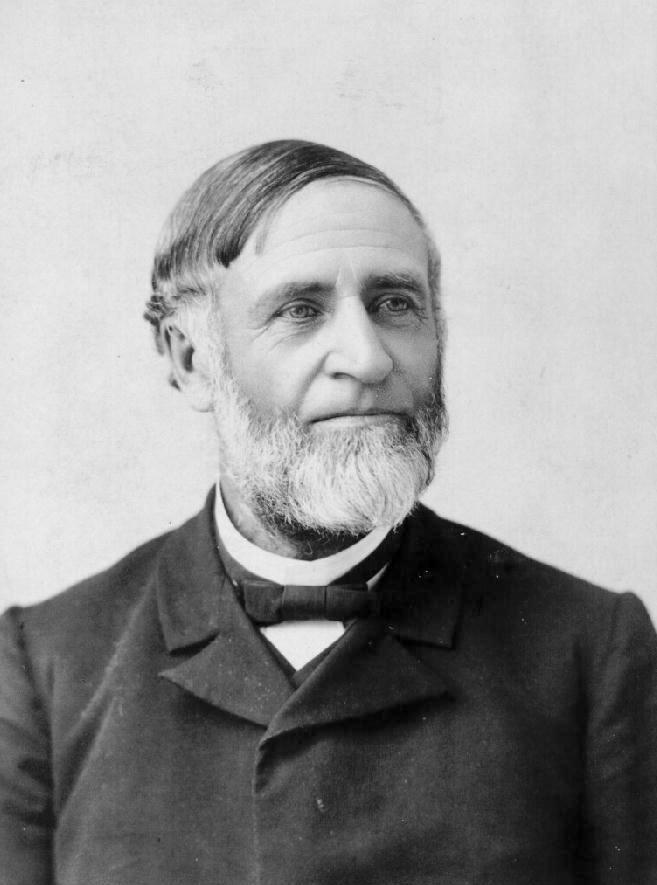
Bishop Milton Wright must have been a busy man – preparing his United Brethren community (and the Wright household) for the coming Christmas celebrations. Or he was just the worst press agent anyone ever commissioned.
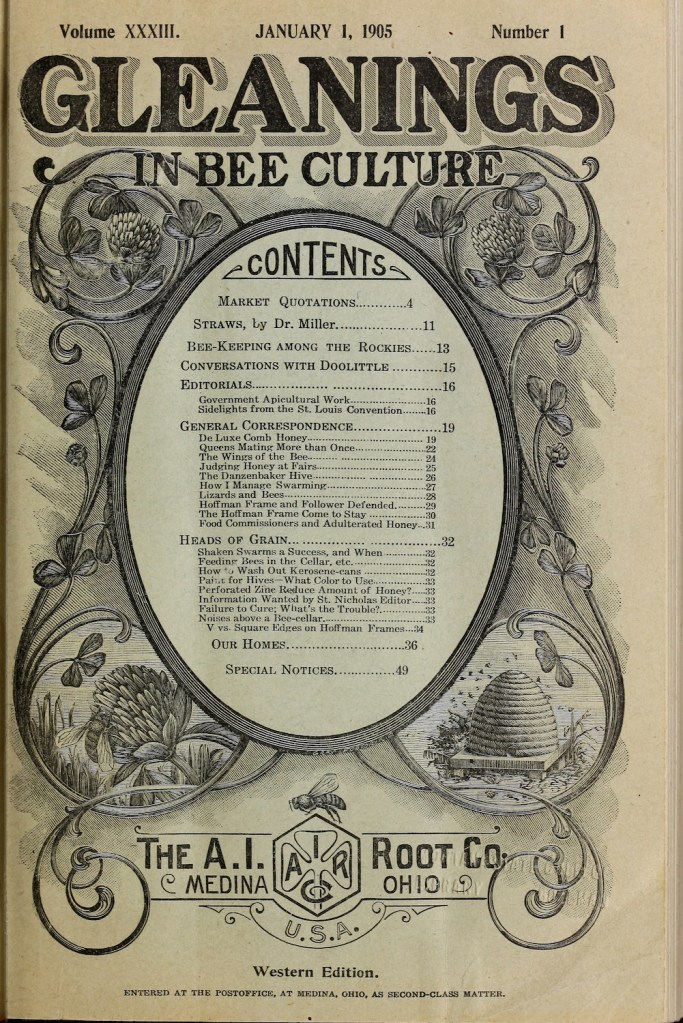
Regardless, it all led to an apocryphal pinky toe note to the footnote that the first legitimate media coverage of the breakthrough didn’t come until January 1905 with a brief mention in that month’s issue of Gleanings In Bee Culture.
So have you ever read it? (Don’t answer yet but, spoiler alert, it wasn’t brief and it wasn’t first.)
Breathless accounts
For a start, the term ‘legitimate media’ could use some scrutiny. Gleanings In Bee Culture was little more than a self-authored customer newsletter for ‘publisher’ Amos Rood’s own apiary supply business, rather than a genuine periodical.
Admittedly, his apiary business was the largest in North America, but the magazine was no Collier’s: The National Weekly.
What’s more, while it may have become the most storied announcement of the Wrights’ remarkable achievements, it wasn’t the first.
On December 17th, local teenager Johnny Moore, who had been with the lifeboat men helping the Wrights, allegedly ran the 3 miles (5 km) to Kitty Hawk to shout “They done it! They done it! Damned if they ain’t flew.”
Whether he did make that run, or whether he actually used the D-word in public, is all up for debate. At the very least, it seems more likely that he ran home to Nag’s Head – in the other direction from Kitty Hawk – and, regardless, no one seems to have paid much attention.
Back in Dayton, Bishop Wright had Wilbur’s elder brother, Lorin (1862–1939) take the news to the Dayton Journal’s Associated Press representative, Frank Tunison, who famously refused to write up the story because he felt the flights were too short to represent a breakthrough.
And that right there is the biggest missed scoop of the 20th century.
In his diary for December 18th, Bishop Wright wrote:
The Enquirer [Cincinnati, OH] contained flaming headlines on the Wrights’ flying. Dayton Journal and Cin. Tribune contain nothing! though I furnished press reporter the news.
At home. Looked a little after the news and a little about getting it out.
Mr Folkerth, reporter of the Cin. Post, interviewed us.
Clearly someone had picked up the story.
‘inform Press’
Almost as soon as the Joe Dosher had sent the Wrights’ message from Kitty Hawk a message came back from the telegraph operator in Norfolk, VA, Jim Gray. He wanted to know if he could inform the press.
The Wrights refused. They wanted the story to come out of Dayton.
Gray went ahead and told his friend Harry Moore anyway, an ambitious young staffer at the coincidentally named Virginian-Pilot in Norfolk. Despite still being employed in the paper’s circulation department, Moore had an abiding interest in the Wrights’ experiments and had visited Kitty Hawk – most likely in 1902 – where he’d seen the basic design of their flying machines. On the strength of that alone, Moore, his editor Keville Glennan and reporter Ed Dean cooked up a story which they published on their front page for the 18th.
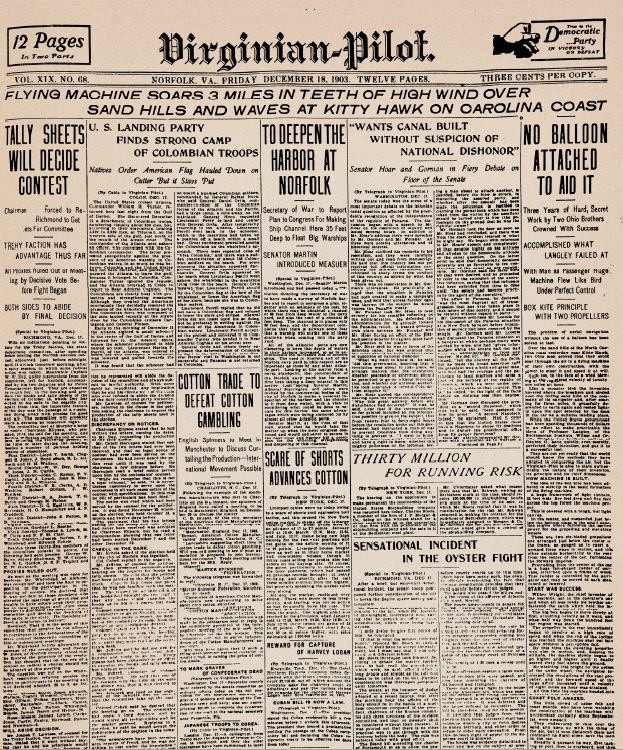
Other papers picked up that report in whole or in parts from the Associated Press wire, and reprinted their own breathless accounts over the following week. Those papers included the Cincinnati Enquirer mentioned by Milton Wright and, closer to home, the Dayton Herald. The Dayton Daily News also carried a brief report, buried in its ‘Country news’ column.
Further afield, The New York American, The Washington Post, Chicago Inter-Ocean The Philadelphia Record and The New York Journal all ran the AP story, mostly on inside pages where its sketchy veracity was less likely to turn into a major embarrassment.
Or did they?
There is an alternative sequence of these events, recounted years later by Virginian-Pilot staff: They recalled that the telegraph line from Kitty Hawk Weather Bureau was down at the time and so Dosher used his new phone line to call the weather office at Manteo, NC. From there, telegraph operator Alpheus ‘Alf’ Drinkwater transmitted it up to the Norfolk Weather Bureau, where operator Charlie Grant took it to Western Union and leaked it to Harry Moore.
No doubt, there are elements of truth in this version as well, and the two may never be fully unravelled.
You can read more – and make up your own mind – here.
Regardless, the erroneous hype travelled at least as far as The San Francisco Call, where it made the front page under ‘Airship’s Flight Is A Success’.
Cooler heads
Back in Dayton, the Journal did print its own, more accurate report – shunning the fanciful AP handout – on December the 19th. It began:
Bishop Milton Wright of this city has received a telegram from his sons, Wilbur and Orville Wright, who are at Kitty Hawk, North Carolina, the fourth autumn, experimenting in gliding through the air an aeroplane of their own make, and regulated by devices of their own invention…
A transcript of the ‘success’ telegram and a description of the Flyer followed, but the real news seemed to be that the boys would be home for Christmas.
Meanwhile, in Newark, NJ, cooler heads also prevailed.
In its evening edition of December 28th, The Newark Daily Advocate published the first really full and accurate report of the flight, complete with illustrations, under the heading ‘Machine That Flies’. It was a single column, buried on page 7 of the 8-page edition, without fanfare or even a byline.
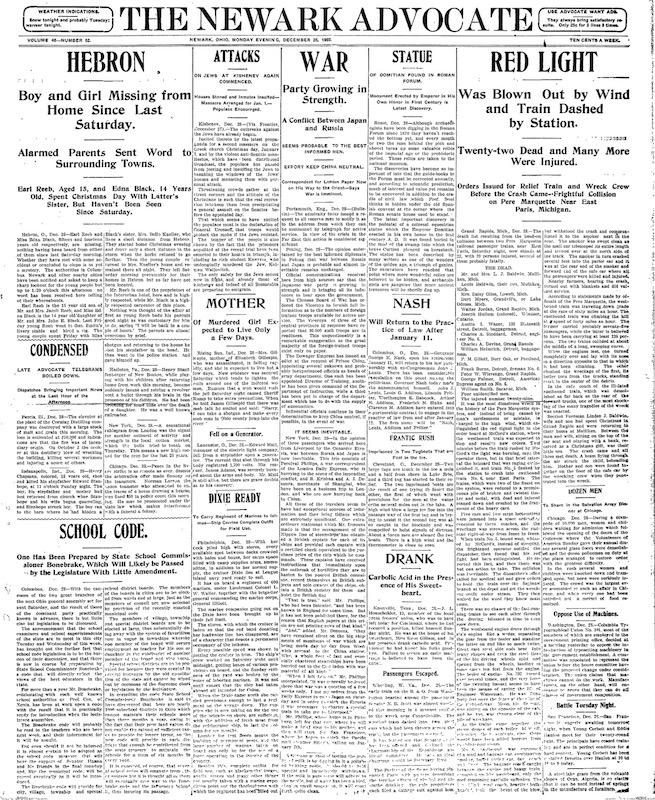
How the Advocate managed to separate fact from the Virginian-Pilot’s fiction is not clear.
On January 5th, 1904, the Wrights attempted to pour oil on the frothing waters by issuing a statement to the Associated Press that the Virginian-Pilot report was a “…fictitious story, incorrect in almost every detail”.
They provided AP with a more reliable statement but by then the bird, like their machine, had flown. Public and publisher interest had moved on, leaving their historic achievement on a par with the previous weekend’s social pages.
Huffman Prairie
Nonplussed, if not actually relieved, the Wrights returned to their experiments. The first project was to build a new aircraft, the Flyer II, based on the machine that had been damaged and left at Kitty Hawk in December.
Next, they needed somewhere to fly it and Orville knew a place.
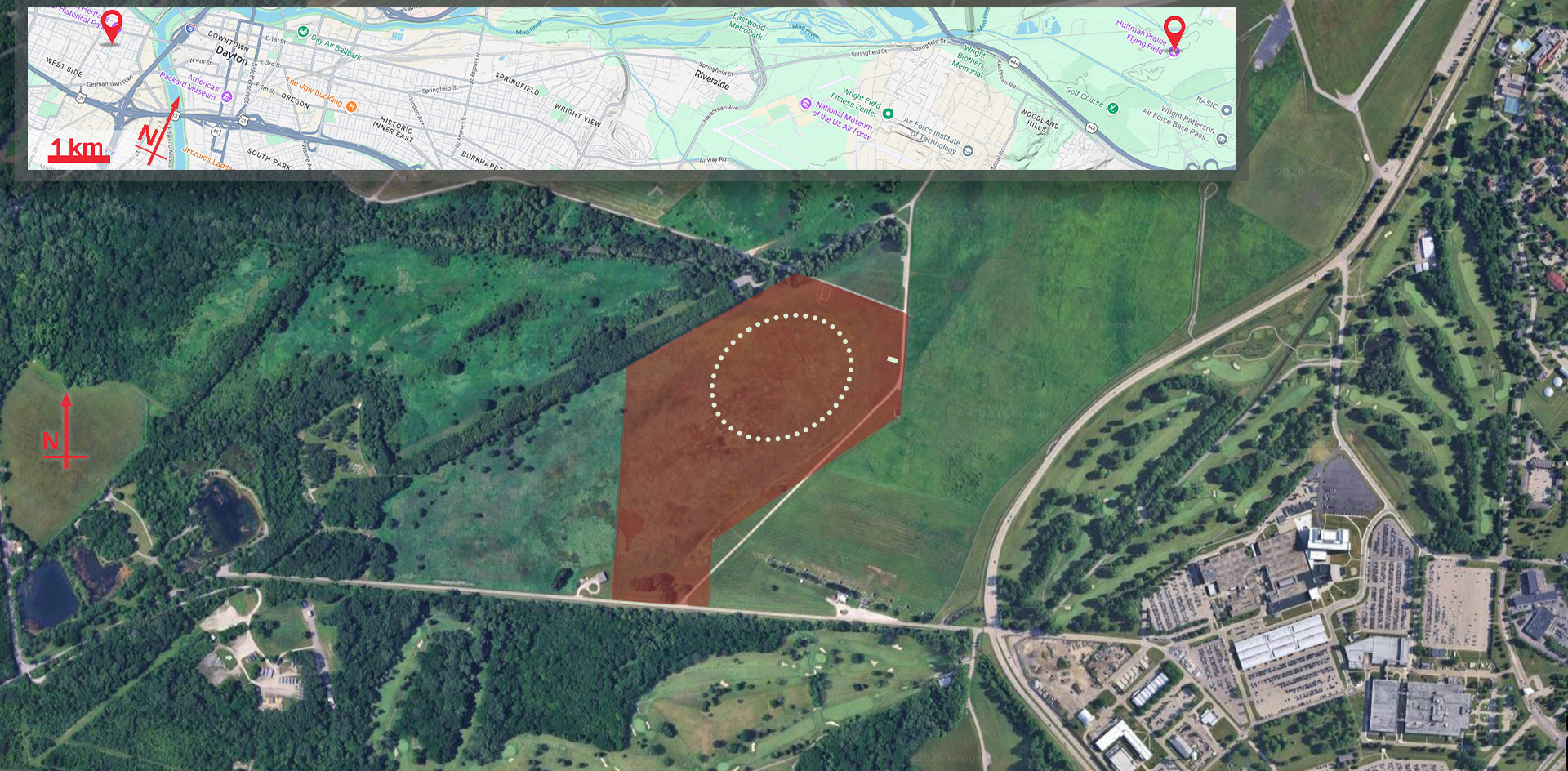
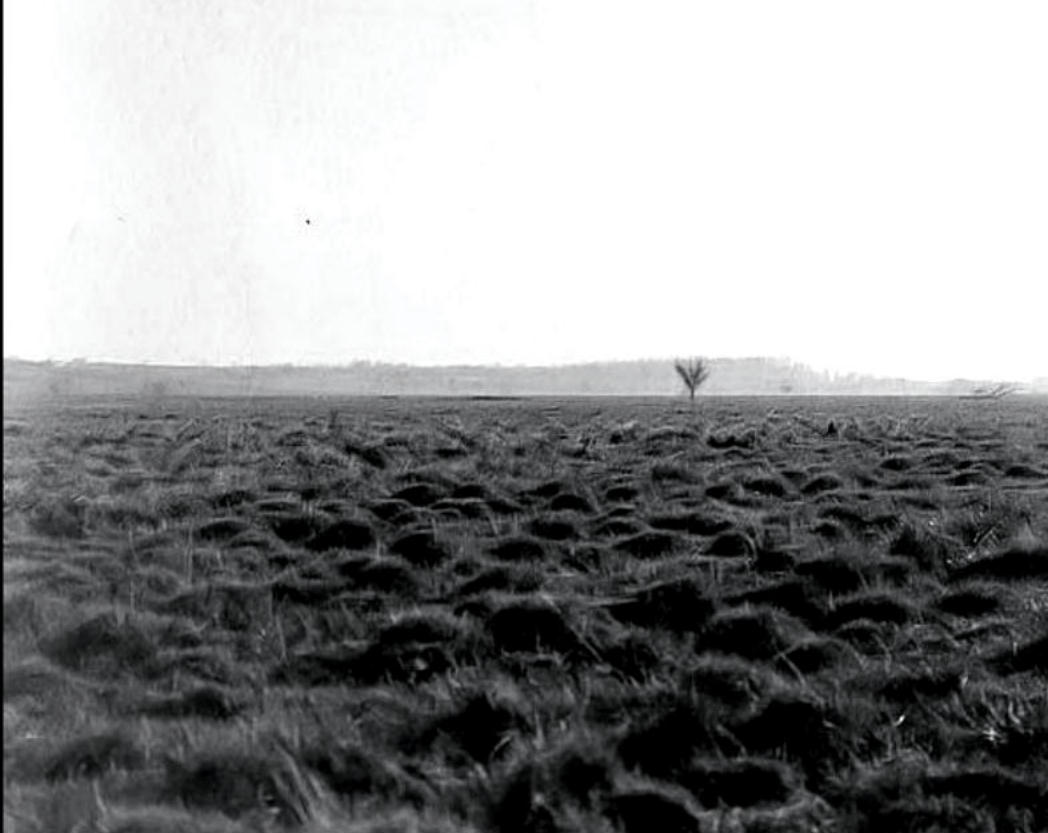
Huffman Prairie, northeast of Dayton, had been a favourite field trip destination for Orville’s high school botany class. He and Wilbur went to take a look. It was smaller and boggier than they would have liked, but the springy ground offered some relief for the inevitable crashes and the site was on the trolley line from town.
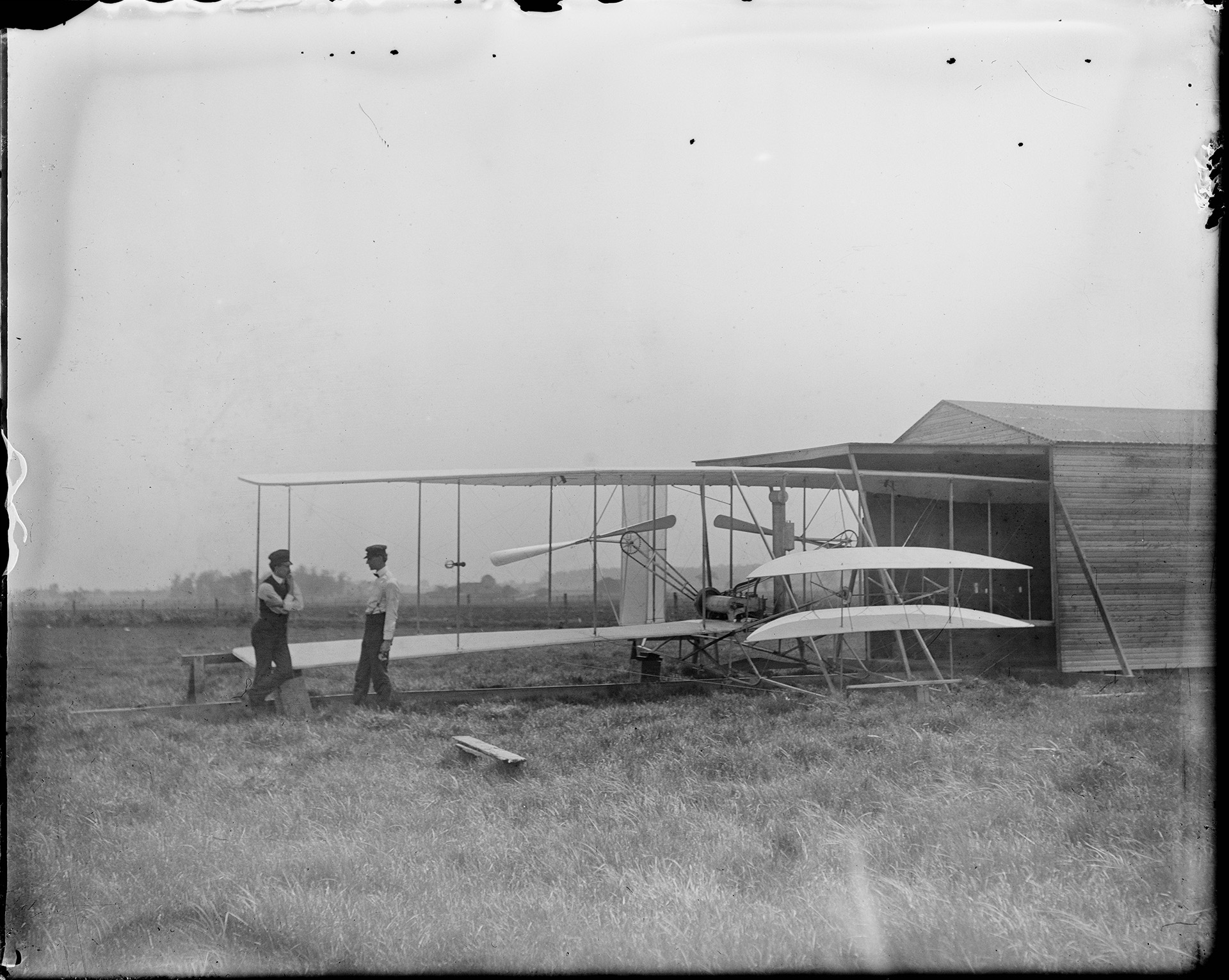
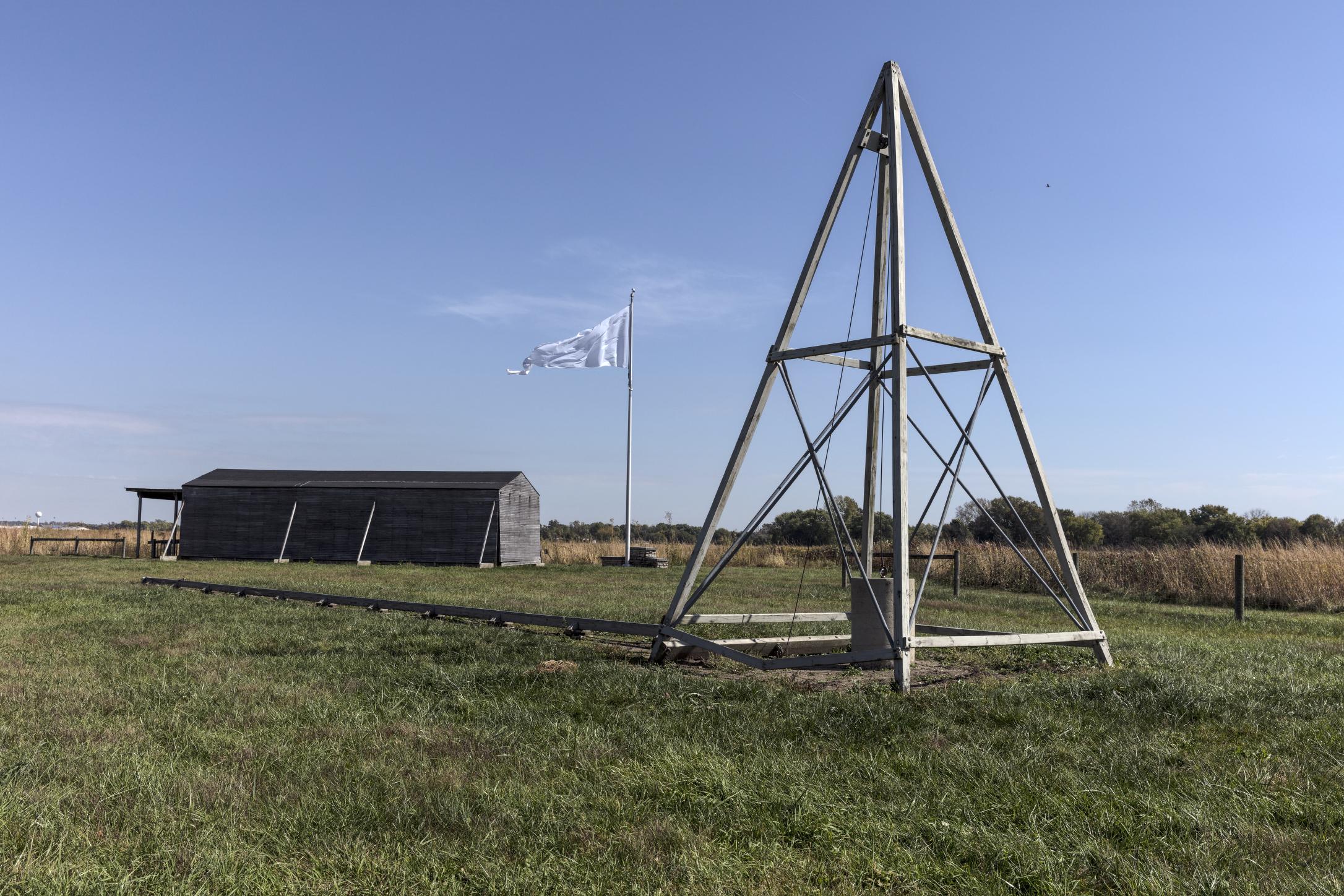
They obtained permission to use an 84-acre (34 ha) paddock from Torrence Huffman and built a shed (or ‘hangar’ in French, if you’ve ever wondered) as far from the trolley stop as they could get. They also set up a launch rail and by mid-May they were ready.
Disaster
On May 23rd, 1904, they invited about 40 people out to Huffman to watch them fly. It was a disaster. The motor wouldn’t run. The Flyer wouldn’t fly.
On the 25th, they coaxed the reporters out to the Prairie again but the cold rain refused to let up and Flyer II never even left its shed. The rain cleared on the 26th, but hardly anyone bothered coming out to see Orville not fly for a third time.
It was all bitterly disappointing and things refused to improve for months. Parts broke. They crashed and broke more parts. Propellers snapped. They crash landed.
It was a unmitigated nightmare but, on August 13th and their 28th attempt, Wilbur finally surpassed the longest flight of December 17th the previous year by 452 feet (m) – making a total of 1,304 feet (397 meters).
The relief was short-lived. That same afternoon, the 32nd try ended in a splintering crash. When that damage was repaired three days later, the Flyer II crashed again. On August 22nd, their 33rd flight made 1,432 feet (439 m). But Orville crash landed again on the 24th, leaving the machine on its back and him bruised, sore and dejected.
It was the summer of their discontent. It looked like Bishop Wright’s observation that they had only flown thanks to the special conditions at Kitty Hawk might have been correct.
Way back
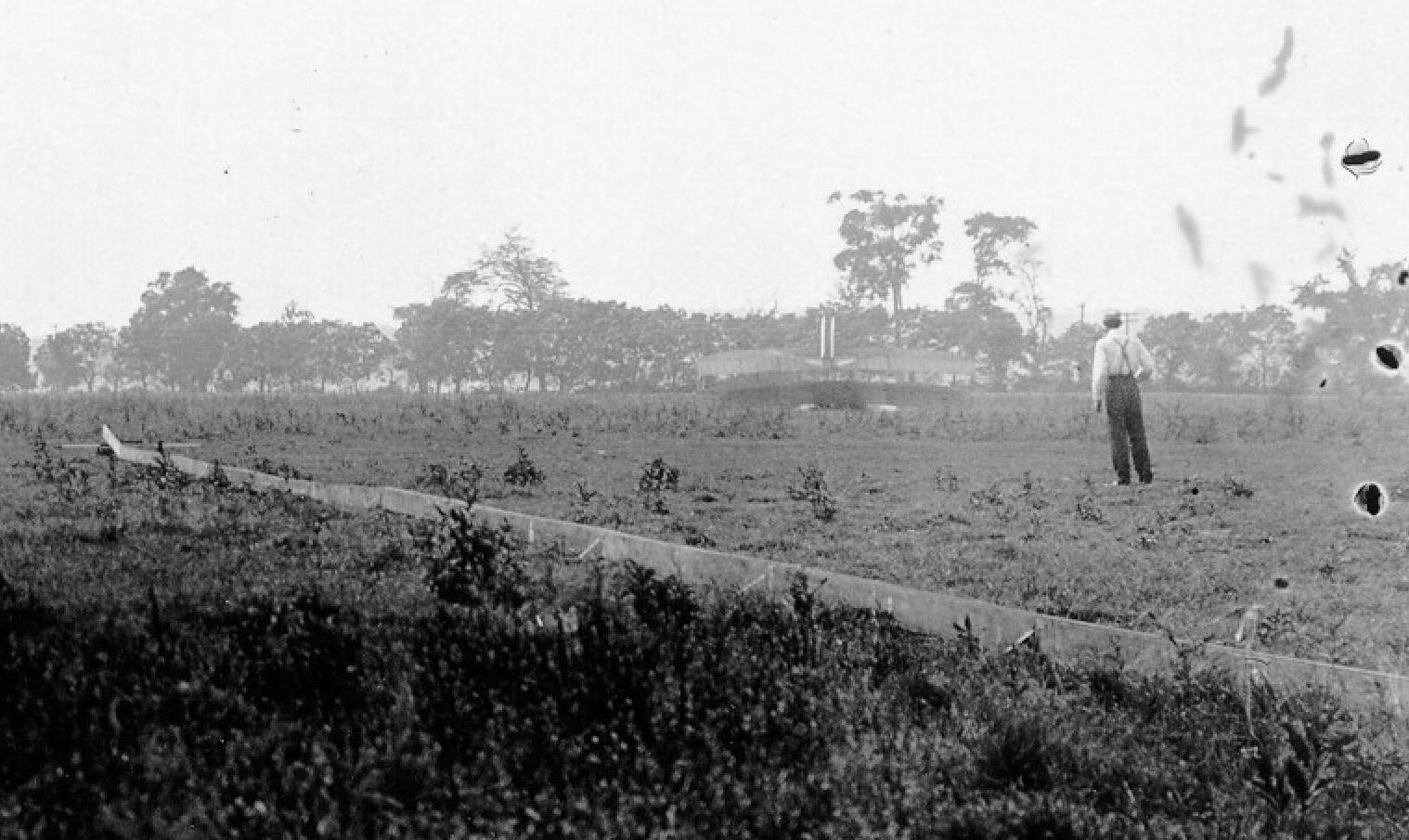
However, Wilbur had already analysed the problem with characteristic insight. On August 8th he had written to Octave Chanute complaining that they couldn’t get enough speed on their take-off track, so the machine was constantly mushing and stalling with the motor unable to generate enough airspeed to overcome the drift (drag).
It was what, today, we’d recognise as being on the back side of the power curve… way back.
The solution was a catapult – actually a 20 foot (6.1 m) tower with a stack of 200 lb (90.7 kg) weights attached by a rope and pulleys to the leading edge of Flyer II’s lower wing.
It was just the ticket. With 7 weights (1,400 lbs, 635 kg) the aircraft would leave its launch rail at 29 mph (47 km/h). That was enough to launch it onto the front-side of the power curve and into successful flight.
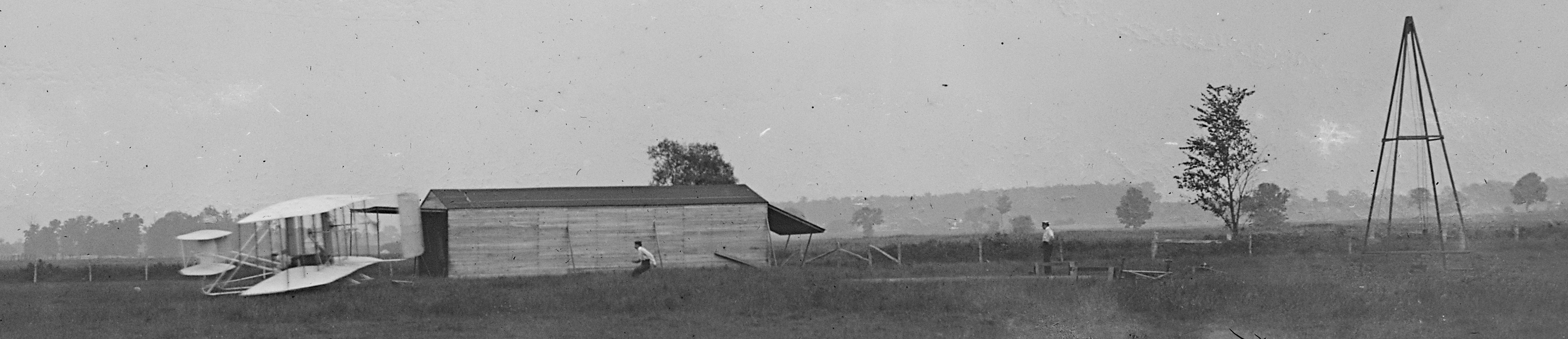
They first tested the system on September 7th. A week later, they made two attempts to circle the entire paddock and, while not quite making it either time, covered more than half a mile (805 m) and stayed aloft for around 2 minutes on both tries.
Finally, they had a flying machine they could actually fly.
Starting point
Enter Amos Root.
Root (1839–1923) lived in Medina, Ohio, 175 miles from Dayton. There, he ran one of the largest beekeeping supply houses in the country and dabbled with invention and Sunday school teaching on the side. So, while America’s newspapers had moved on from the Wright brothers and taken the impatient public with them, Amos Root was intrigued.
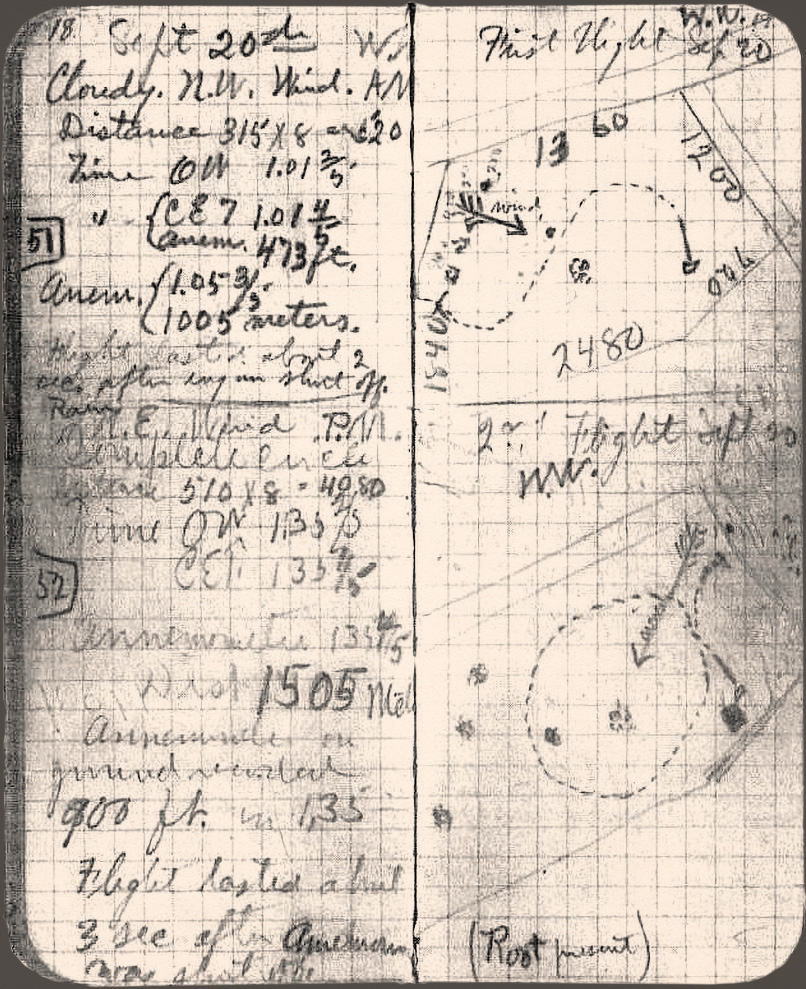
Having decided to see this wonder for himself, he made the journey with impeccable timing. Proceeding via Columbus, he arrived under a forbidding dark sky in time to see Orville make the first complete circuit of the ground (September 20th ).
It was a momentous occasion. For the first time, a heavier-than-air flying machine had been successfully guided back to its starting point.
Flyer III
The Wrights would continue learning – and crashing – but the fundamentals of aerial navigation had been solved. They would never really look back, even if their obsession with patent protection would stop them from ever truly leaping forward…
They started the 1905 flying season with a new Flyer III and encountered all the familiar short hops and crashes before ironing out the problems with the propellers and the control arm of the canard-elevator. By October, they were regularly making flights of more than half an hour and staying aloft until the fuel tank ran dry.
Then, fearful that growing newspaper attention could jeopardise their patent claims, they stopped.
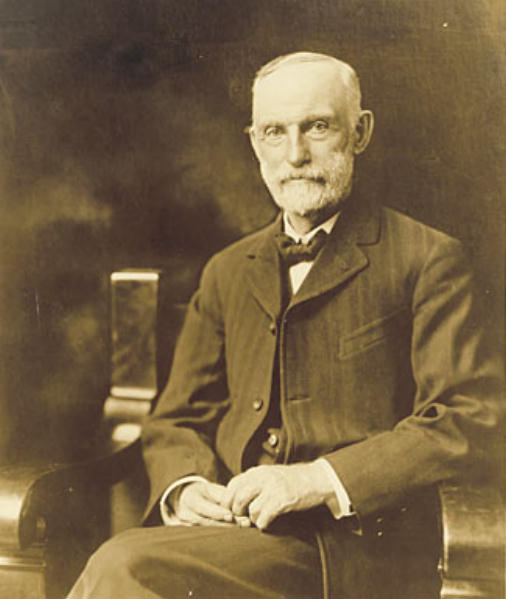
Amos Root, meanwhile, wrote up what he had seen and offered the miraculous account to Scientific American magazine. They agreed that it was miraculous and so, being a science journal, refused to run it.
Bird and the bees
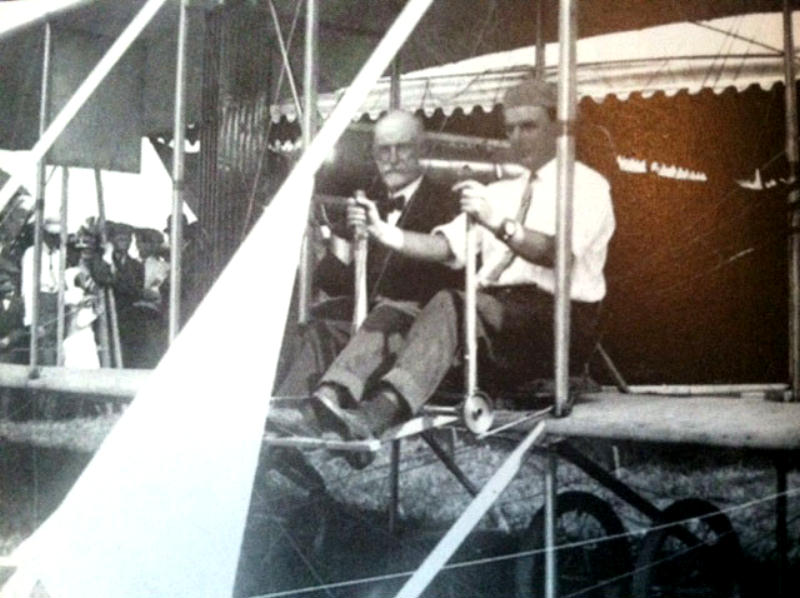
So Root published it in his own magazine – the in-house Gleanings In Bee Culture – on January 1st, 1905 – which was circulated to customers of his apiary supply business (somewhat less creatively called The A.I. Root Co).
…for the first time in my life, during the past summer I have been under a promise of secrecy, he wrote.
When the Wright brothers kindly permitted me to be present while they were making preliminary experiments they especially desired I should keep to myself, at least for the time being, what I saw. I recognised the justice of it, and of course assented. But it was a very hard task for me to keep my tongue ― or pen ― still when I knew the great outside world knew so little (or nothing) of what was going on…
And later:
I told you there was not another machine equal to such a task as I have mentioned, on the face of the earth; and, furthermore, just now as I dictate there is probably not another man besides these two who has learned the trick of controlling it. In making this last trip of rounding the circle, the machine was kept near the ground, except in making the turns.
If you will watch a large bird when it swings around in a circle you will see its wings are tipped up at an incline. This machine must follow the same rule ; and to clear the tip of the inside wing it was found necessary to rise to a height of perhaps 20 or 25 feet. When the engine is shut off, the apparatus glides to the ground very quietly, and alights on something much like a pair of light sled-runners, sliding over the grassy surface perhaps a rod or more. Whenever it is necessary to slow up the speed before alighting, you turn the nose up hill. It will then climb right up on the air until the momentum is exhausted, when, by skilful management, it can be dropped as lightly as a feather.
I’m not going to go over the old ground of rival claims to the Wrights’ pre-eminence. But first, second or fifteenth, there was genius in the flying machine they invented and the way they went about mastering it.
And, equally, it doesn’t really matter if Amos Root’s article was first, second or fiftieth. There was far more importance in his ability to appreciate the significance of what he had seen:
…the time may be near at hand when we shall not need to fuss with good roads nor railway tracks, bridges, etc., at such an enormous expense. With these machines we can bid adieu to all these things. God’s free air, that extends all over the earth, and perhaps miles above us, is our training field.
Here’s the full article for you. (Get comfortable – he goes on a bit.)