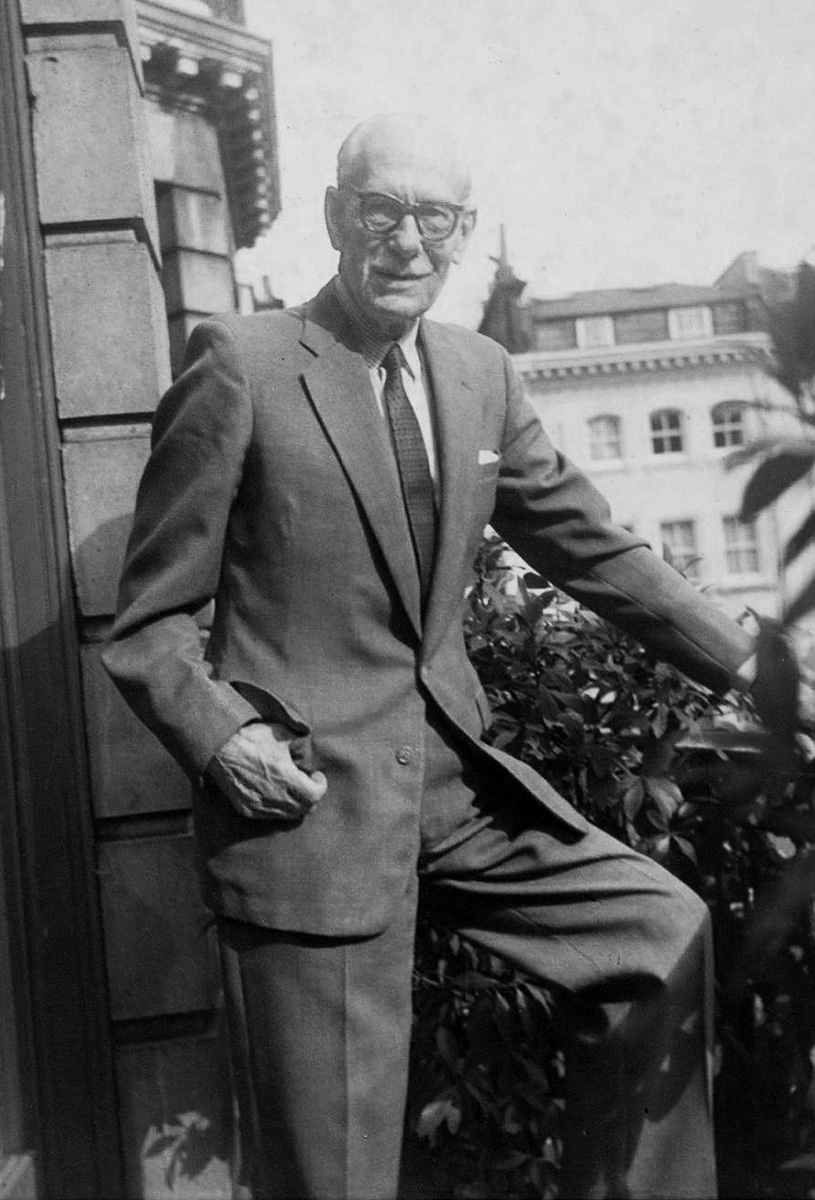
Capt. Duncan Grinnell-Milne RAF, MC, DFC
Duncan William Grinnell-Milne was born in Bromley, Kent (just south of London) England in August 1896 and enlisted in the Prince Consort’s Rifles aged a little more than 17 in December 1913. Deemed too young to fight when World War One started, he transferred to the Royal Fusiliers in December 1914 in an effort to get to the front.
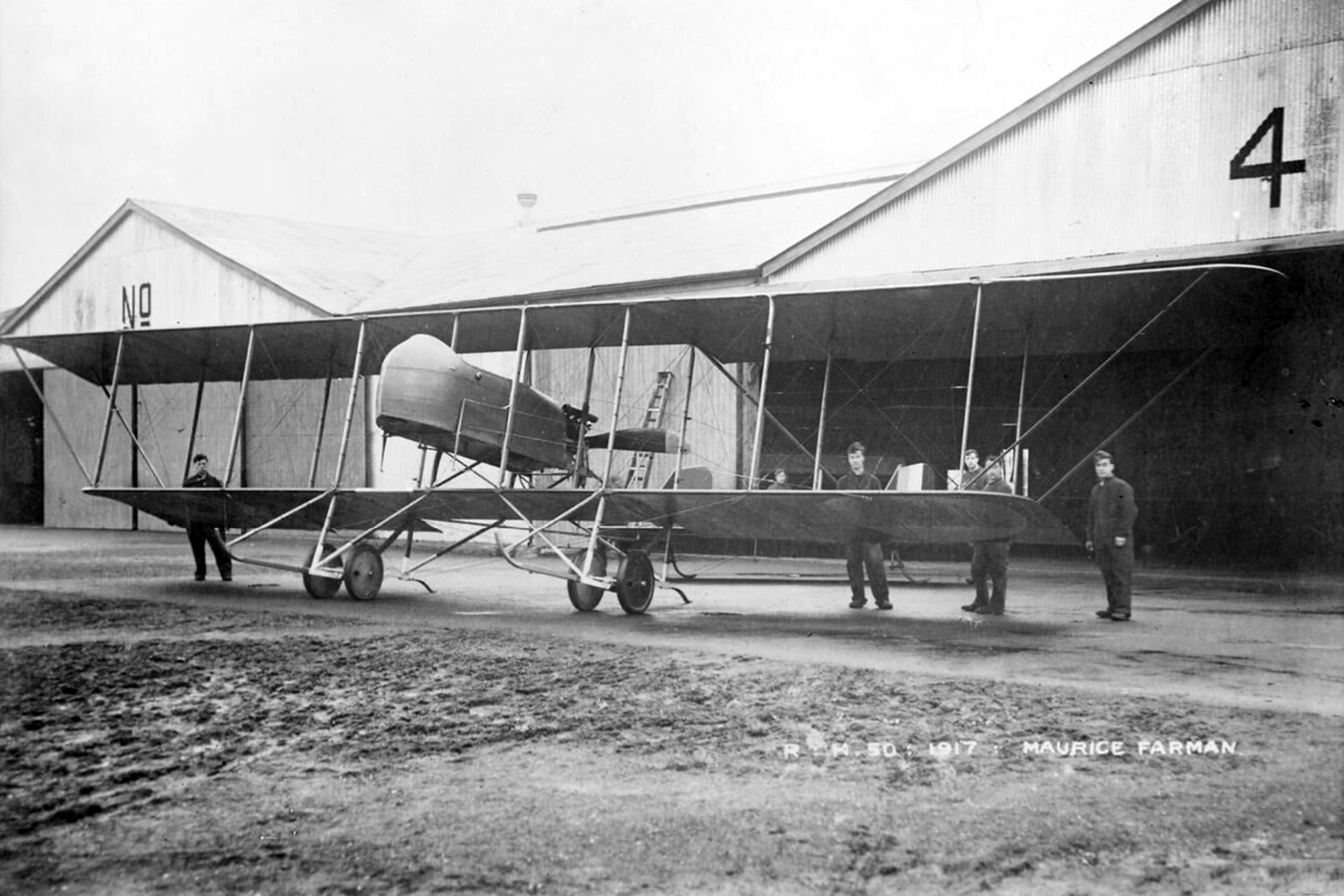
However, still itching for action, he then transferred to the Royal Flying Corps and qualified as a pilot on August 17th, 1915, after training on Maurice-Farman Longhorns at Shoreham-on-Sea.
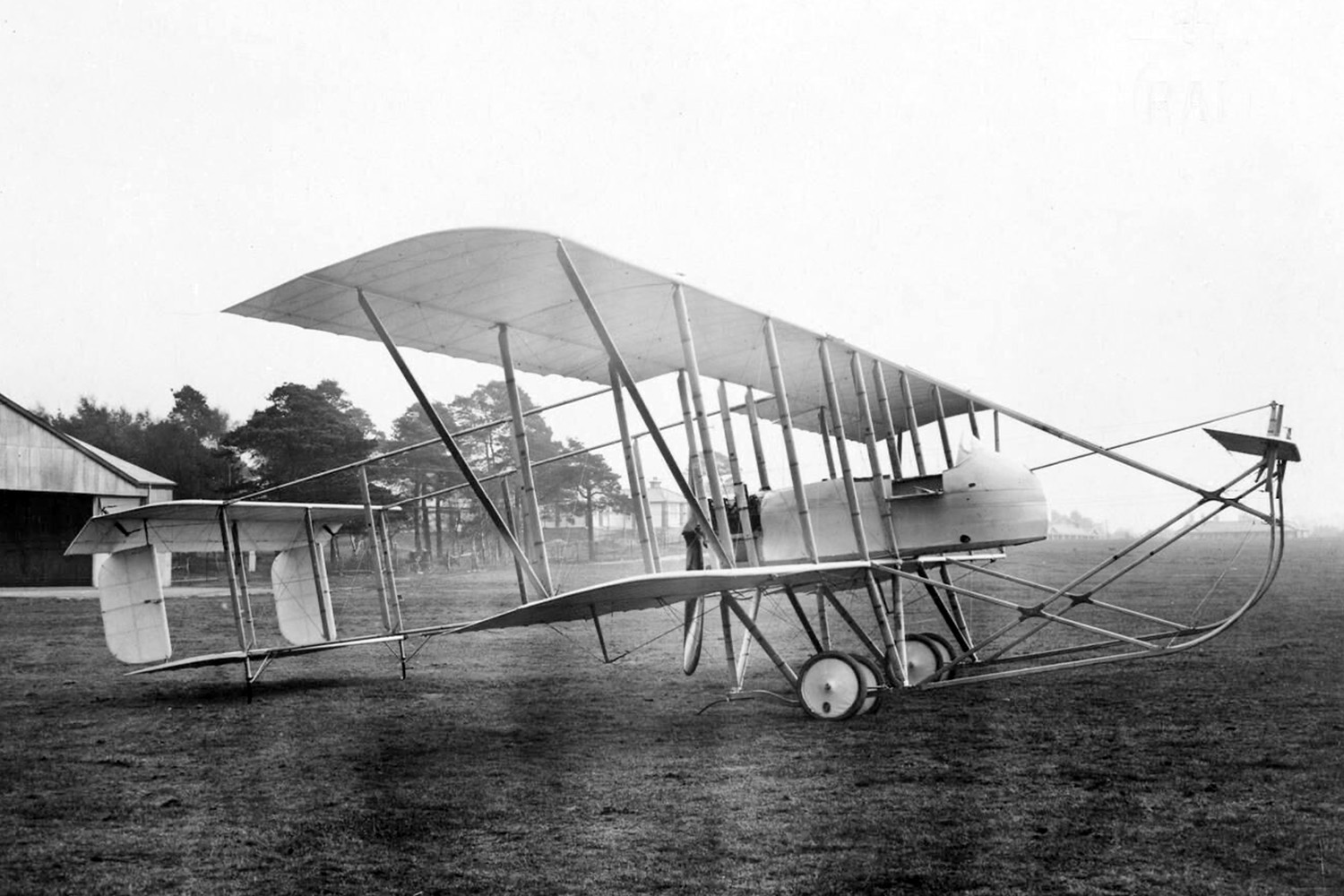
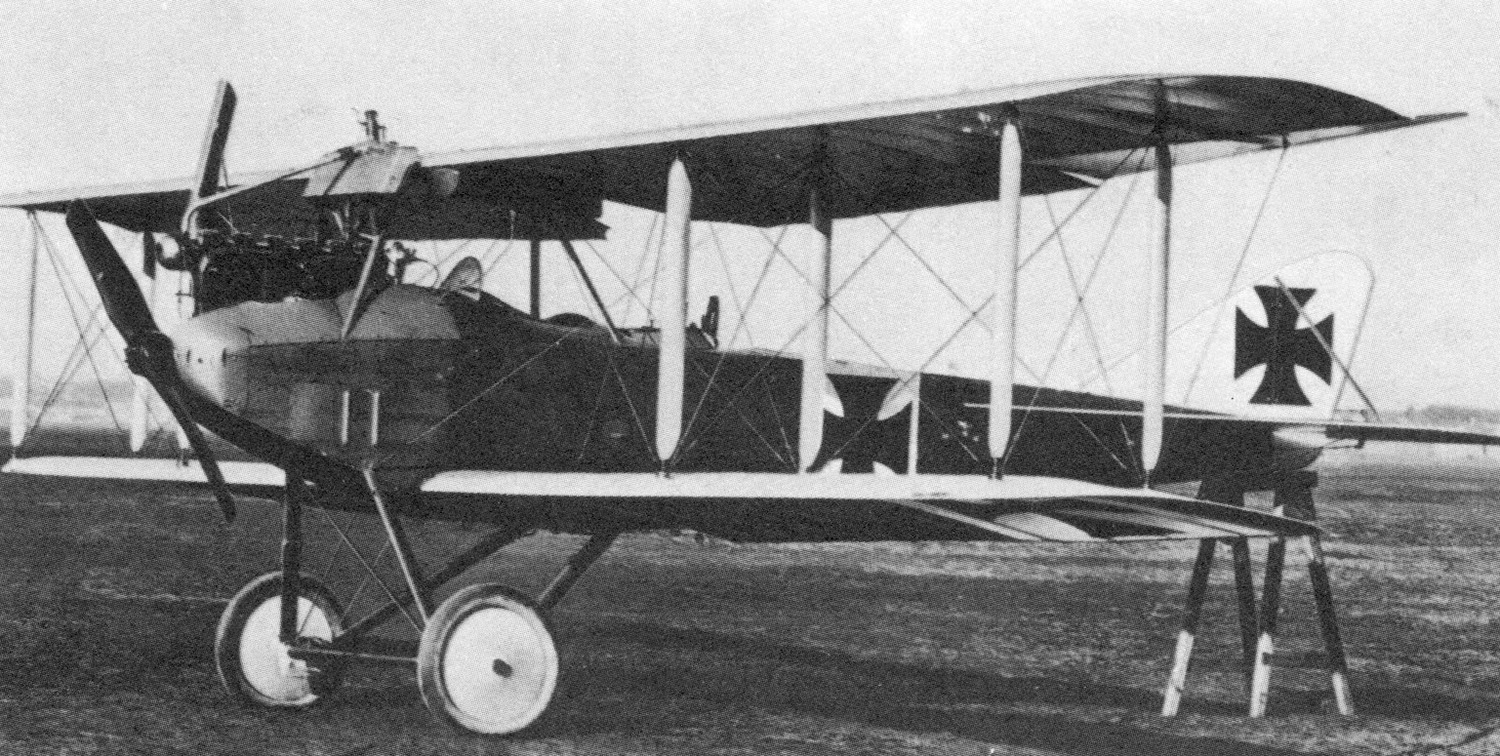
As a sign of the growth – and losses – of the early RFC, he was commissioned as a second lieutenant on September 7th and appointed a flying officer on the 9th. On the 29th, he was made a full lieutenant and posted to No.16 Squadron in the far north of France. Lt. Grinnell-Milne and his observer (who did the shooting) tasted victory in a BE2c the following month, downing an Albatross C.1 on November 28th.
Three days later they failed to return from a reconnaissance mission.
His account of those early days in flimsy aircraft and disorganised dogfights is a window in time. In fact, it’s a rare first-hand account of those comparatively happy-go-lucky days just before dedicated fighter aircraft and lethally efficient pilots began to codify air combat.
The text is Grinnell-Milne’s original. I have only added subheads to help with its readability online.
Flying Corps, 1915
In the autumn of 1915, when the excitement caused by the unsuccessful battle of Loos had subsided and the conditions under which we were living in France had again become normal – when, in the words of a certain Staff Officer, “we had returned to the piping times of peace” – flying was by no means an unpleasant occupation.
The risks in those days were, of course, greater than they are now, and the work was periodically arduous, but on the whole we lived in far greater comfort than did the unfortunate men in the trenches. Those of us who had come from the infantry had no real cause to regret our choice.
From one cause or another we suffered a good many losses and in the course of about three months the flying personnel of the squadron to which I belonged had been almost completely replaced.
I began to count myself among the lucky ones, since not only had I successfully completed a number of more or less important flights, but I had come unscathed through no less than four aerial combats – quite a large number at the time.
A long time ago
It all seems such a long time ago that I find it difficult to remember my feelings when first I flew in France, but sometimes when day-dreaming I manage to recapture some of the thrill of those early days of war-flying, when the average speed of our primitive machines rarely exceeded sixty miles an hour and the art of aerial fighting was almost unknown.
There were no specialist squadrons then, and pilots in the Royal Flying Corps were ready to start at a moment’s notice on bombing raids, long or short reconnaissances, photographic expeditions or artillery observation flights.
Fighting in the air was regarded as a side-show. Occasionally, it is true, machines were sent up to attack and pursue some of the more daring German aircraft which had ventured to cross our lines, but it was a rare occurrence for an enemy to be brought down.
Up in pursuit
One day, towards the end of November 1915, some twenty-five of our aeroplanes sallied forth to bomb a railway junction on the German side of the lines. How much damage we did was difficult to estimate, but it is certain that one of the results of this raid was to spur the German airmen into greater activity than they had shown of late.
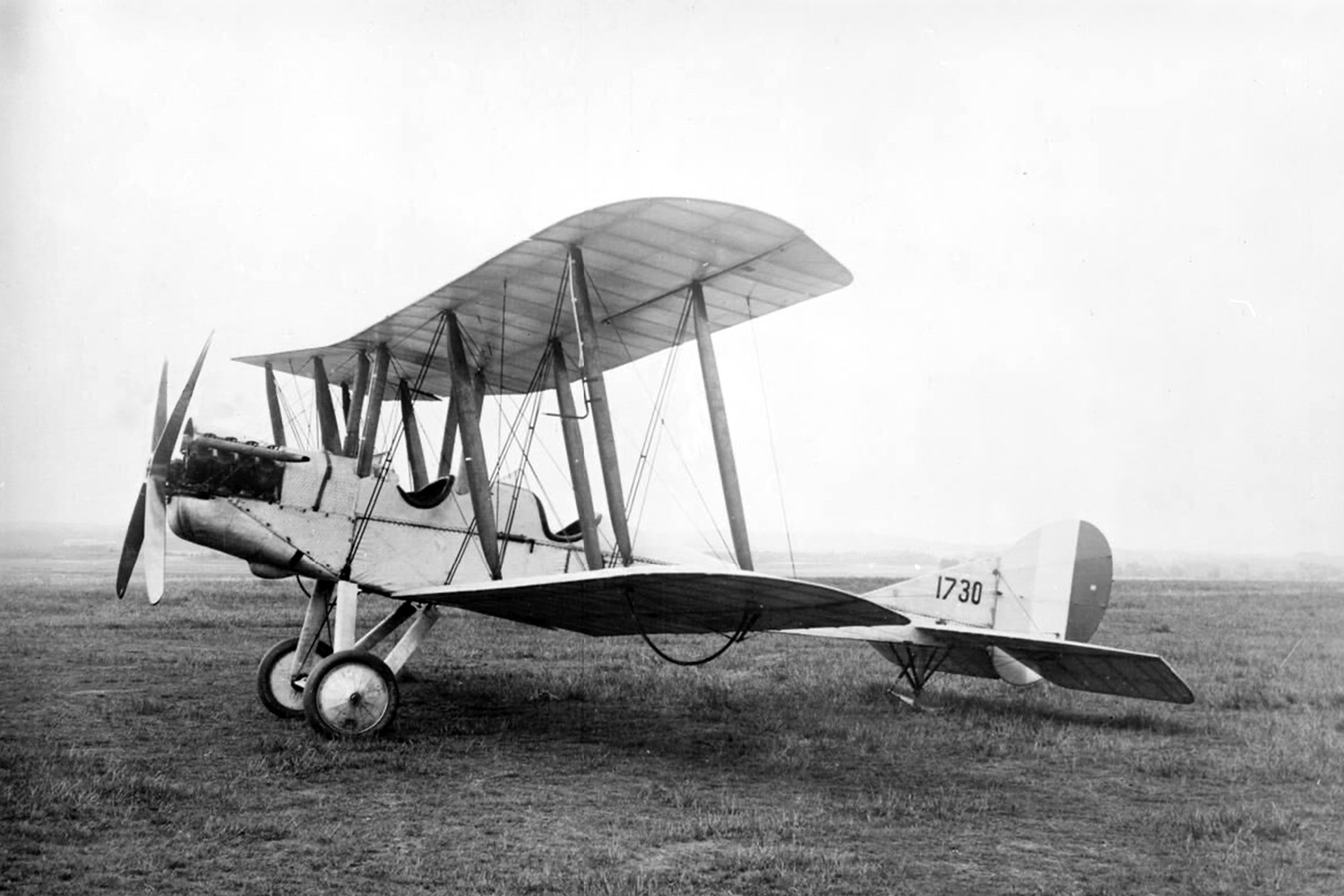
On November 28th a German machine appeared over our aerodrome and I was sent up in pursuit, accompanied by my observer, a Captain Strong. For nearly an hour we climbed slowly towards the enemy, who pursued a leisurely course to the northward.
At last we reached his height – about 6000 feet – and at the same time he must have caught sight of us, for he turned back towards the lines.
His course now brought him close alongside, and as he passed my observer opened fire with the Lewis gun. Just then I caught sight of three other German machines coming towards us. It looked as though we were trapped and I at once endeavoured to manoeuvre for a better position.
On the approach of his friends the first aeroplane returned on our starboard side, fired at us, and received a broadside at the hands of my observer. The enemy then turned slowly away, and a second or two later dived down steeply. I felt certain that he had been hit, but I was unable to watch him for the other three Germans were now closing in on us.
I began to enjoy myself
For the next few minutes I was kept busy dodging and swerving in every direction in an attempt to avoid the enemy’s fire.
In 1915 aerial gunners were poorly trained and it must have been to this fact that we owed our preservation more than to any skill upon our own part. The enemy flew in no particular formation, and by getting in each other’s way hindered their own fire considerably. Nevertheless the crack of passing bullets was almost continuous, and every now and then a slight jar and a flying splinter told that a shot had got home on our machine.
The fight lasted quite a long time, and after a short period of nervousness I began to enjoy myself thoroughly.
I remember waving at one of the Germans as he came up close alongside and then emptying my automatic pistol in the vain hope of hitting the pilot, while my observer blazed away with his Lewis gun.
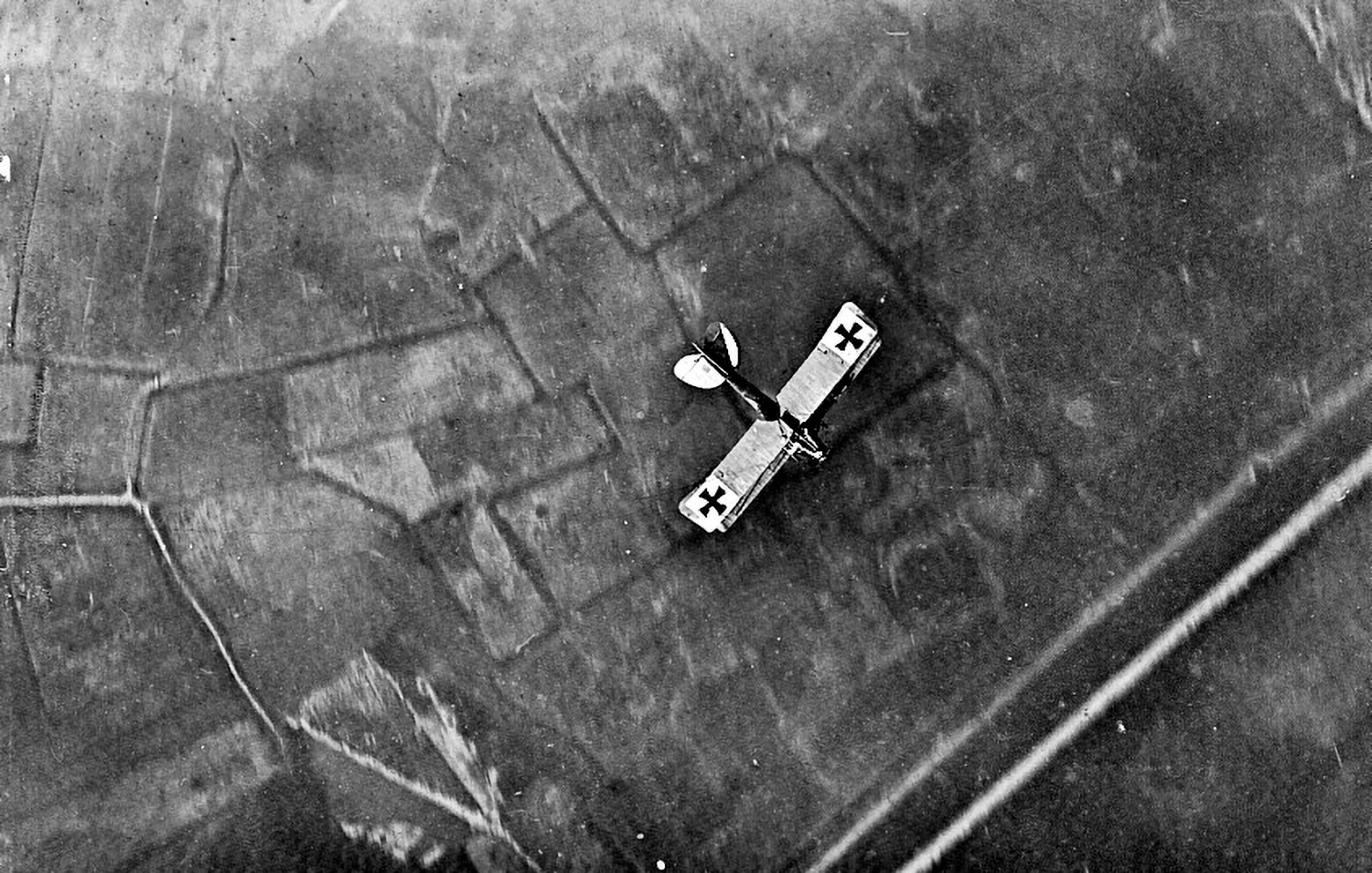
After what seemed like half an hour but in reality was only some ten minutes, yet another German joined in the scrap. This time we were glad to note that he was himself being pursued by a small British monoplane, and the British machine was evidently getting the better of him.
Very shortly this latest German machine turned away and started gliding for home. One of the other Germans, who had apparently been slightly damaged by my observer’s fire, also turned and made off in the direction of Lille. Whereupon the remaining two aeroplanes, finding their superiority reduced, separated and broke off the fight.
We pursued one of them for some distance, but he was faster than we were and eventually eluded us by dodging behind a cloud.
Overjoyed with our success
At intervals during the fight I had watched our first enemy circling slowly downwards. He did not appear to be out of control, but I fancied that the pilot was wounded. This was probably the case, for towards the end of the fight I saw him land and capsize in a field almost immediately beneath us but unfortunately in the territory occupied by the Germans.
We returned to the squadron overjoyed with our success, although as a matter of fact the achievement was to lead indirectly to our undoing.
Headquarters were very interested in our account of the fight and wanted to have definite confirmation of the crashed German aeroplane.
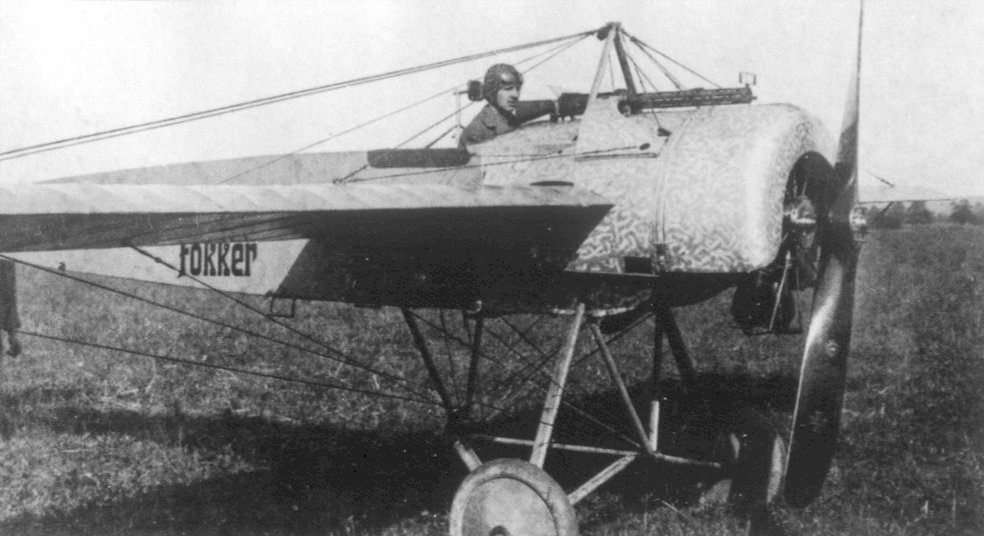
Consequently next day a great friend of mine, Herbert Ward, was sent over with his observer, Buckley, to try and take a photograph of the wreck. They reached the spot and almost immediately disaster overtook them. They were attacked by a Fokker monoplane (then quite a new machine just beginning to make a name for itself) and after a short fight Ward was wounded in the knee and forced to land his aeroplane in the German trenches.
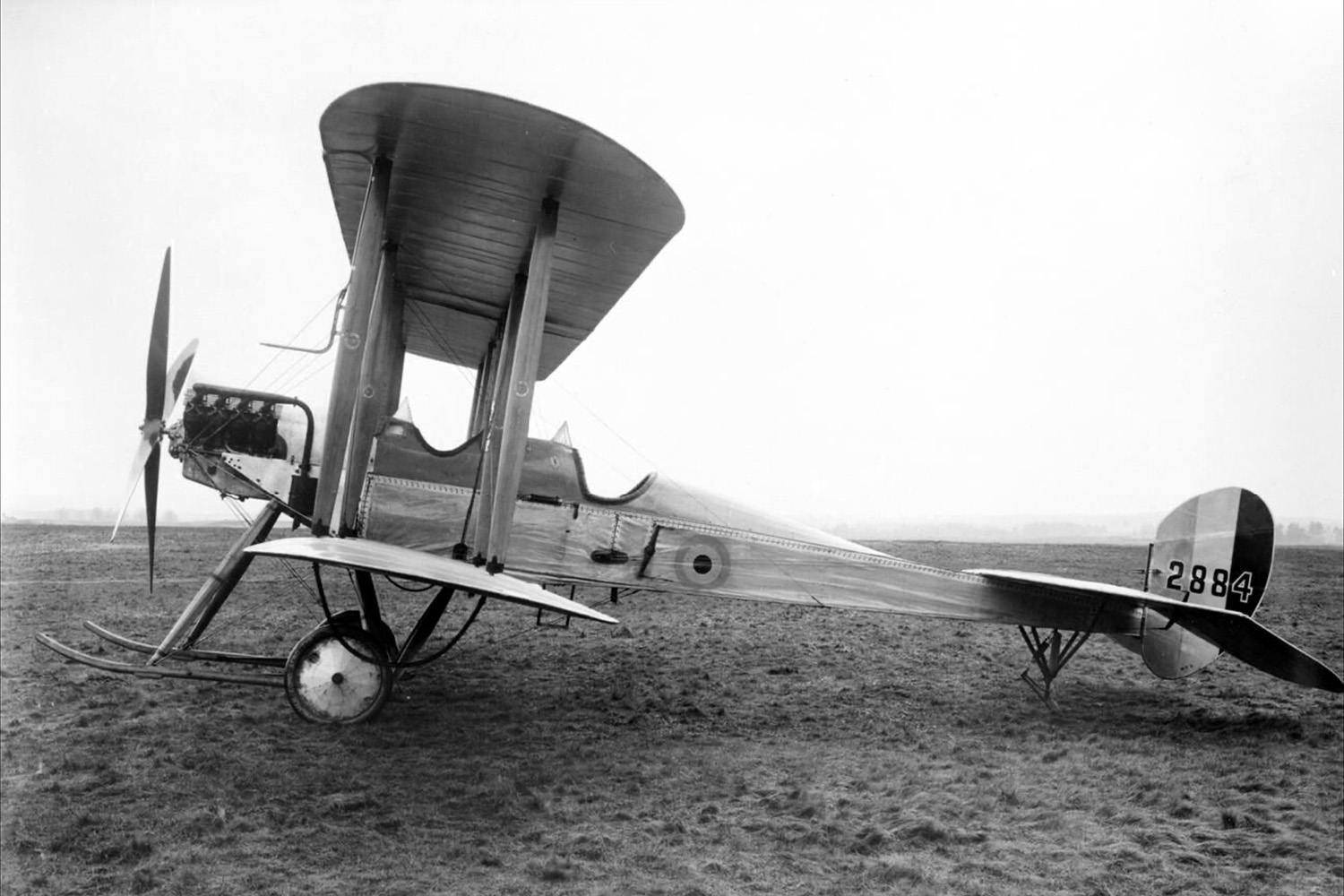
My turn
Two days later two machines of the squadron were due to carry out the periodical ‘long reconnaissance’ to Valenciennes.
This reconnaissance, whatever its military value may have been, was undoubtedly productive of more casualties than any other job we were required to do. For one thing, although our engines were remarkably good, they were not built to stand the strain of a long-distance flight at high speed.
Secondly, the Germans – knowing all about our ‘long reconnaissance’ flight – were in the habit of lying in wait at Douai aerodrome and rising to attack us on our return journey when, short of petrol, we were generally beating against a strong wind.
Now it had been Ward’s turn to undertake this flight but Fate, having seen him safely captured, decided that it was my turn and that I too should become a prisoner.
No-one to stop us
The morning of December 1st was wild and blustering with half a gale of wind blowing from the northwest but, in the absence of the Squadron-Commander who was away on duty, there was no-one to stop us from going. Not that we were unwilling to start. Personally, I had a ridiculous idea that the reconnaissance might be productive of further fighting, from which we would return covered with eternal glory!
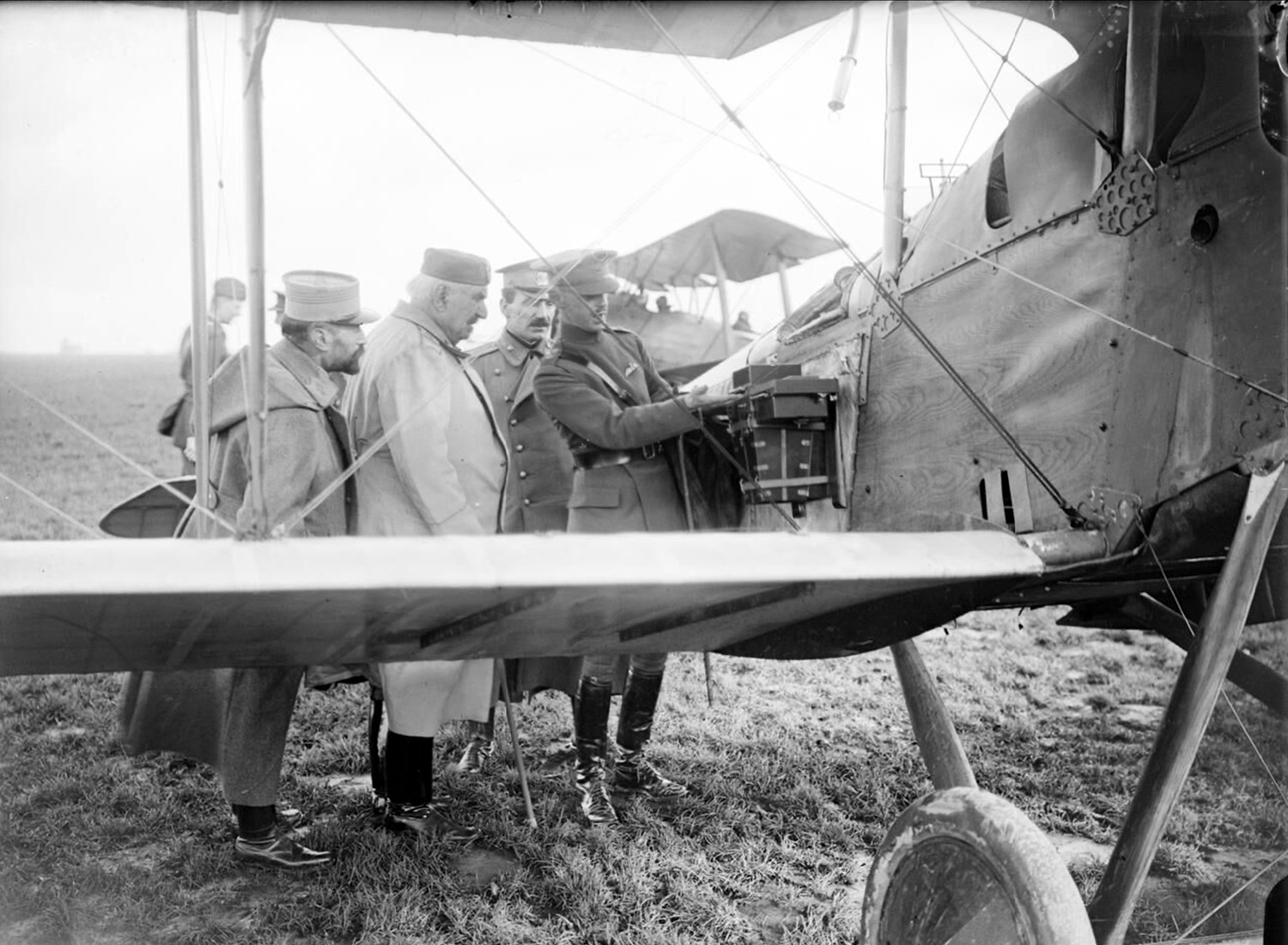
And so Strong and I left the ground at 9am, followed a few minutes later by the second machine which was to act as escort.
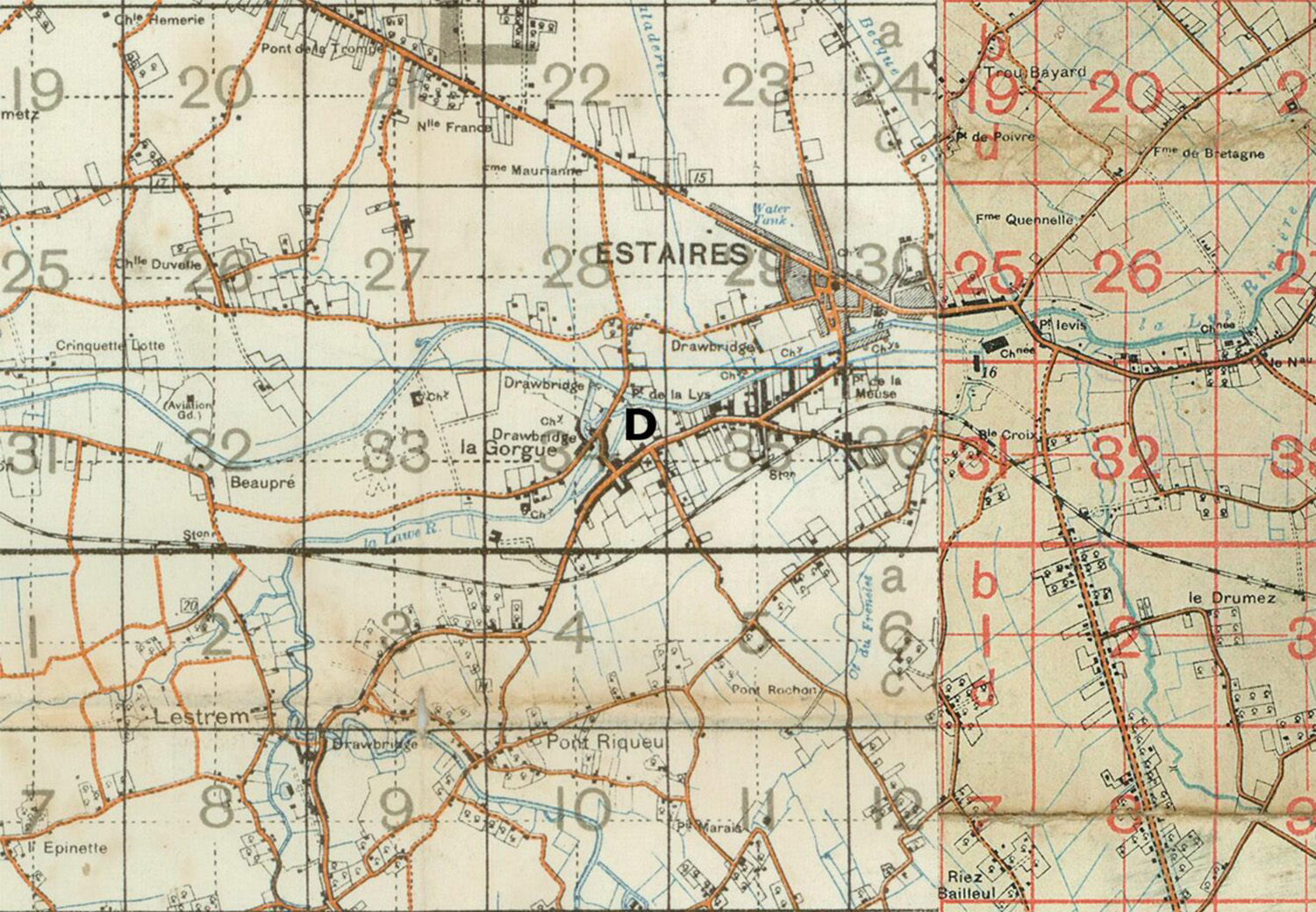
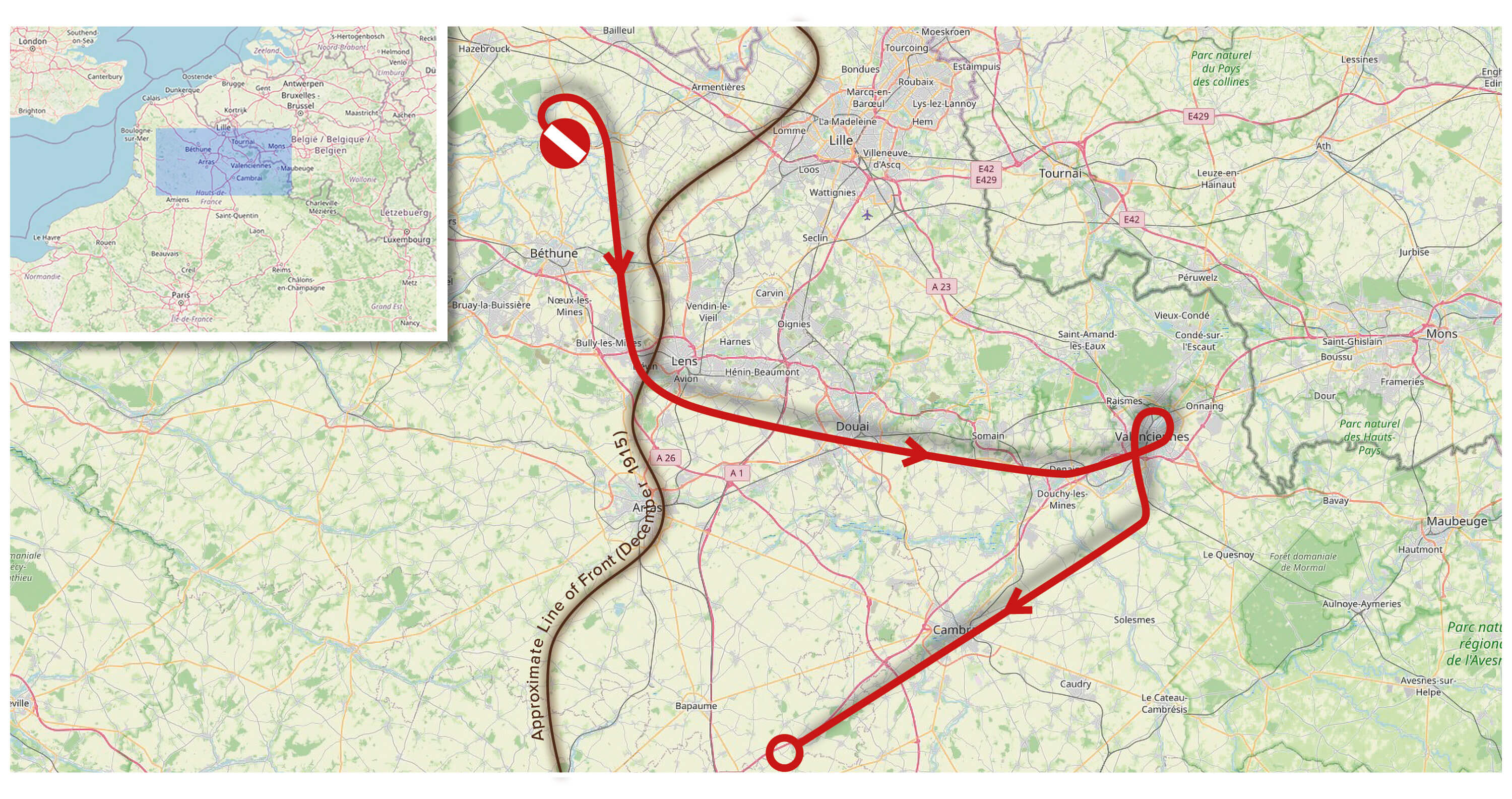
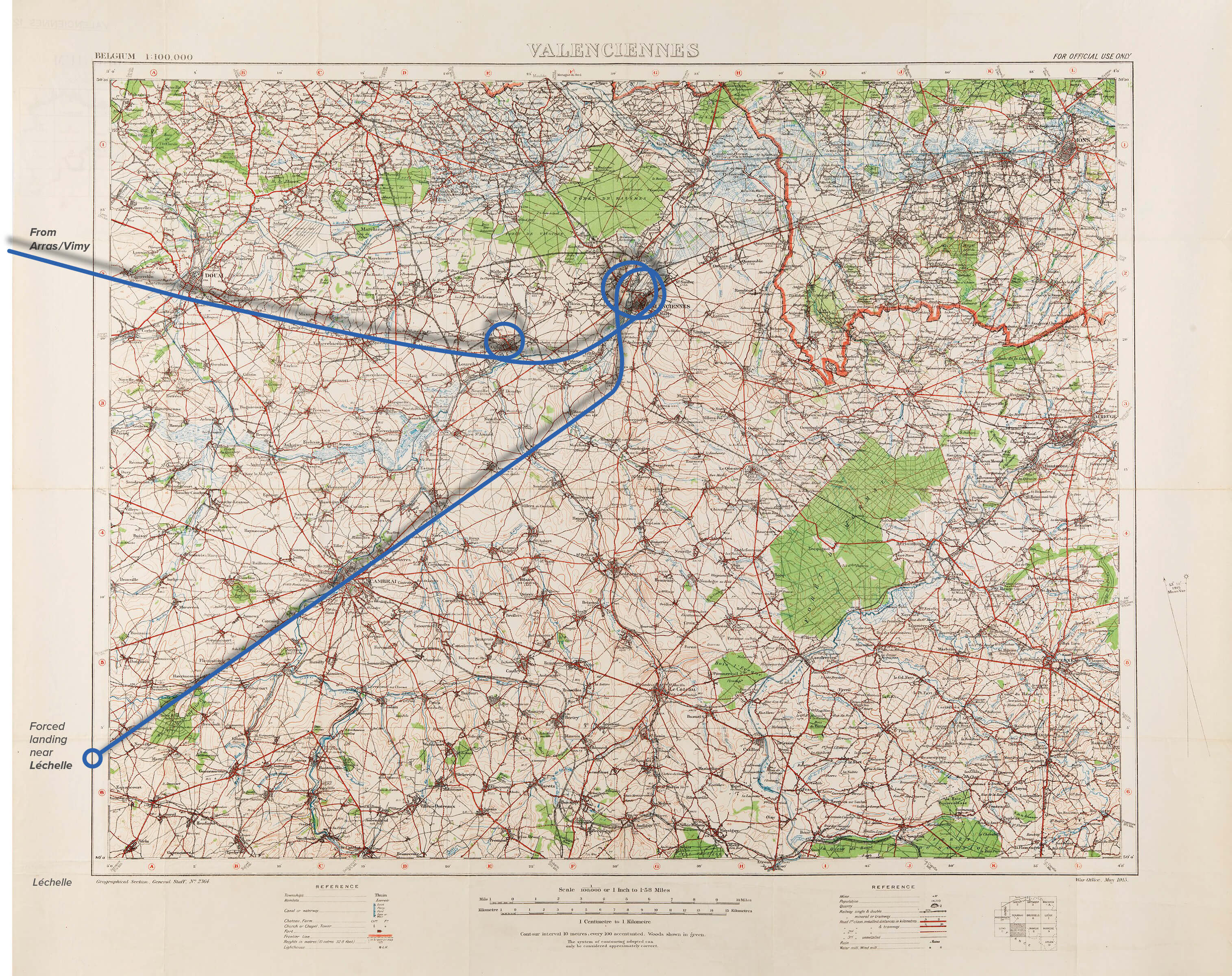
We steered south while gaining height and crossed the lines in the neighbourhood of Arras.
At this point we lost sight of the escorting machine, whose pilot evidently thought that the weather was too bad. Thence we passed over Douai, Denain and Valenciennes. I circled round each of these places while my observer counted the rolling-stock in the railway sidings, and then after going a mile or two beyond Valenciennes we turned to make for home.
An ominous knock
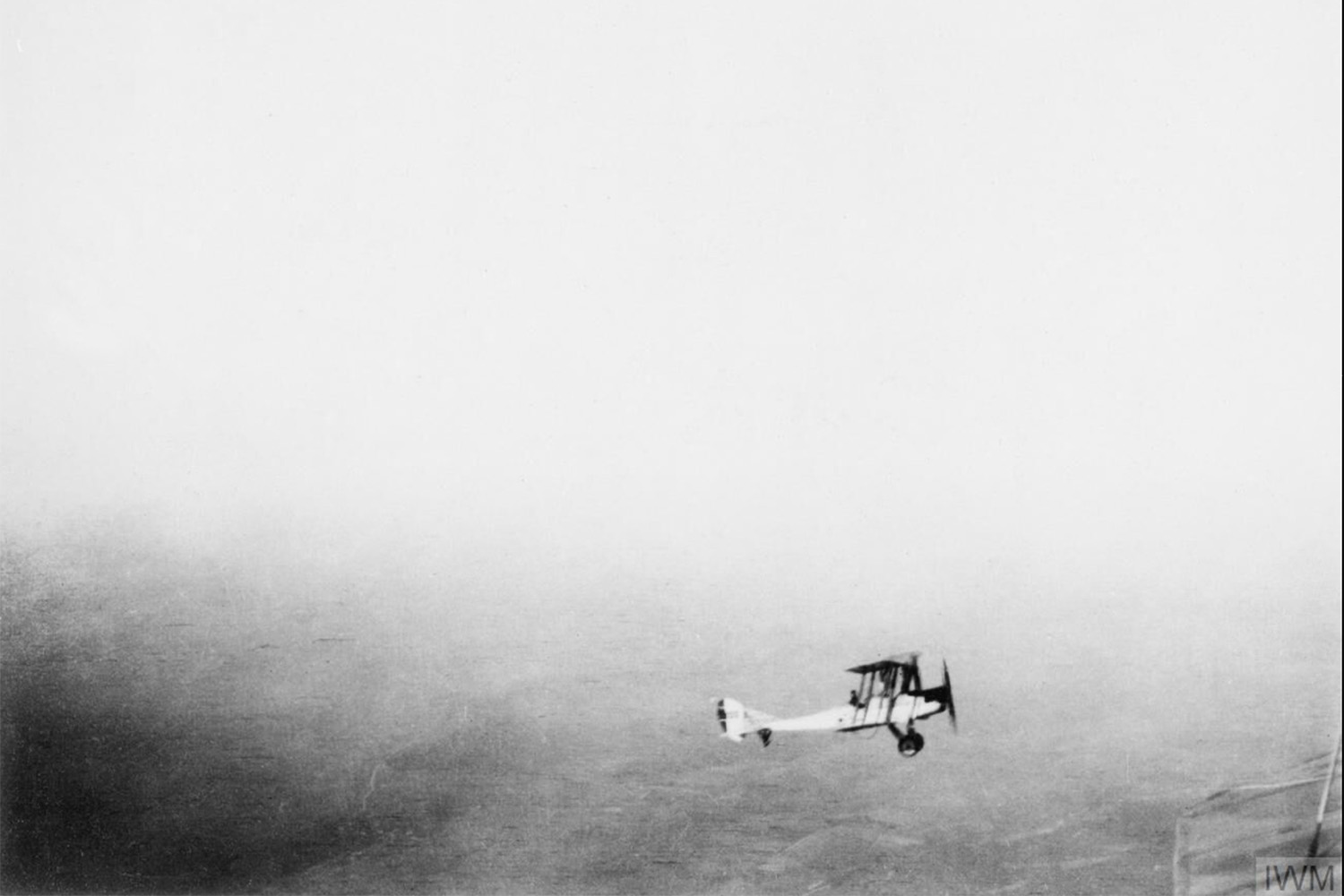
I had barely set the machine on its westerly course when I began to hear an ominous knock in the engine.
At first I imagined that it was some little sound which I might have been hearing for a long time without noticing, but within a few minutes it had grown so loud that I realised we were going to have serious trouble.
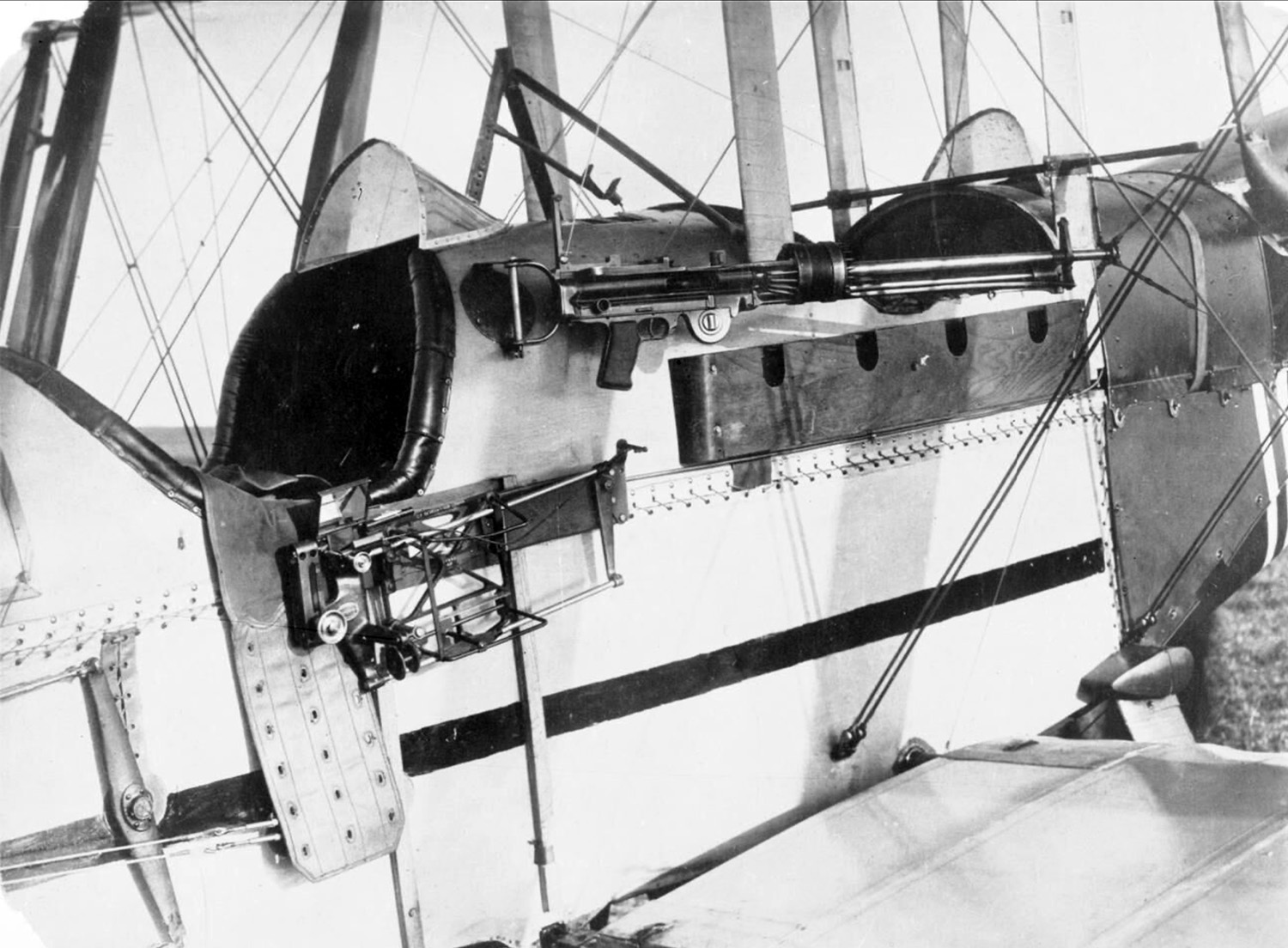
Suddenly there was a loud explosion. Pieces of metal flew past my head and the machine was enveloped in a cloud of blue smoke. For one horrible moment I thought we had caught fire, and, switching off the engine and closing the petrol supply, I pushed the control-stick forward and dived the machine towards the earth.
It was almost immediately obvious that the machine was not on fire and I gradually brought her back on to an even keel. I switched on the engine and cautiously opened the throttle, whereupon the engine started to run again, although it was now vibrating in a really astounding manner. I peered forward and noticed that with the explosion the greater part of one of the cylinders had disappeared.
In spite of this I accelerated the engine as much as I dared, and the awful vibration notwithstanding we managed to make some headway. At this time our height was about 13,000 feet, and our speed between fifty-five and sixty miles an hour.
Misery, depression and hopelessness
I knew that we were over fifty miles from the lines and, judging from the rate at which the cloud-shadows on the ground were moving, we must have a wind of more than forty miles an hour dead against us. We were slowly losing height and the only thing to be done was to keep a steady course more or less due west.
The cold that day – particularly at height – was intense and, the top of my compass having frosted over, it was with the greatest difficulty that I could steer with any accuracy.
I find it almost impossible to describe my feelings as it gradually dawned on me that we were certain to come down within the enemy lines. I had a sensation of misery, depression and hopelessness, which grew so strong as time went on that I felt almost physically sick. I suppose it was a form of nostalgia – or was it just cowardice ? At any rate, I felt unbearably sad at the idea that in all probability I would have to spend that night in a German prison.
Running itself to pieces
At an altitude of about 8,000 feet we saw ahead of us a huge bank of clouds stretching for miles in every direction. There was no means of avoiding these clouds as they lay right on our course but once inside, with no sight of the earth, the suspense became even worse. We were descending more rapidly now, the engine fast running itself to pieces, although still heading due west in the vain hope that we might yet reach the British lines before we were forced to land.
Presently we became involved in a series of snow, hail and rain storms, and, what with the shaking of the engine and the tossing and bumping occasioned by the storm, I wondered whether we should ever reach the ground in safety.
We went down in the clouds to within (by the aneroid) 300 feet of the earth and then, just as I was beginning to consider the possibility of hitting treetops if we were in hilly country, the clouds broke and we saw the ground not 200 feet beneath us.
We were passing over a small village that I was quite unable to recognise and which, with the exception of one man in civilian clothes, appeared to be deserted. The fields round about were also devoid of people, but it was still pouring with rain which probably accounted for the lack of inhabitants.
Of trenches there was not a sign.
I had a sickening presentiment that we could not possibly have crossed the war zone during our long flight in the clouds, but there was just a faint chance that we had. In a few minutes’ time we were to find out.
End of the flight
Our machine could hold the air no longer.
The engine had settled down to a gentle rumble and hardly sufficed to drag her along. Two miles past the village we barely cleared the tops of trees standing on a piece of rising ground. Ahead of us there were more trees; we would not be able to cross them and so the end of the flight had obviously come.
Turning into the wind, I landed in a ploughed field.
Strong and I immediately jumped out and held a hurried consultation. Neither of us really believed that we had crossed the trenches, although we tried to pretend to each other that there was nothing to worry about. I asked Strong to go to the edge of the field and look over the brow of the hill, towards the village, to see if anyone was coming.
He had been gone barely a few seconds when I heard a yell. Turning round, I saw him rushing back shouting that the Germans were coming.
The last glimmer of hope disappeared and there was only one more thing to be done. I went round to the front of the machine, pulled off a rubber connection and set fire to the petrol. By the time the foremost German breasted the hill there was little to be seen of our unfortunate craft but a cloud of smoke and a blaze of flame.
Strong rejoined me and we deliberated as to what our next move should be. It was no use running away – the Germans were coming up on two sides, about two hundred strong, and there was no cover near in which we could take refuge.
And so, standing by our burning machine, we awaited their arrival.
A strange position
They came up at the double, headed by an NCO on a horse. All at once, when they were still some ten yards away, they came to a full stop, checked by a series of loud explosions which suddenly occurred in the aeroplane – the ammunition for the machine gun had evidently reached boiling point and was beginning to go off.
The effect on the Germans was quite extraordinary. Half their number threw themselves flat on their faces while the remainder took refuge in flight.
On those who were lying down I tried a few phrases of my choicest German, informing them that we were quite harmless and would like to surrender. To this they made no reply, merely staring at us wide-eyed.
It was a strange position to be in: We begged to be allowed to surrender as our enemies either lay flat on the ground in front of us or ran away.
I felt like shrugging my shoulders and walking away in disgust but presently, when our ammunition had burnt itself out, they plucked up courage and started to return. We were soon surrounded by a large crowd of harmless enough individuals, who stood gaping at us as though we had dropped from Mars.
Then some German flying officers arrived and introduced themselves to us with much bowing and saluting as if the war had never existed.
Chivalrous reception
It turned out that there was a German aerodrome not far from the village we had passed and that all these men were members of a squadron, which accounted for our chivalrous reception. Apart from this we had committed no particularly war-like act that day, having been forced down by engine trouble far from the heat of battle, and the Germans were by no means unfriendly.
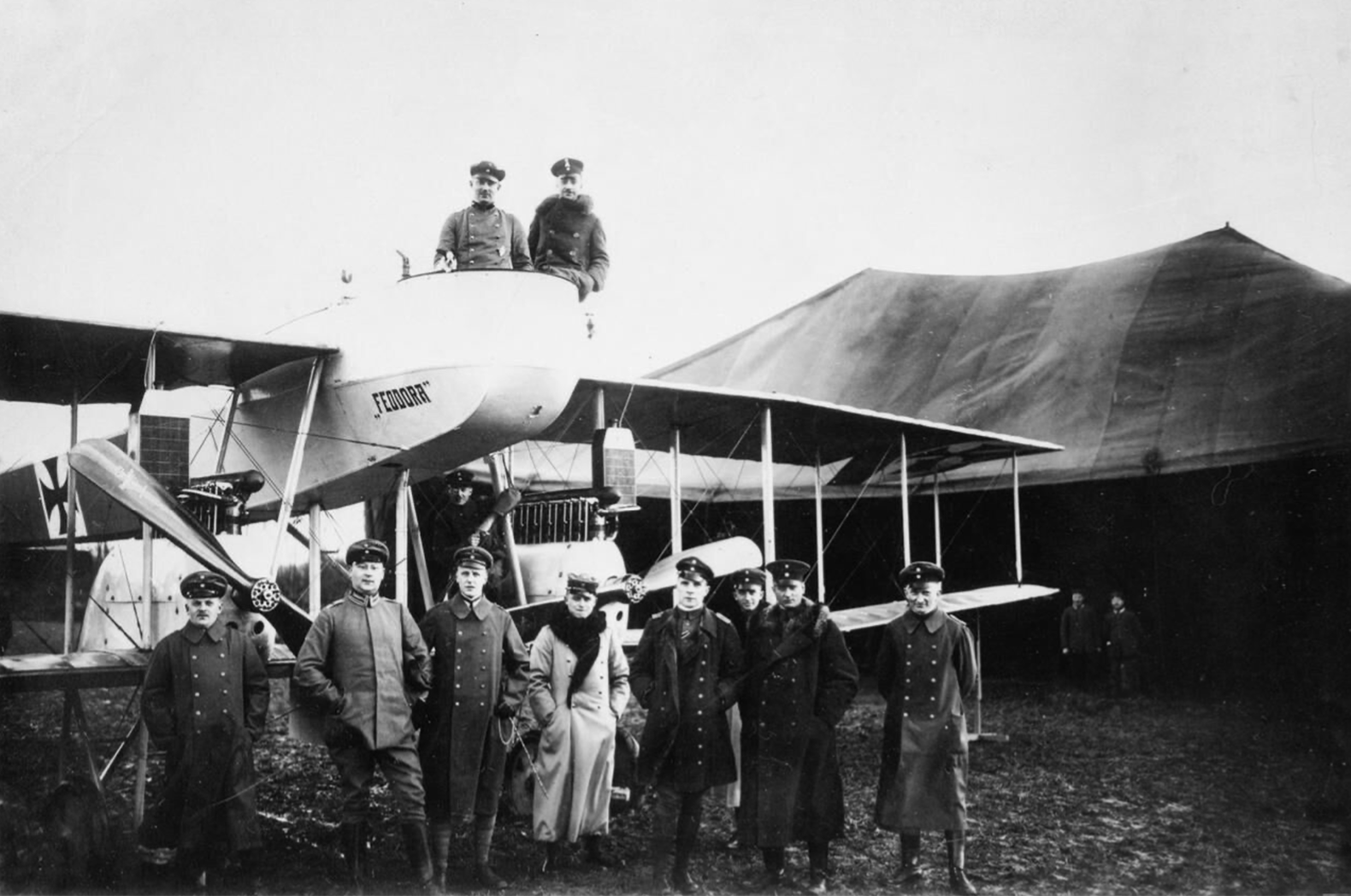
The only man who was at all nasty was a member of the German field police who, arriving late and very much out of breath to search us for arms, was furious at finding that everything of importance or interest had been burnt in our machine.
The German flying officers tried to engage us in an interesting discussion on aerodynamics, about which we knew nothing, and we took a last look at our ill-fated craft.
A few minutes later we walked away with several German officers and reaching a road where a large Mercedes touring car was waiting we were bowed into the most comfortable seats and driven off at a great speed for the village.
A most excellent lunch
The officers’ mess was situated in a large and moderately comfortable French château not far from the aerodrome, and here we were entertained to a most excellent lunch accompanied by numerous wines and liqueurs.
After lunch the senior German officers tried to pump us for information. But since we were junior officers in a Flying Corps squadron and the questions they asked us mainly concerned the dis-position of corps and divisions, there was little enough we could have told them even if we had wished.
As a matter of fact I believe that, generally speaking, Flying Corps officers knew even less of the situation of the armies in France than, say, the average junior infantry officer.
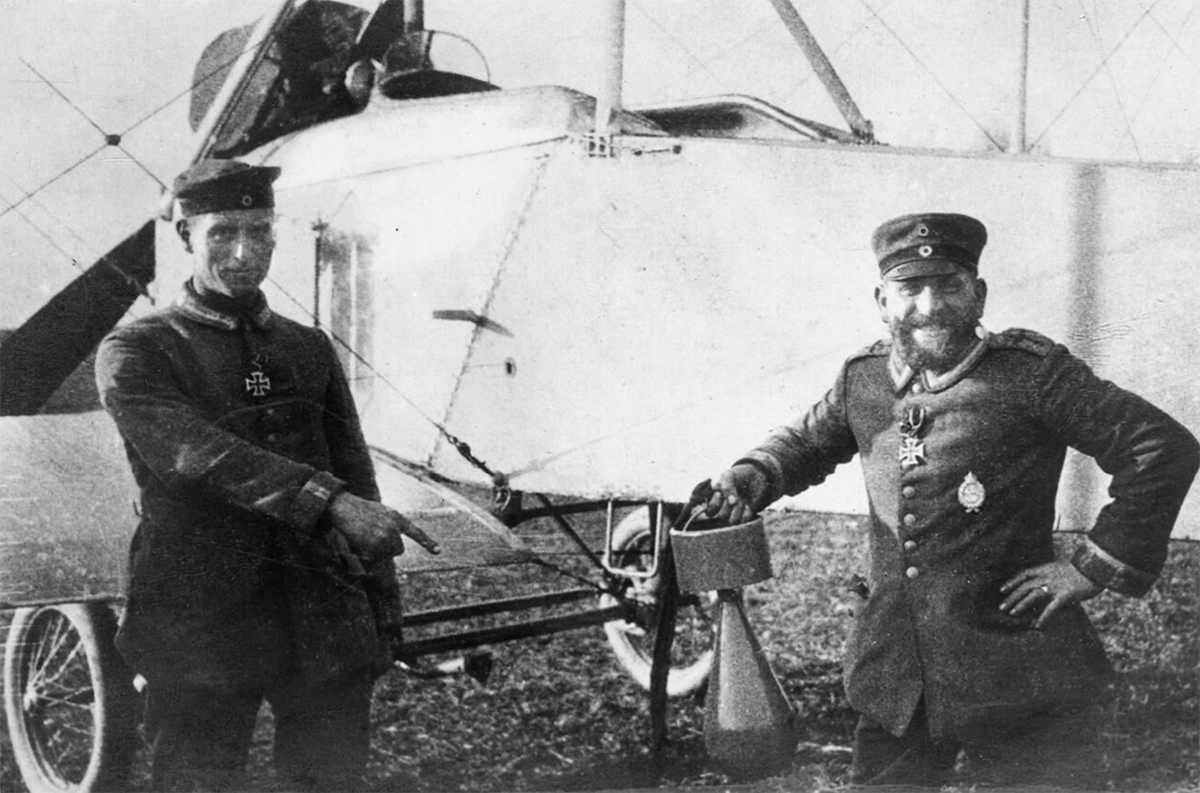
As an instance of this I remember a story about my brother, who while flying in France was forced to land, owing to petrol shortage, in a French army zone. French soldiers immediately rushed up and seeing a machine with strange markings, and a man in unusual clothing, took him to be a German spy and hustled him off to the nearest prison, where he was questioned by a French Intelligence officer.
My brother was first asked to what squadron he belonged and this he was able to answer but, having only recently joined his unit, he was quite unable to tell the Frenchman to what brigade, division or corps he was attached. He was even uncertain as to what sector of the front he came from except that his aerodrome was ” somewhere near Béthune.
The Frenchman found all this most suspicious and kept my poor brother in prison for two whole days before a British liaison officer, who happened to know my brother, came and cleared up the mystery.
Bowed and saluted
To return to my own troubles, we stayed in the German mess until 4 in the afternoon, spending the time chatting with the German pilots.
We ascertained that the aerodrome was situated not far south of Bapaume. The wind had blown us slightly off our course, but we had actually been headed for the nearest point of our lines, from which we were only about eight miles distant.
Once we had said good-bye, bowed and saluted to each member of the officers’ mess, all of whom had treated us very well, we were ushered into another car in which we were driven off to St. Quentin. The journey took nearly two hours and it was dark before we got there.
We were taken first of all to the Army Headquarters, where we were again examined and pumped for information – all kinds of tricks being played on us in an attempt to extract important news which, perhaps fortunately, we did not in reality possess.
An Escaper’s Log
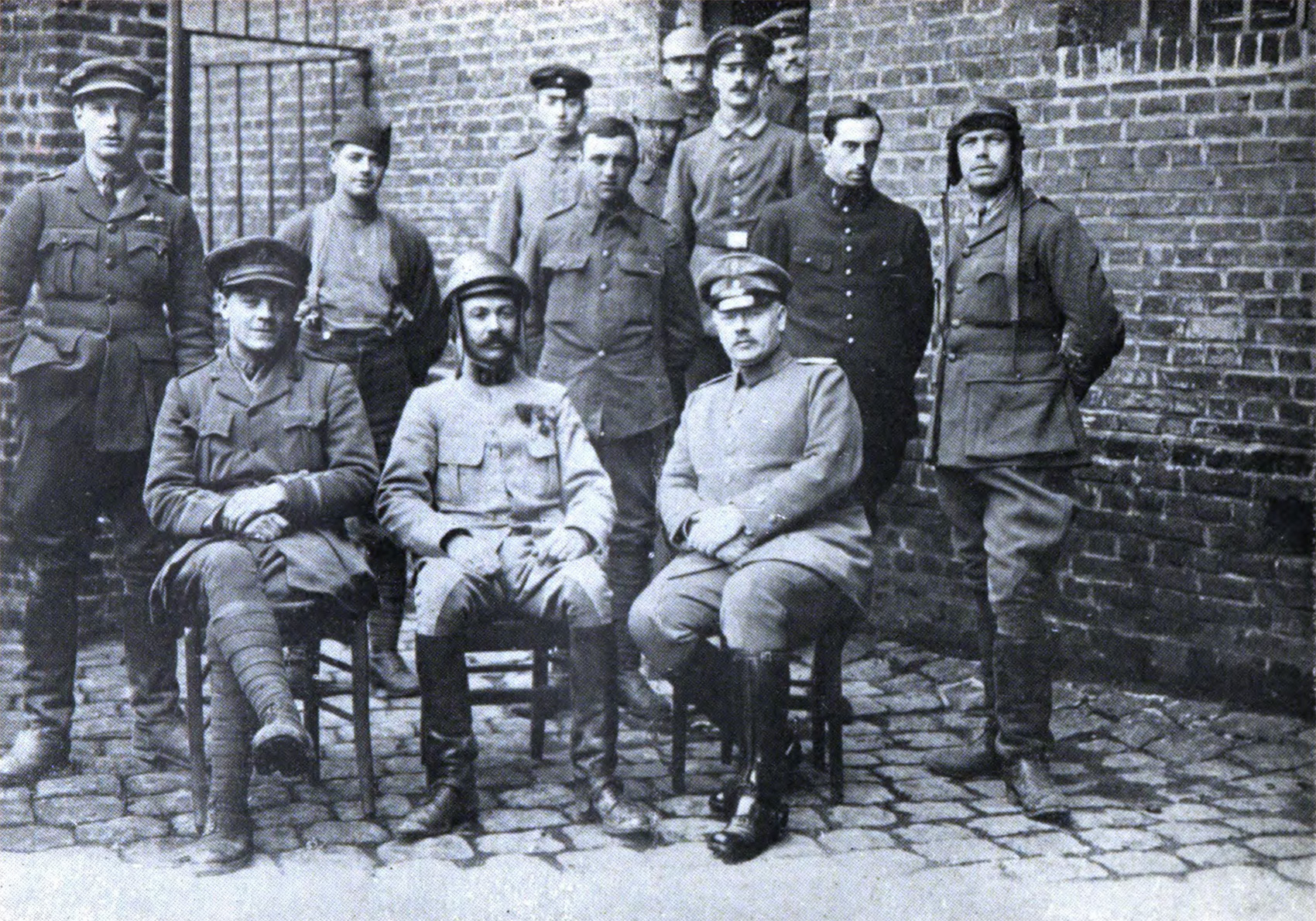
Grinnell-Milne was eventually sent to Germany and imprisoned as a POW, there he be all but set the template for the ‘inveterate escaper’. He attempted numerous half-successful tunnels and schemes, and was sent to increasingly ‘escape-proof’ camps for troublesome POWs.
From The Colditz Story and The Great Escape to The Wooden Horse and even Hogan’s Heroes, we are spoilt for choice when it comes to tales of World War II airmen devising ways to get out of their camps deep in Germany. In fact, their brave efforts had been informed by the élan of a previous generation of airmen who’d had had their wings clipped.
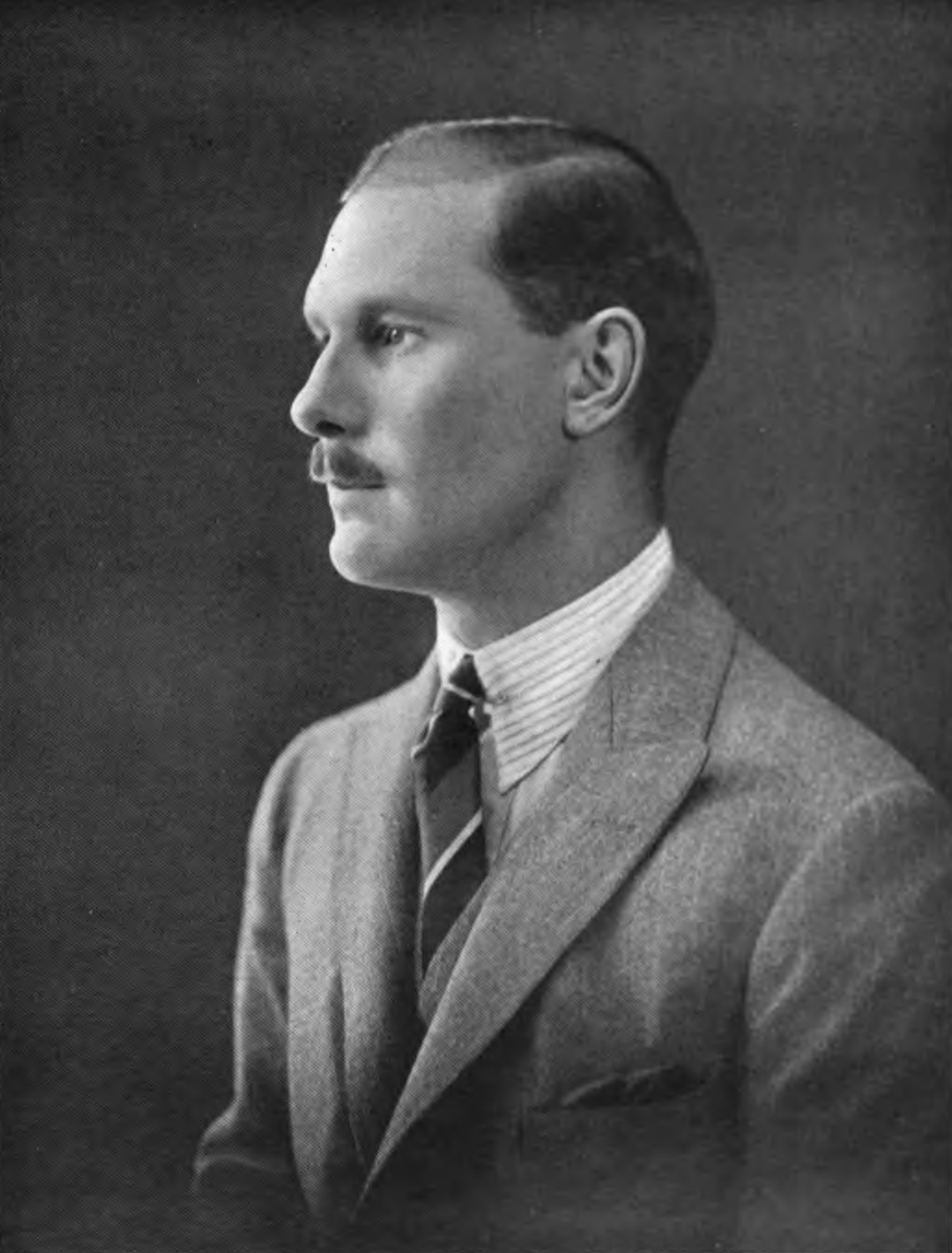
Duncan Grinnell-Milne never gave up and, in April 1918, finally made his way across the Dutch frontier to neutral territory and then England. To out-fox a resistant Air Ministry, went right back to elementary training and worked his way back to France.
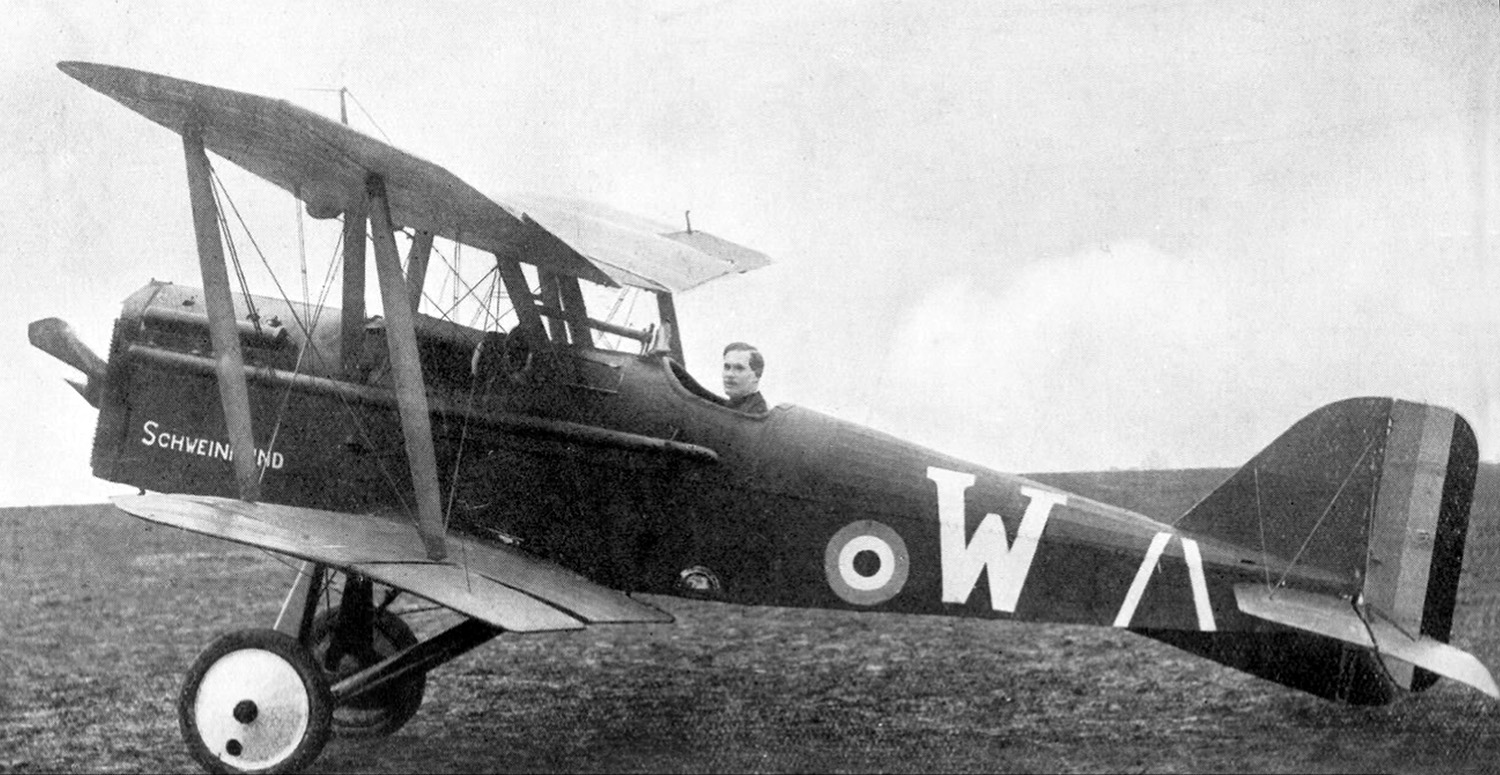
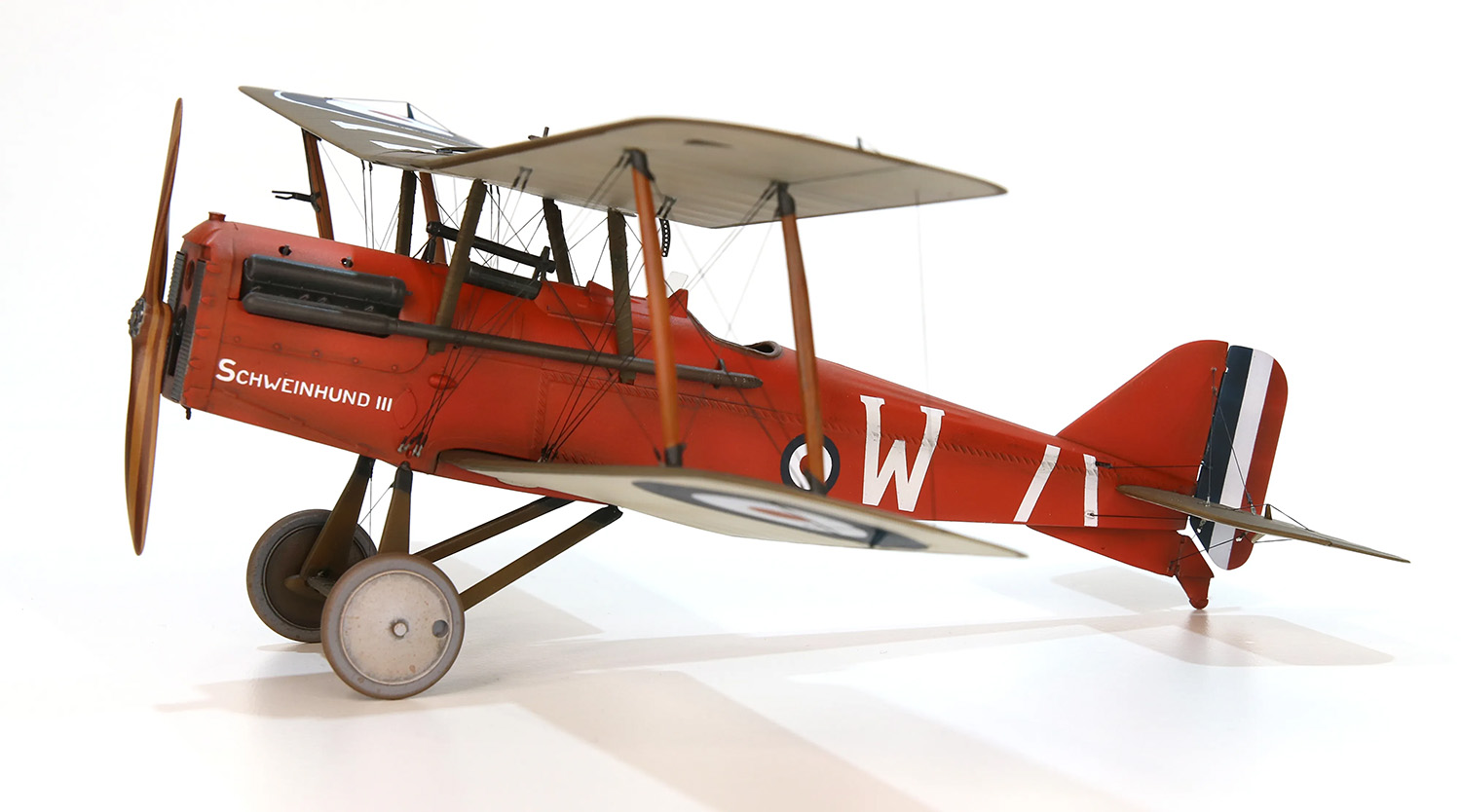
By war’s end he was a flight commander in No.56 Squadron RAF, flying a distinctive red SE5a he named Schweinhund and adding five more victories to his Albatros of 1915. In November, he took over command of the squadron and was awarded the DFC.
Yet another lifetime
He described returning to the air war of 1918 as being like Rip van Winkle, having lived, fought and fallen asleep in one epoch before waking in a completely different one. In yet another lifetime, he would sit down and write his memoirs as the opening to a successful writing career.
This excerpt, from his An Escaper’s Log, was first published in 1926, as interest in Great War experiences began to rise after the inevitable exhaustion, grieving and ‘moving on’ that followed the conflict. The author had just resigned from the RAF, where he had continued to serve in the Middle East, as a test pilot at Farnborough, and as an air attache in France.
He would follow An Escaper’s Log with a full memoir of his RFC/RAF career – titled Wind in the Wires – in 1933. Later, he admitted that he was far from happy with changes that his publisher forced into the narrative, and substantially revised the text before it was republished as a paperback in 1968. That is the version to seek out.
Grinnell-Milne was recalled to RAF service in 1939 and he served again until 1944, reprising his liaison duties with the French (including a hair-raising trip across France as it was collapsing in 1940) before resigning his commission to join the BBC in 1944 where he made propaganda broadcasts in French and German.
If you’d like to read more, you can. A digital copy of An Escaper’s Log is available for free via the Internet Archive, and signed-in members can borrow Wind In The Wires too.
Otherwise (and with no affiliate interest on my part) if you’d prefer a physical copy, Wind in the Wires and An Escaper’s Log was republished as a combined volume by Pen & Sword in 2016. This should be easy enough to find through good second hand book sites or stores, or as an e-book direct from Pen & Sword.
I can assure you it is a fantastic read.
Good hunting!