I started the other day berating myself over the time it’s been since my last post.
Maybe I’m still exhausted from the Merlin Mustang story – it’s not over yet, by the way – and it’s not like there aren’t more stories in the pipeline…
In fact, the current iteration of my schedule includes a chance for four solid hours of writing per week, which is more of a luxury than it sounds after the previous iteration bargained me down to five-eighths of none.
So while I have articles-in-waiting from the dawn of powered flight to the 1990s, what I still lack is a real opportunity to locate, research, edit and caption the images. That aspect of airscape can take as much effort as the stories themselves.
Regardless, you didn’t subscribe to ’complain-scape’, so I’ll come to the point.
Heavy Equipment Operator Robert Liggett on a mini-dozer, loaded aboard a flatcar with fuel and tools at the Elmendorf AFB railway freight depot. We’re not sure if this is before, after, or even related to the B-29 recovery mission. But still a cool pic, right? (Liggett Family. All rights reserved.)
Cold warrior
Waiting in my inbox that beratey morning was a small trove of colour photos showing Robert Liggett and his detachment of the USAF 39th Aircraft Repair Squadron in Moses Point, Alaska, during April 1952.
If you need a reminder, Robert and his comrades were sent north to Moses Point from Elmendorf AFB outside Anchorage to salvage WB-29 #44-87744, which had spun across the gravel strip and broken her back during an emergency landing on April 8th.
You can read more about Robert, the recovery mission, and -87744’s top secret ‘Ptarmigan’ flight from Japan to Alaska (with more photos) in ‘A Journey Shared’ from two years ago.
Sadly, Robert Liggett passed away shortly after that article was published. R.I.P.
It was a real privilege to preserve his story beforehand.
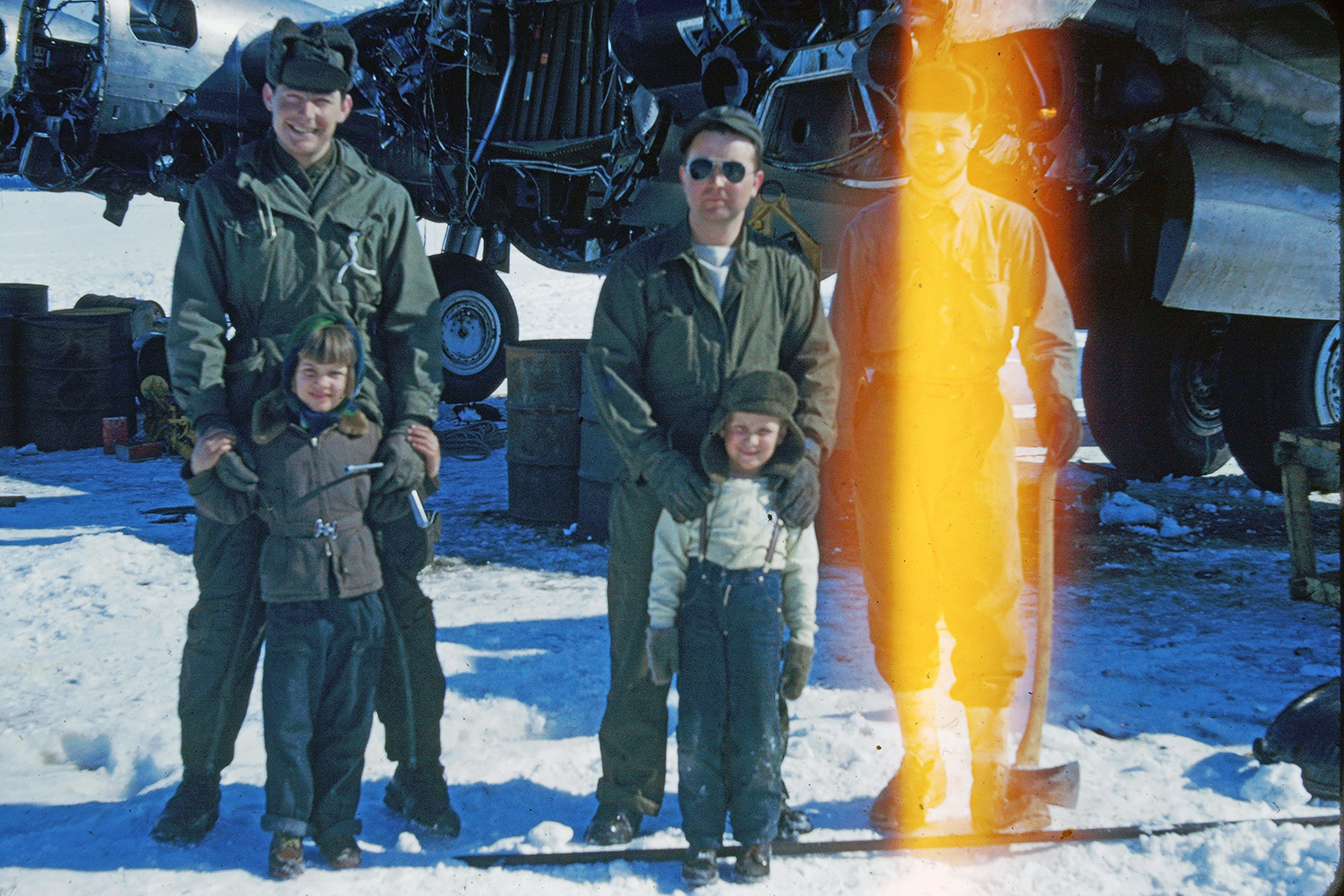
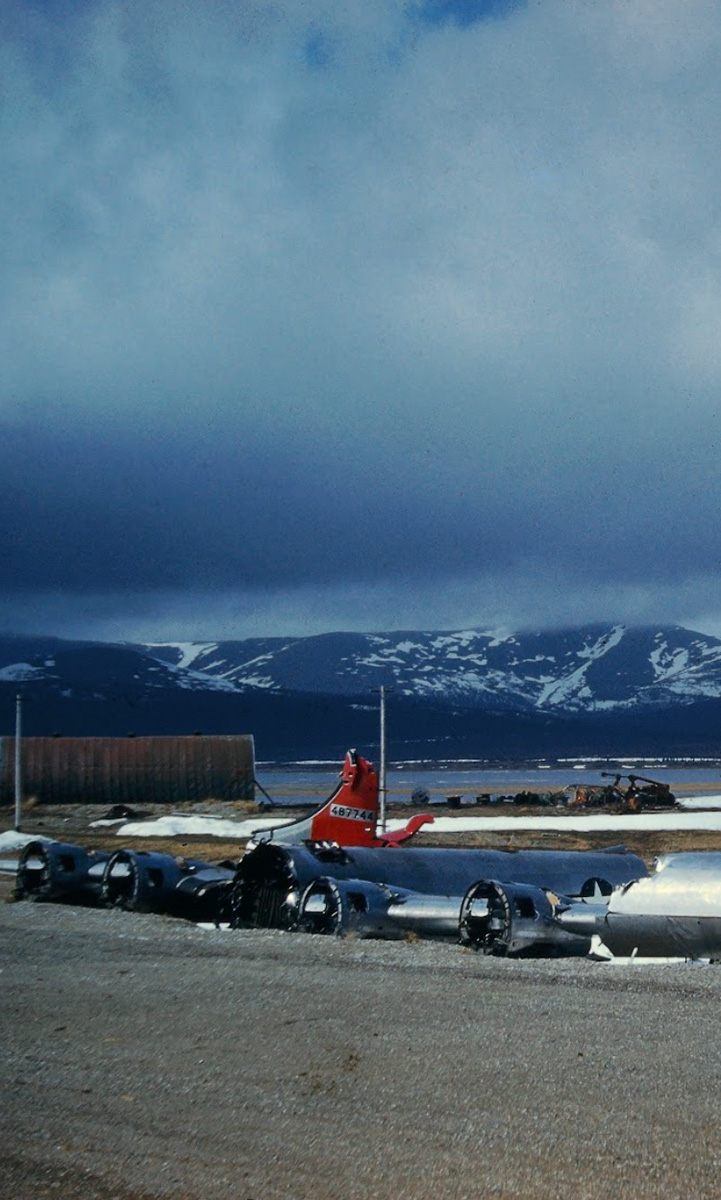
Opening up the Number 2 engine. It’s clear from the propeller blades that they were still under power when the aircraft spun into the snow. At this point, the aircraft is lying where it stopped. Note the fuselage break just forward of the main spar, and the top-secret ‘bug catcher’ awaiting removal from the top of the fuselage. (Liggett Family. All rights reserved.)One of the crewmen on the stripped hull of the WB-29 after it had been dumped. The tail section is plain to see and, a little further back, the forlorn wreck of a C-47 which had evidently come to grief at Moses Point some time earlier. Notice that the snow has completely gone by this time, so it was not a quick job. (Liggett Family. All rights reserved.)An unfortunately light-scarred print of the crew in front of the WB-29, which is now engine-less and on its gear, but separated from the nose section. So presumably this is before it was moved to its final dumping-place. The kids belong to locally-based personnel. That’s Robert Liggett on the left, with the ever-present little girl that he remembered so clearly when we spoke about the mission. (Liggett Family. All rights reserved.)The abandoned carcass and tail section of WB-29 44-87744 after it was stripped of its engines and pushed to the side of the Moses Point runway. The separated nose section lies to the right. None of this is still there now, by the way; not even the foundations for the Nissen hut. (Liggett Family. All rights reserved.)
Shared with deep gratitude to Robert Liggett’s family – and his memory…
You mentioned the snow being melted . If I remember correctly, dad said after securing the engines and doing all they could, the rescue crew went back to the base at Elmendorf. They returned to Moses Point in July to finish the job. Not sure how long they were there after that.





Outstanding job! I appreciate your attention to detail and honouring my dad with this wonderful story.
My heart and eyes are full. Thank you so much LaDona
You mentioned the snow being melted . If I remember correctly, dad said after securing the engines and doing all they could, the rescue crew went back to the base at Elmendorf. They returned to Moses Point in July to finish the job. Not sure how long they were there after that.
Ah… makes sense. Thanks for clearing that up.