
Part Two: All the way with N.A.A.
As we’ve seen in Part One of this story, the British – and Rolls-Royce specifically – hold pride of place on the Merlin Mustang’s birth certificate.
But the reality is that while Rolls-Royce had built a brilliant engine, their experiments with the Mustang were something of a dead end. The P-51’s future would be made in the USA. And, as we’re about to see, it likely would have happened with or without Ronald Harker’s eureka moment.
Only half the story
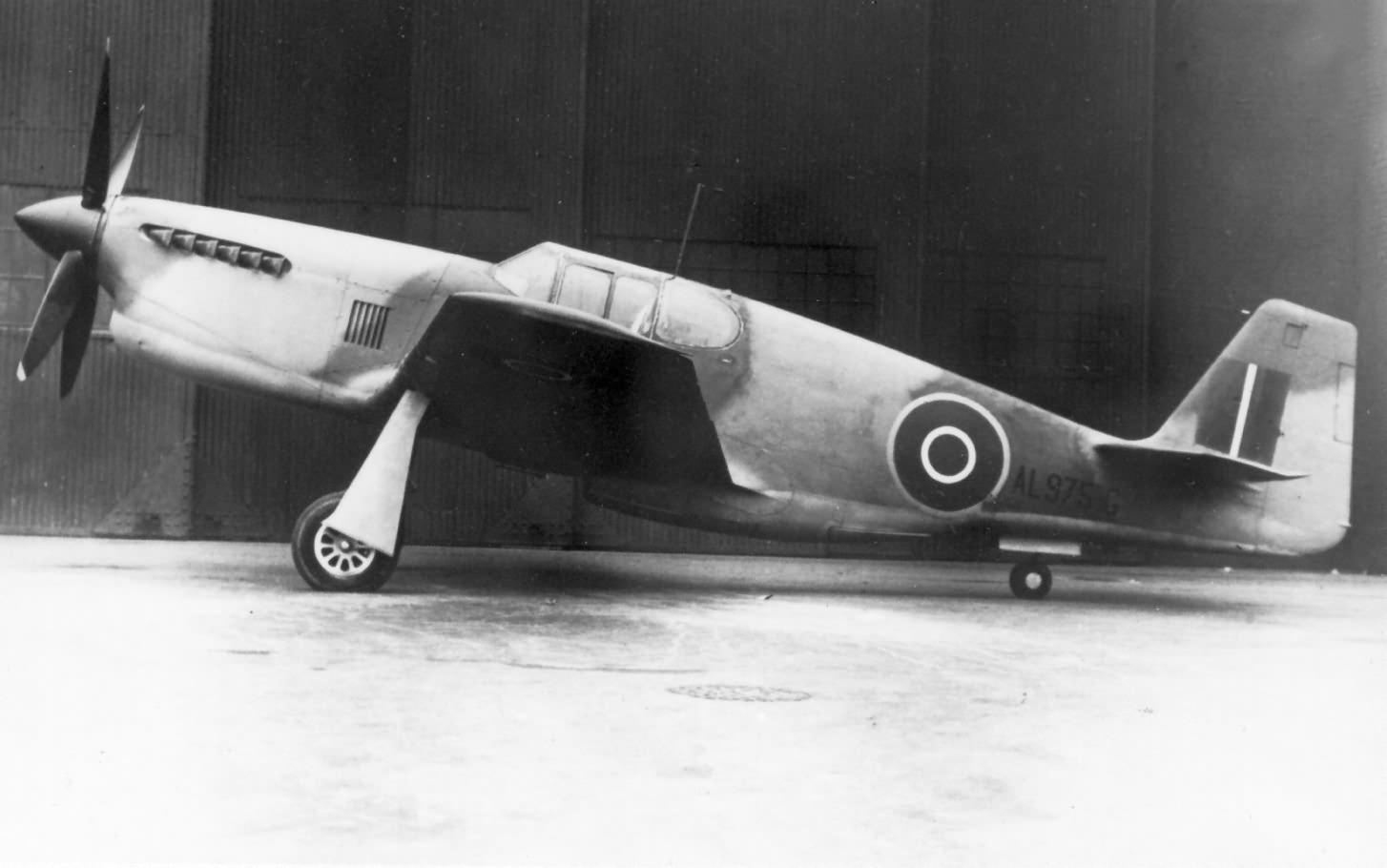
Few people could deny that the Merlin installations designed by Rolls-Royce were, to put it politely, functional. True, the upper cowling was now free of the long snorkel needed for the Allison’s down-draught carburettor, but the underside bulged with a deep, blunt chin inlet to feed the Merlin’s up-draft supercharger intake and create room for the large supercharger radiator that Rolls-Royce engineers had attached to the underside of the engine block.
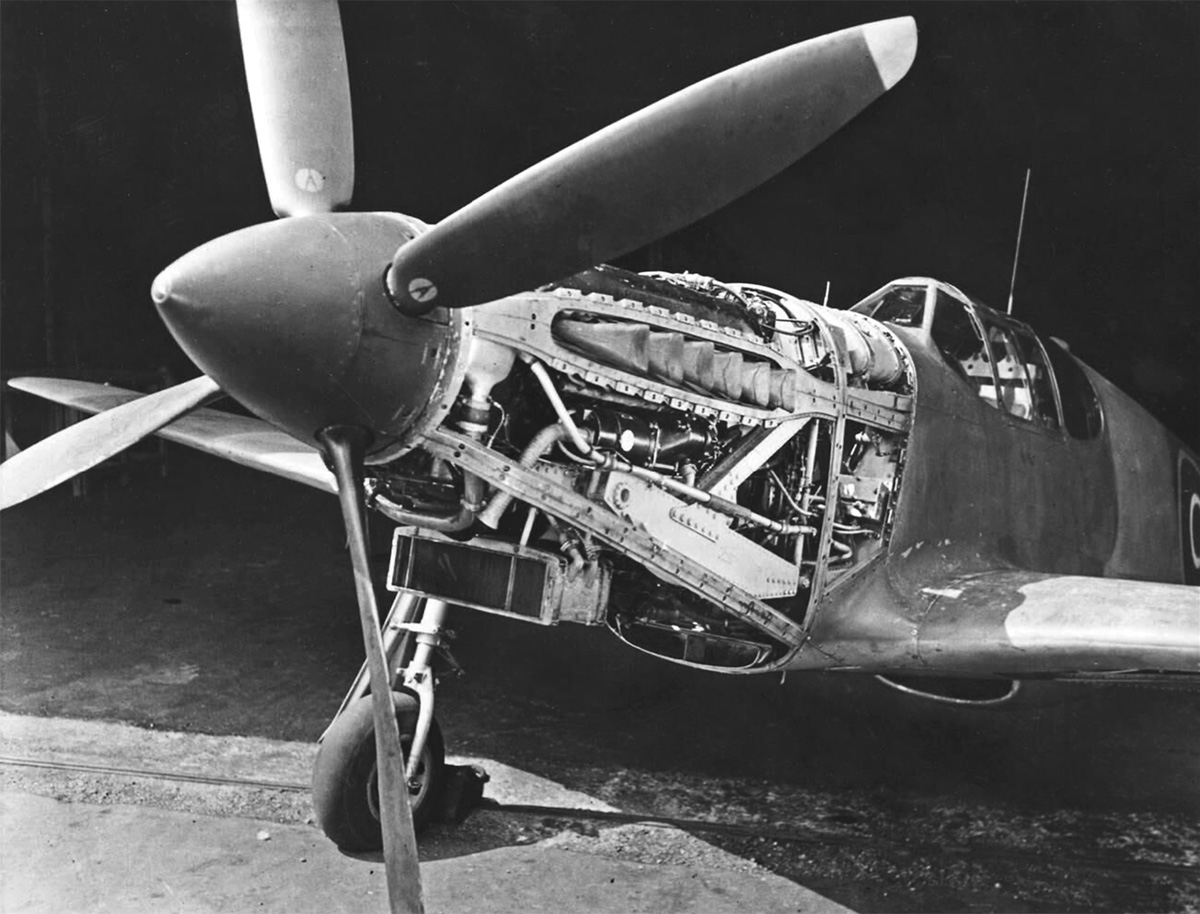
In fact, the front end of a Mustang X wasn’t much more streamlined than that of a Curtiss P-40.
The famously smooth nose of the P-51B and C was the result of near-parallel project happening back in the USA. As always in the Mustang’s development, Britain was only half the story.
Back in the USA
For virtually the whole time that the original Mustang had been in development, production and evaluation for engine conversion, the Packard Motor Car Company had been building the Rolls-Royce Merlin XX in Detroit under the US designation V-1650-1.
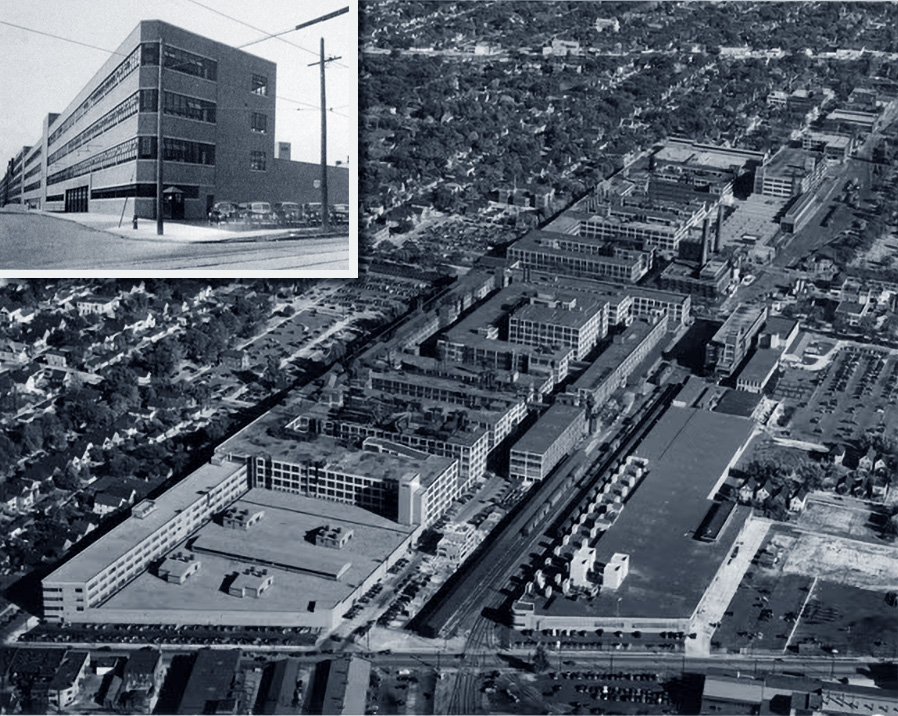
An initial order had been placed in September 1940, while the Battle of Britain still hung in the balance, and engines had been rolling off the lines since August 1941. The majority were installed in Canadian Car & Foundry Hurricanes, Avro Lancasters and Curtiss P40Fs, as the Packard Merlin 28 (because naming Merlins can never be made too complicated).
Packard had also been aware of the improved twin-blower -60 series Merlins since late 1941 and, with typical foresight, had promptly taken steps to obtain a production license and manufacture their own variation of the Merlin 63 as the V-1650-3. This would be the Mustang’s Merlin.
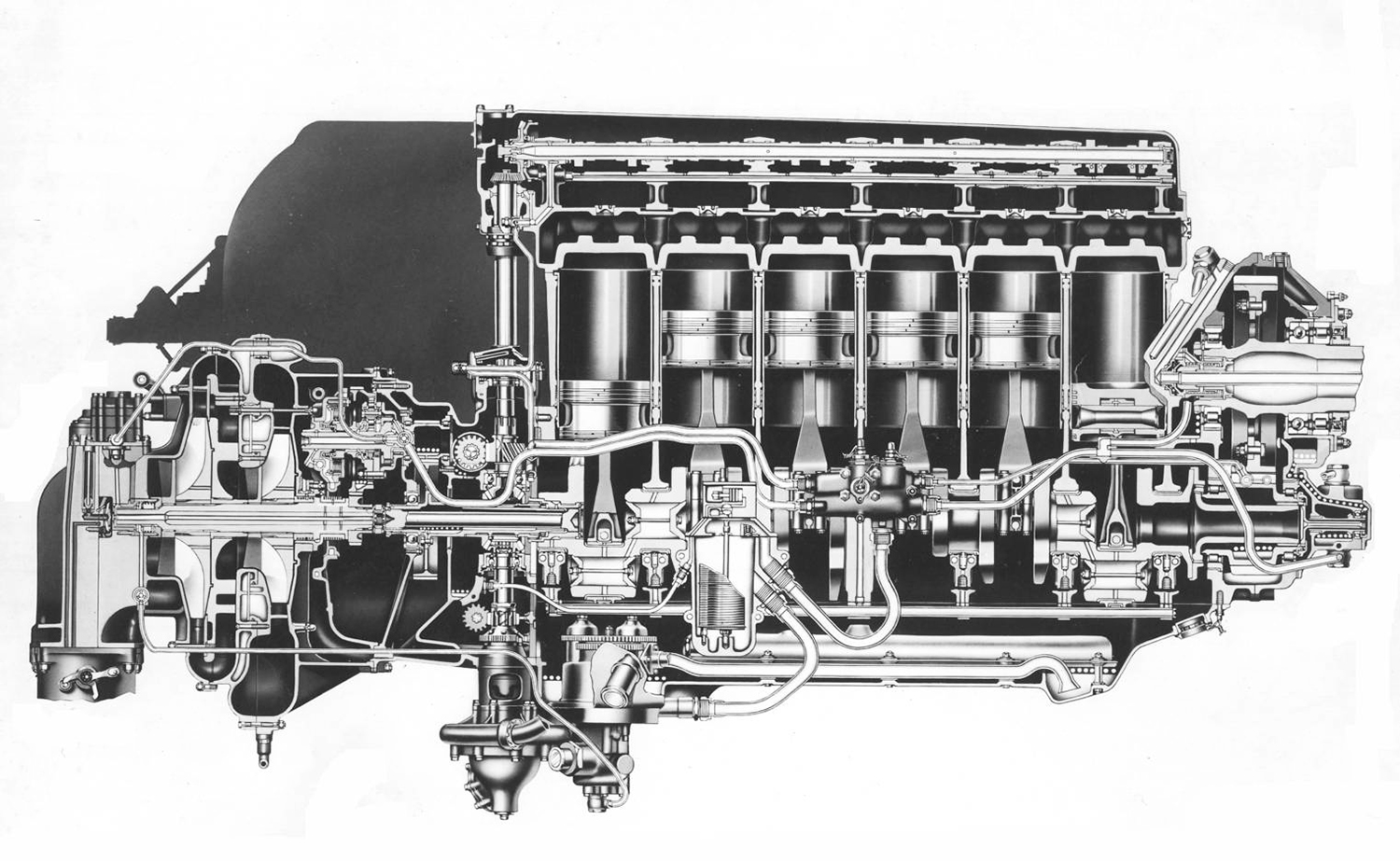
The first production V-1650-3s would see the light of day in December 1942, while conversion to full production would roll through over the subsequent months. Further refinement would lead to the even better V-1650-7 (equivalent to the RR Merlin 66) which would power the P-51D / Mustang IV.
Taking up the same torch
Meanwhile, many other pivotal people had also seen the potential of a Merlin XX powered Mustang – and a high ranking group that included the US Ambassador in Britain, John C Winant, and several senior RAF officers, had advocated for an improved Mustang when General ‘Hap’ Arnold, Chief of the USAAF, was in London at the start of June 1942.
General Arnold, for his part, quietly pushed the Merlin Mustang concept forward as soon as he returned to the States. He had his Chief of Materiel, Brigadier General Oliver Echols, arrange for two pre-production Packard V-1650-3s to be delivered to NAA as soon as they were ready, to help with development.
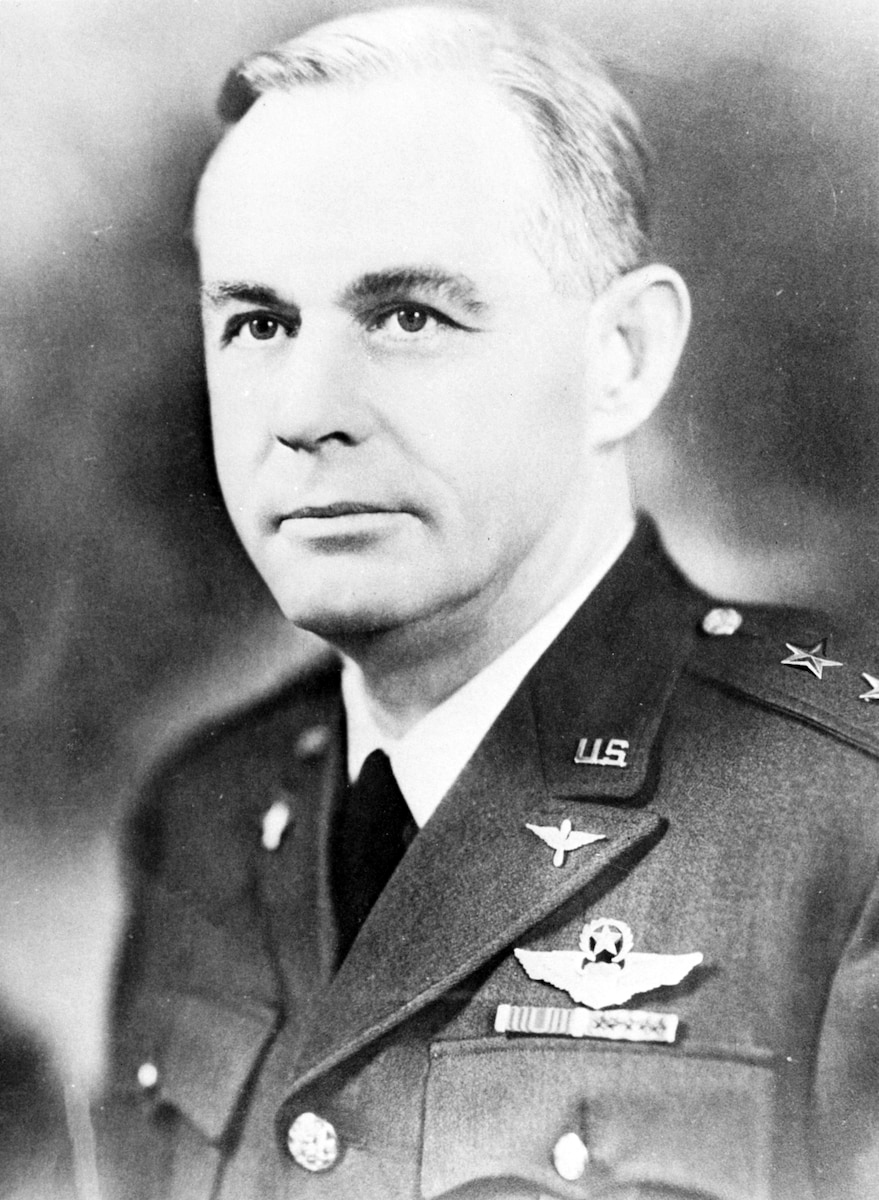
So it was that North American Aviation were already aware of the new high altitude Merlins and the benefits they could bring to the company’s slippery fighter airframe within weeks of Rolls-Royce taking up the same torch.
NA-101
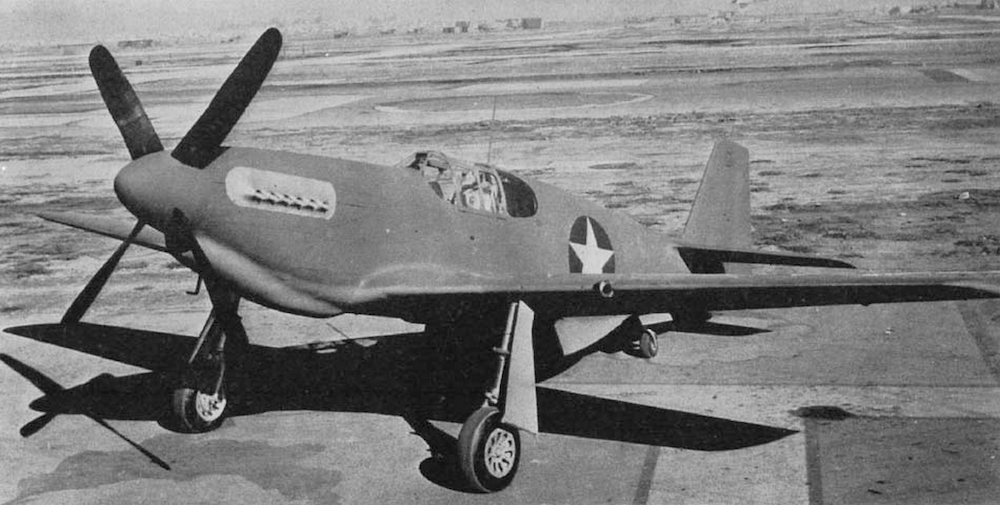
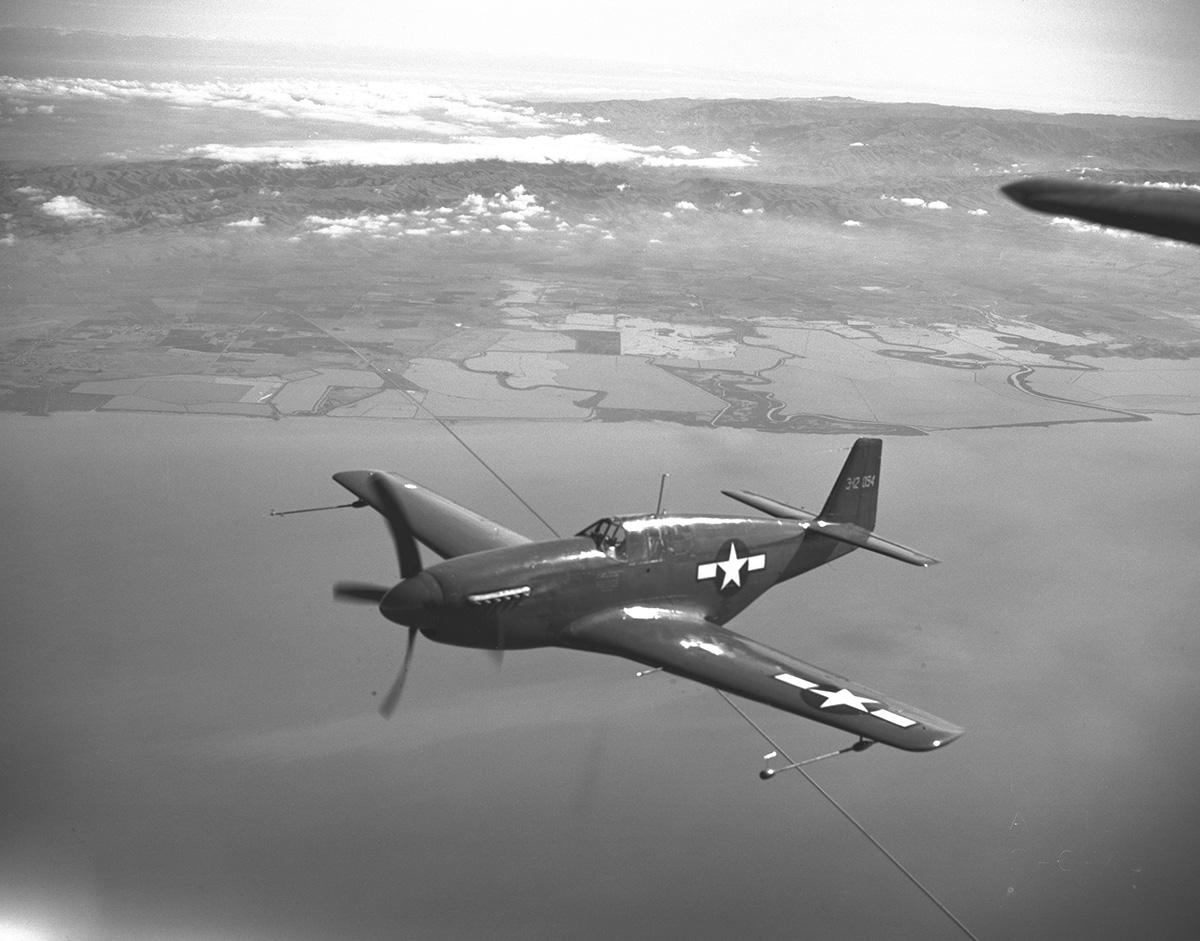
Authorisation to proceed came from the USAAF as quickly as 12 June 1942 and, at almost exactly the same time as Rolls-Royce was installing Merlins on the Mustang Xs, NAA were developing their own Merlin installation as the NA-101. Their more elegant concept was submitted to the War Department for approval on 24 July and a development contract was signed on 31 July under the official type designation XP-78.
In fact, that process was little more than a formality. The USAAF (whose lack of interest in the early Mustangs is the subject of much chatroom comment) placed a firm order for 400 P-78s in August 1942 – two months before the first Merlin-powered Mustang flew in Britain. Additional contracts covering 1,350 and 1,588 Mustangs were placed later that same year.
When General Arnold updated President Roosevelt about the Merlin Mustang project in November 1942, he told the President that orders for no fewer than 2,290 new P-51s were already in hand. This was still weeks before the first prototype flew at Inglewood and six months before the first true production airframe came off the line.
Fighter sans pareil
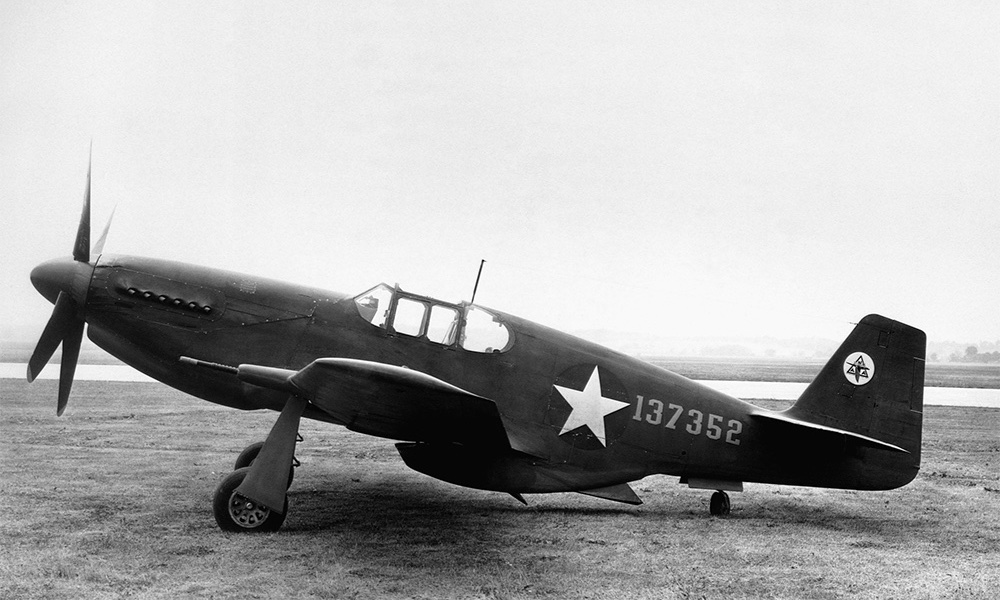
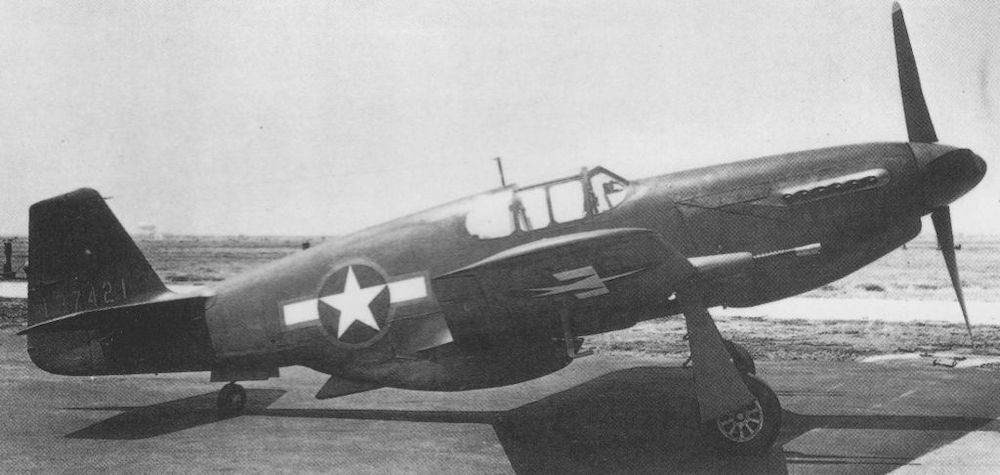
To begin, two development XP-78s would be converted from a pair of NA-91 cannon-armed Mustang IAs (c/n 91-12013, #41-37352 and c/n 91-12082, #41-37421) which were pulled from the current British production run. Being Lend-Lease aircraft, the US government could simply help themselves.
The type designation was officially changed from XP-78 to XP-51B in September.
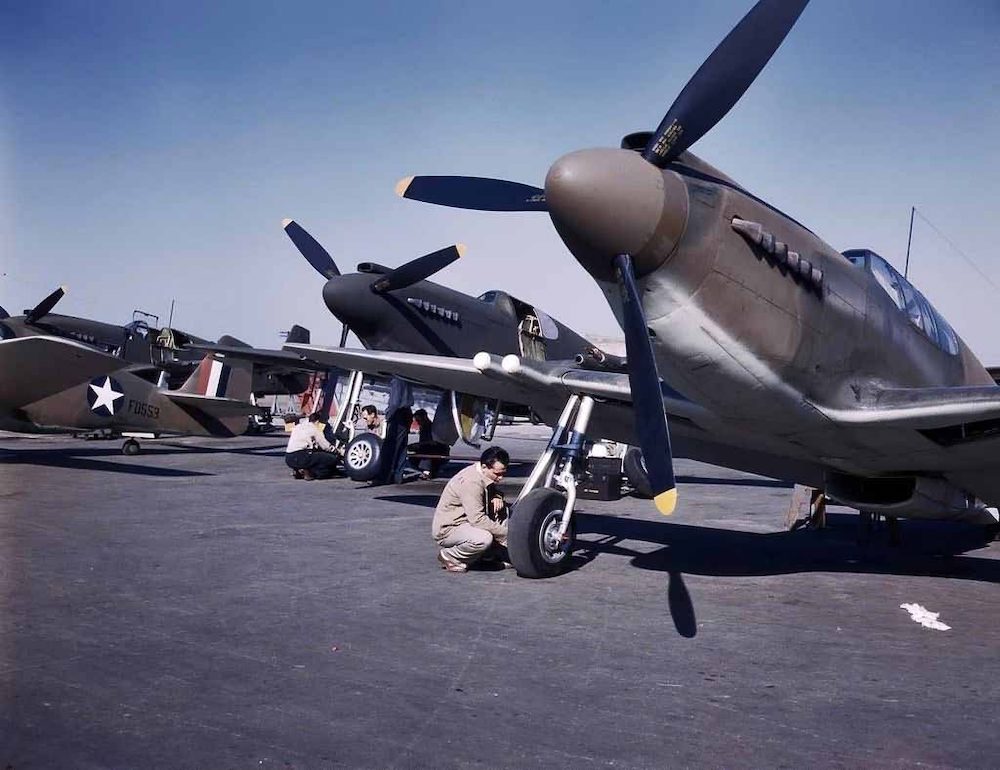
Meanwhile, the North American and Rolls-Royce engineering teams exchanged information freely. A spirit of friendly competition developed and, when Rolls-Royce got AL975 airborne on 13 October 1942, Inglewood sent a letter to Hucknall congratulating the Brits on beating them.
However the Americans had not been sitting on their hands. With typical dedication and panache, NAA had been working to make the newest Mustang their fighter sans pareil. And it wouldn’t be easy.
Six weeks of head-scratching
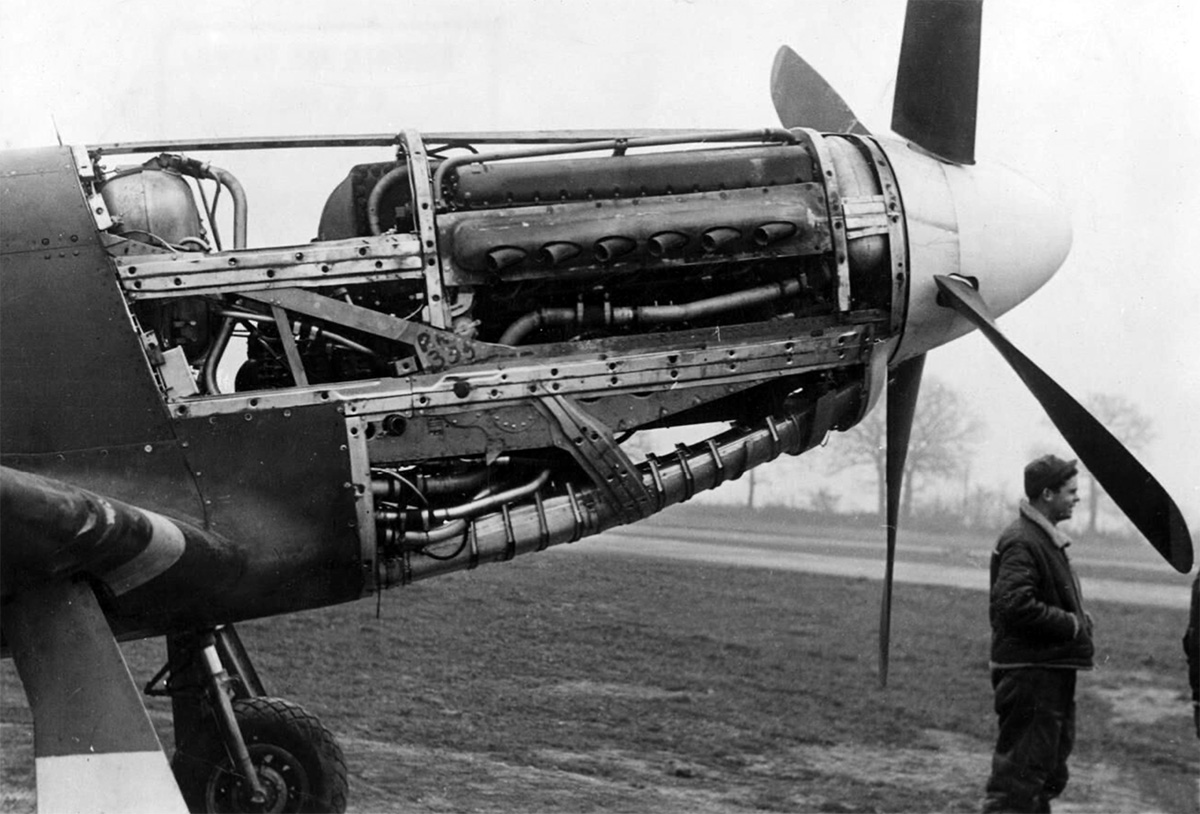
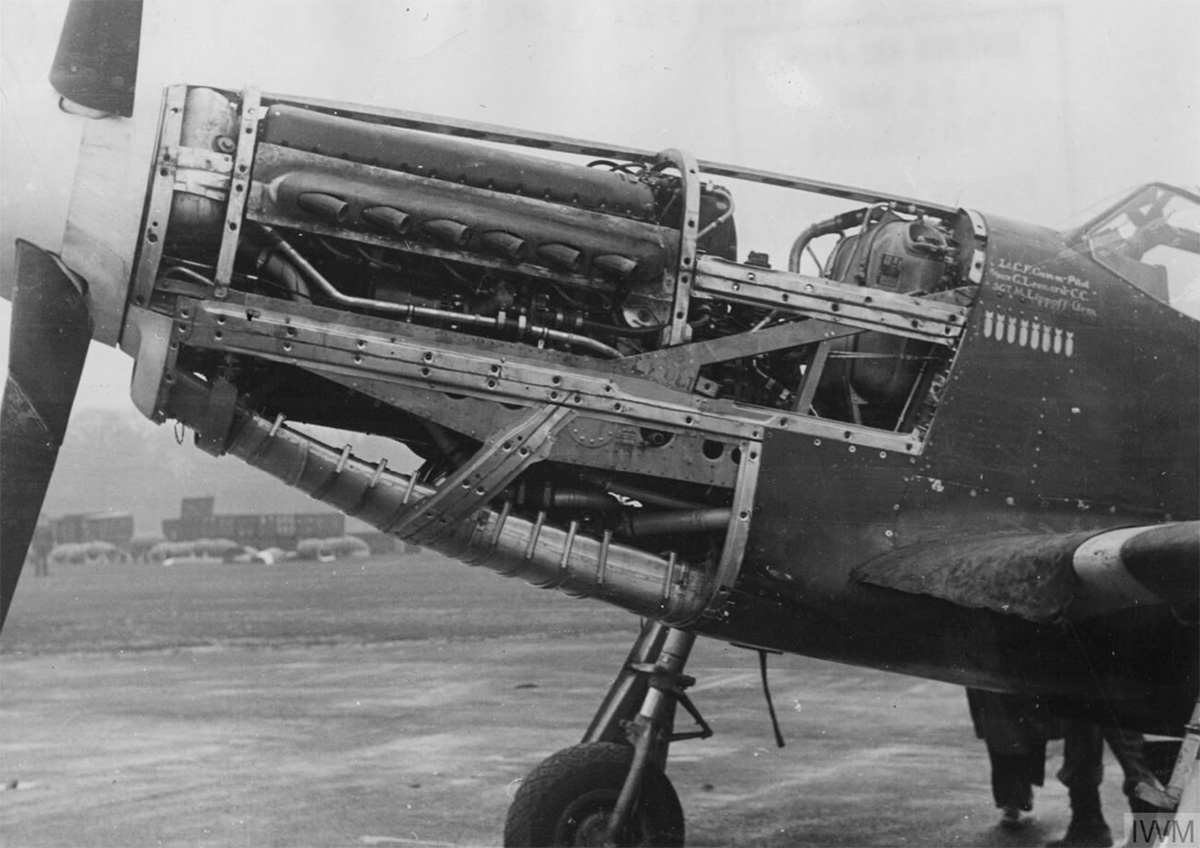
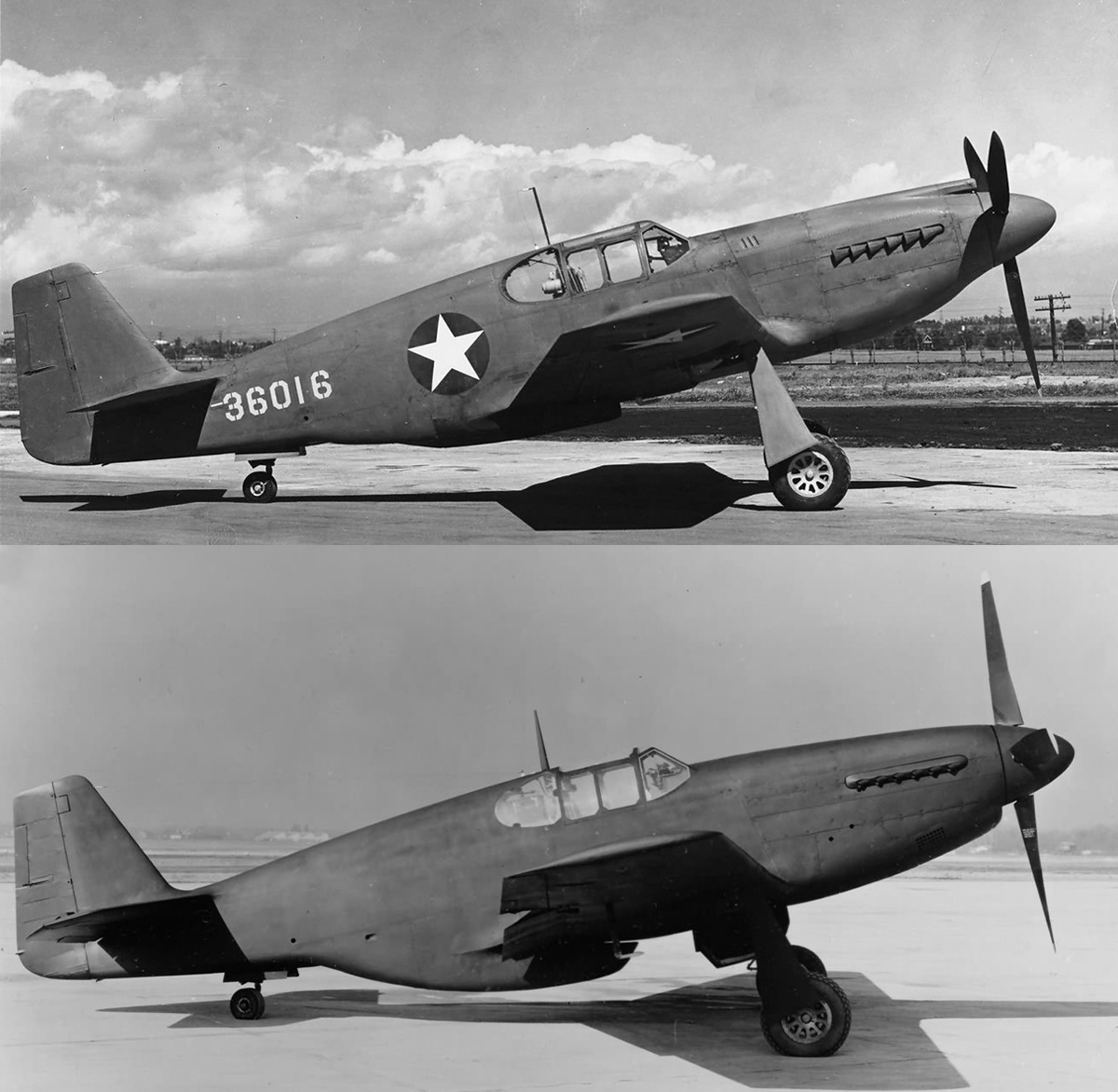
First, they engineered a completely new box-beam aluminium engine mount that hugged the Merlin while supporting the pressed metal cowl frames. Better still, the entire unit could be completed separately and fitted to the airframe as a firewall-forward sub-assembly.
It wasn’t just an incredibly elegant design; it was a master-stroke of production efficiency.
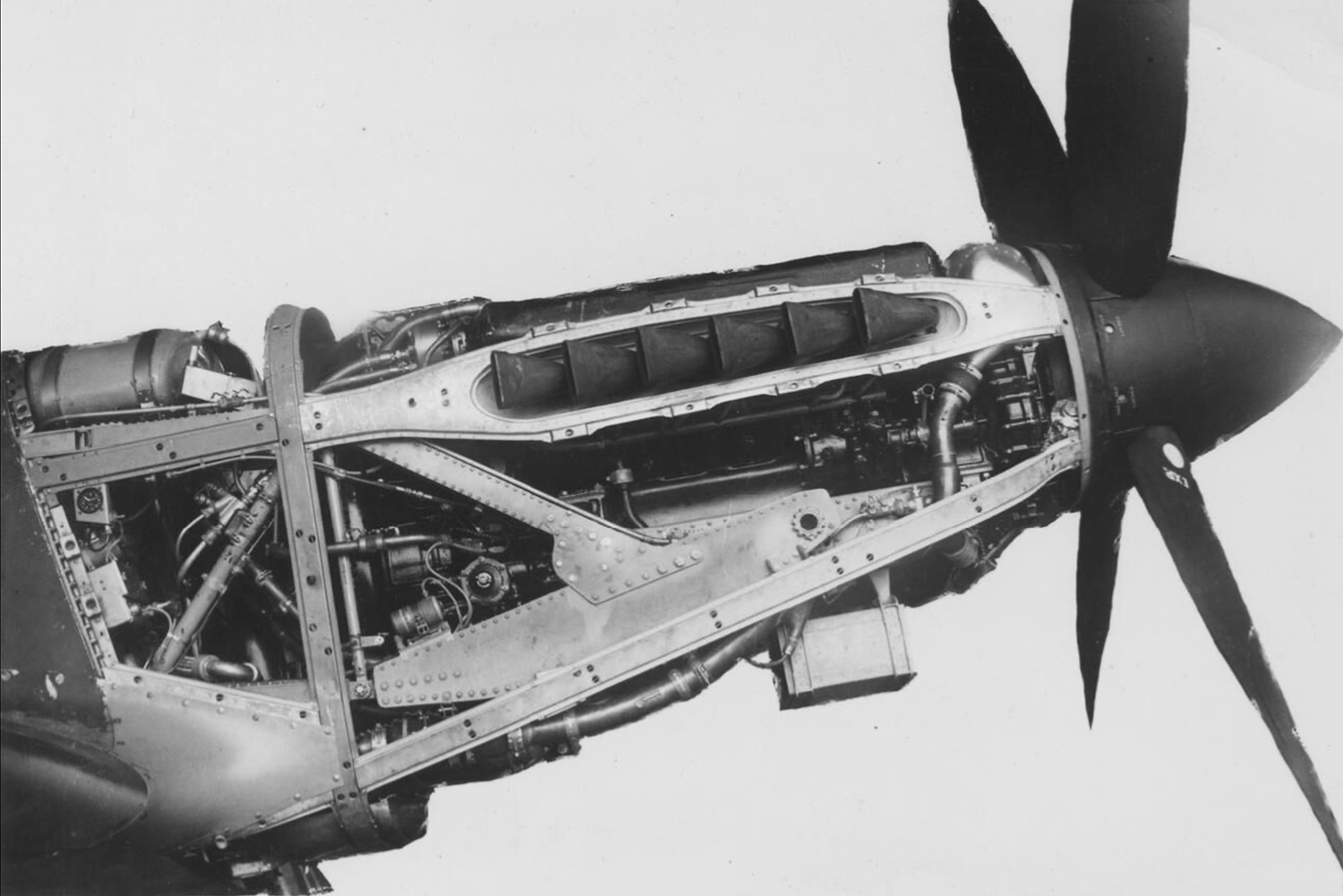
Fixing the gaping chin scoop of the British conversions was more complicated. Putting the new supercharger radiator was probably just a simple expedient for the Rolls-Royce engineers (it would end up under the left wing of production Spitfires), but it wouldn’t do for the sleek conical section lines of the Mustang.
Fundamentally, this second radiator was huge. Rolls-Royce had worked out that the inlet charge would be heated by 205ºC (401ºF) after passing through both compressor stages. Weighing up a range of conflicting requirements, they landed on a 40% reduction (around 80ºC) as the sweet spot for their radiator requirement. And that needed a coolant flow of 30 gallons (113.6 litres) per minute!
Over six weeks of head scratching and late night drafting, NAA engineers managed to cram the extra radiator into the ‘doghouse’ behind the Mustang’s famed belly scoop, alongside the engine coolant radiator and behind the oil cooler. This kept the Mustang’s nose profile as fine as possible, and meant the heat from the added radiator would help augment any Meredith Effect thrust from the variable doghouse vents.
Their own headaches
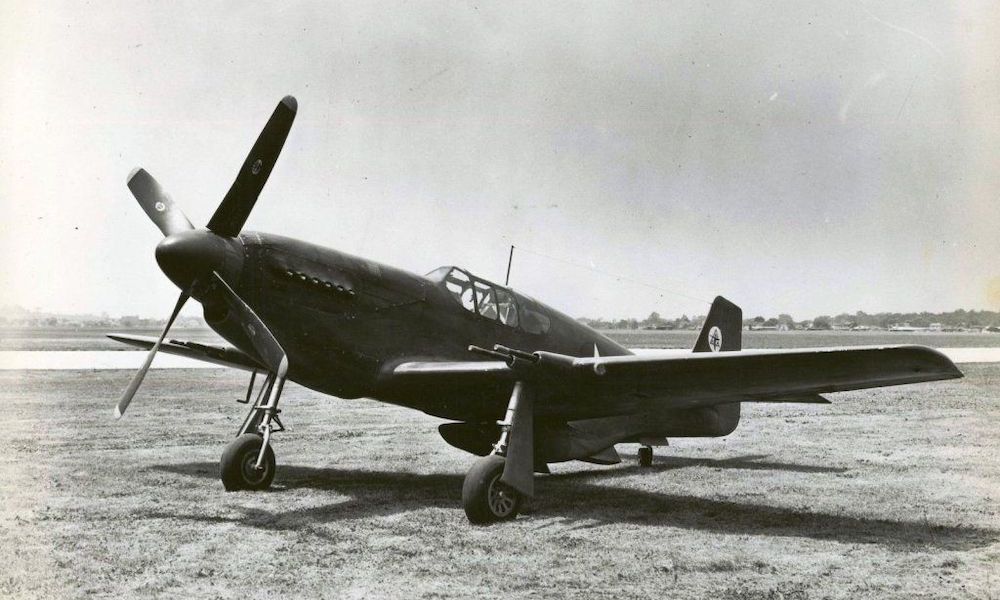
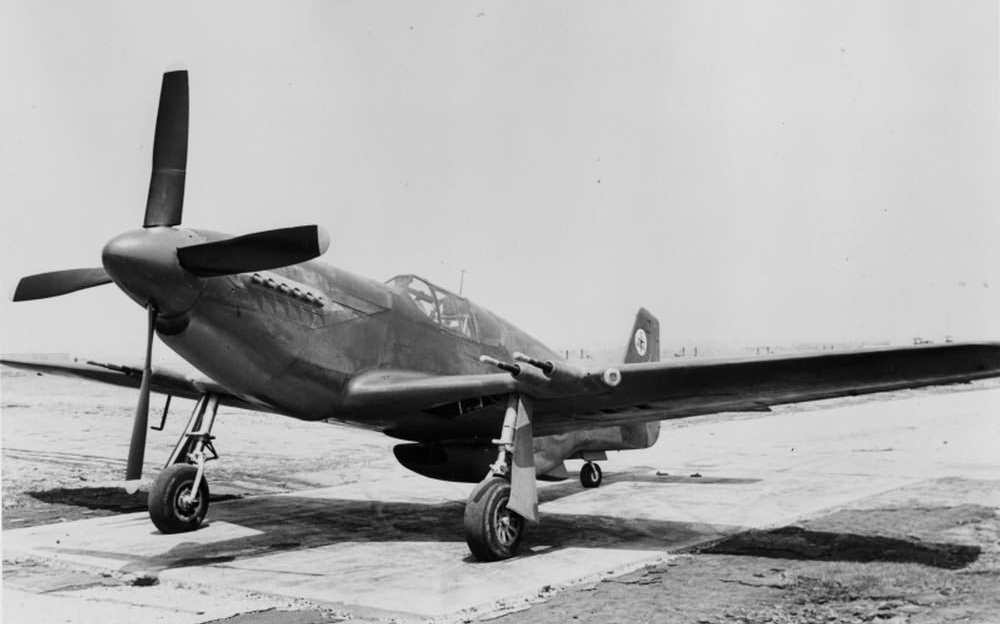
Then, the rush-delivered Packard V-1710-3s caused their own headaches. The first example overheated during ground running, so a replacement had to be urgently flown out from Wright Field. It arrived on 18 November and NAA test pilot Bob Chilton was finally able to take the first XP-51B (41-37352) aloft on the 30th.
The result was a near-disaster.
After less then 40 minutes, the oil temperature was skyrocketing as the pressure fell away. Trailing a long cloud of boiling coolant vapour and oil smoke, Chilton was lucky to get the aircraft back to Inglewood in one piece – and that engine, too, was toast.
A critical problem
This was a critical problem. Based on the contracts signed in August and September, Merlin-ready Mustang airframes were coming down the line. Almost 50 were already on the factory ramp awaiting completion of the engine tests.
Desperate, the team pulled the entire cooling system apart. They discovered that the Merlin used copper tubing for its radiator plumbing. Furthermore, Rolls-Royce – and therefore Packard – used a 70/30 mix of glycol and water for the coolant, whereas Allison had used 100 percent glycol.
None of this should have been an issue – except that North American had designed the Mustang with a purpose built aluminium radiator. The hot water in the coolant was acting as an electrolyte, making a battery of the copper tubing and the radiator. The severe oxidation and precipitation his triggered was quickly clogging the radiator passages.
A fix was urgently needed.
Back in the air
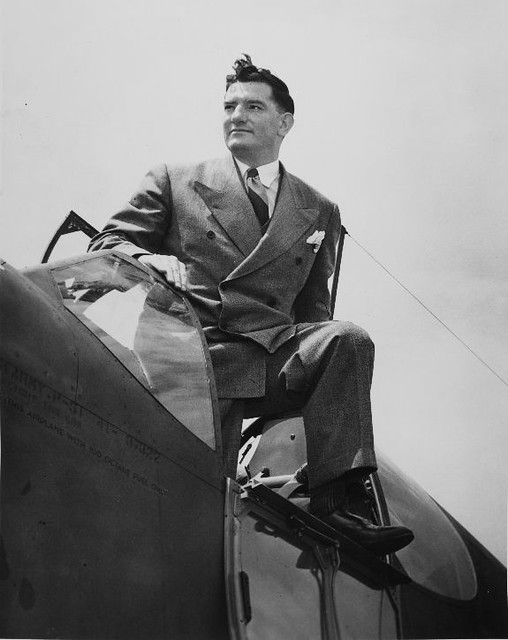
Mustang designer Edgar Schmued personally flew to Washington DC to consult with the Bureau of Standards about possible solutions. The Bureau assigned a specialist who recognised a similar reaction from when beer was first shipped in aluminium kegs. He suggested sloshing the radiators with lacquer-based Keg-Liner to insulate the aluminium from the copper.
It worked.
Chilton was back in the air on 4 December and, over the the following few weeks, he pushed the new aircraft to a level speed of 441mph at 29,800 feet and demonstrated its phenomenally improved climb performance over the earlier Mustangs.
For a more permanent solution, NAA worked with the Harrison Radiator division of General Motors to design a new, larger radiator with separate sections for engine, oil and supercharger cooling, while Union Carbide developed a new corrosion inhibitor called MBT.
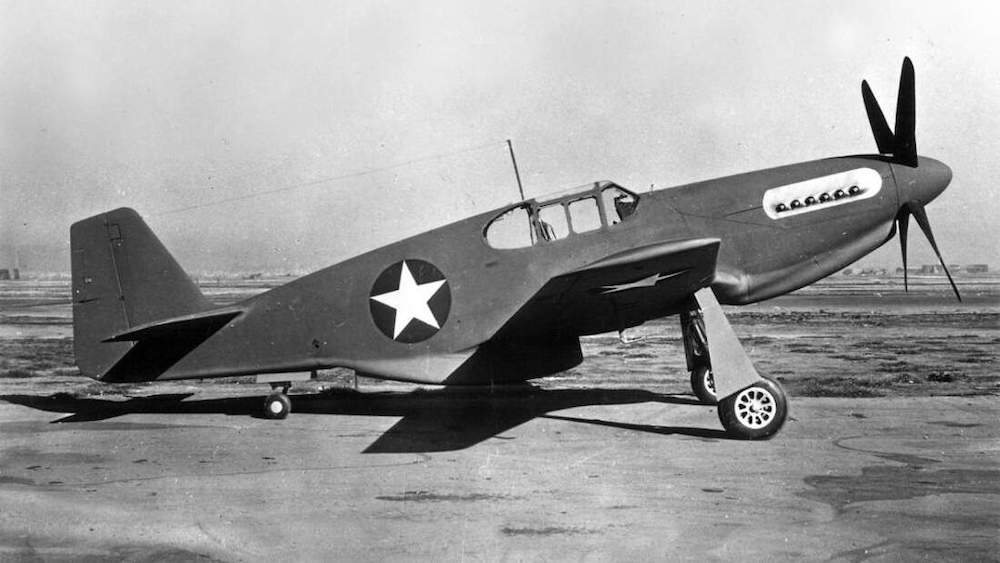
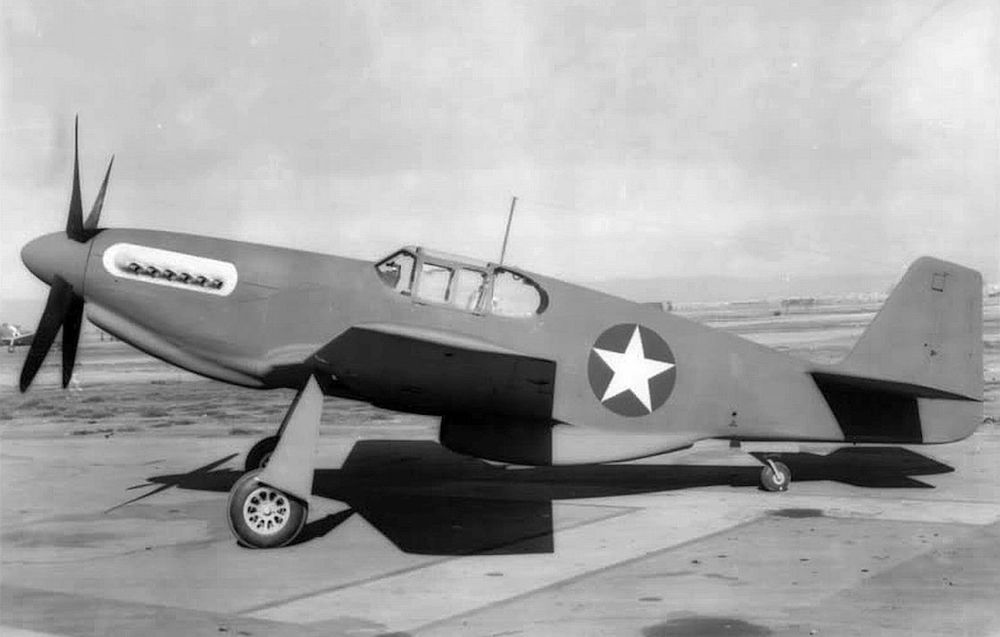
Incredibly, this improved system was ready and installed in the second XP-51B prototype, which first flew on 2 February 1943.
And the rest, as they say, is history…
A source of aerodynamic problems
You’re not falling for that again, are you?
True to Murphy’s Law, the new radiator installation meant the Mustang’s belly scoop needed a redesign. That work would continue well into 1943, even as more and more P-51Bs came off the line.
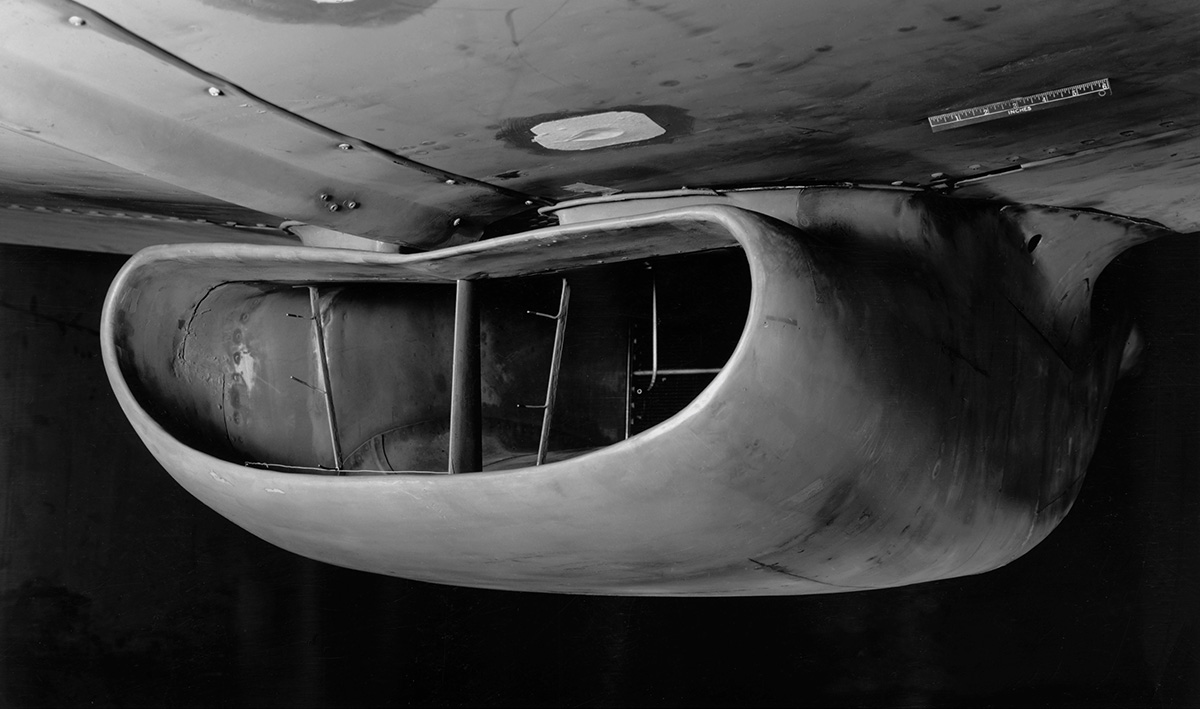
Actually, the belly scoop had been a source of aerodynamic problems since the beginning. The original design had no gutter for boundary layer air, which caused an infamous rumbling and banging as the airflow separated from and then re-entered the scoop. Although mitigated by moving the Mustang !’s scoop away from the belly skin, the problem was only truly quieted with the A36.
Now, with the belly scoop redesigned for the XP-51project, the boundary layer gap was again too small and the aerodynamic rumble and buffet had returned.
This time Schmued, along with aerodynamicists Ed Horkey and Irving Ashkenas, were determined to tame the beast once and for all.
The magic number
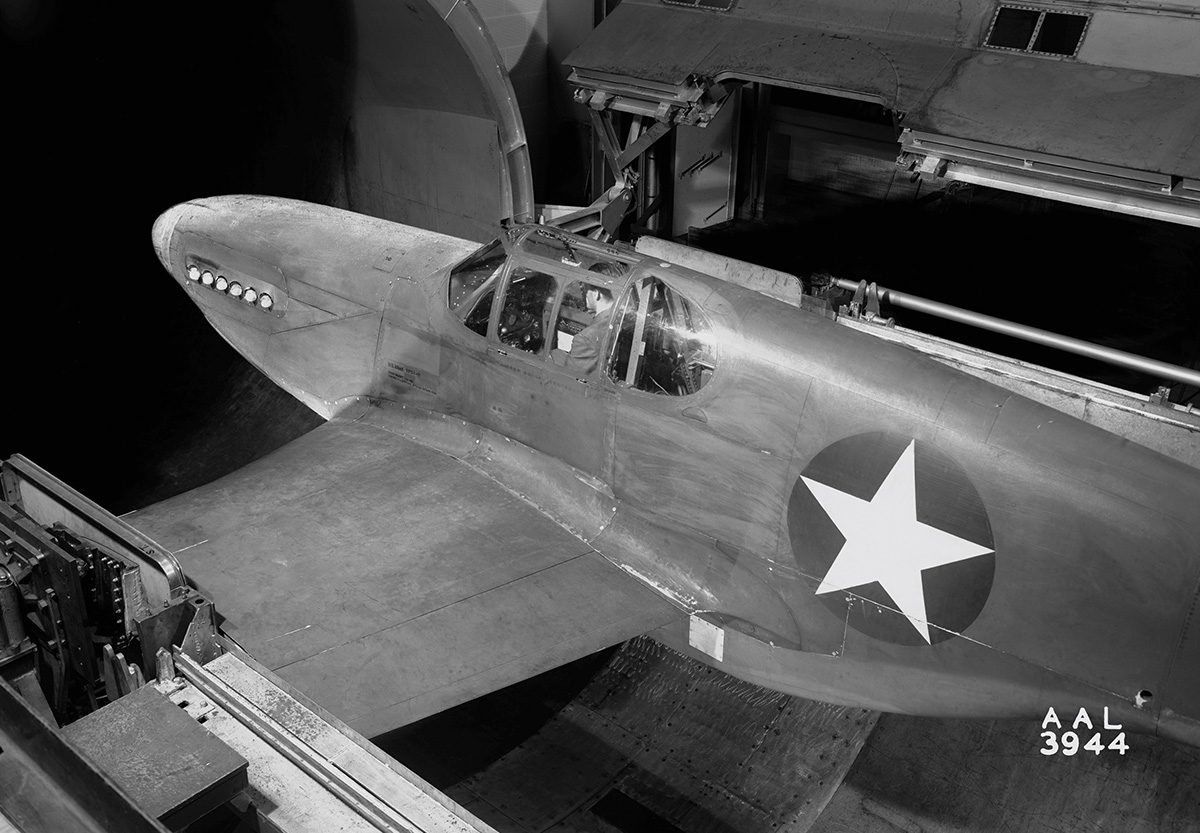
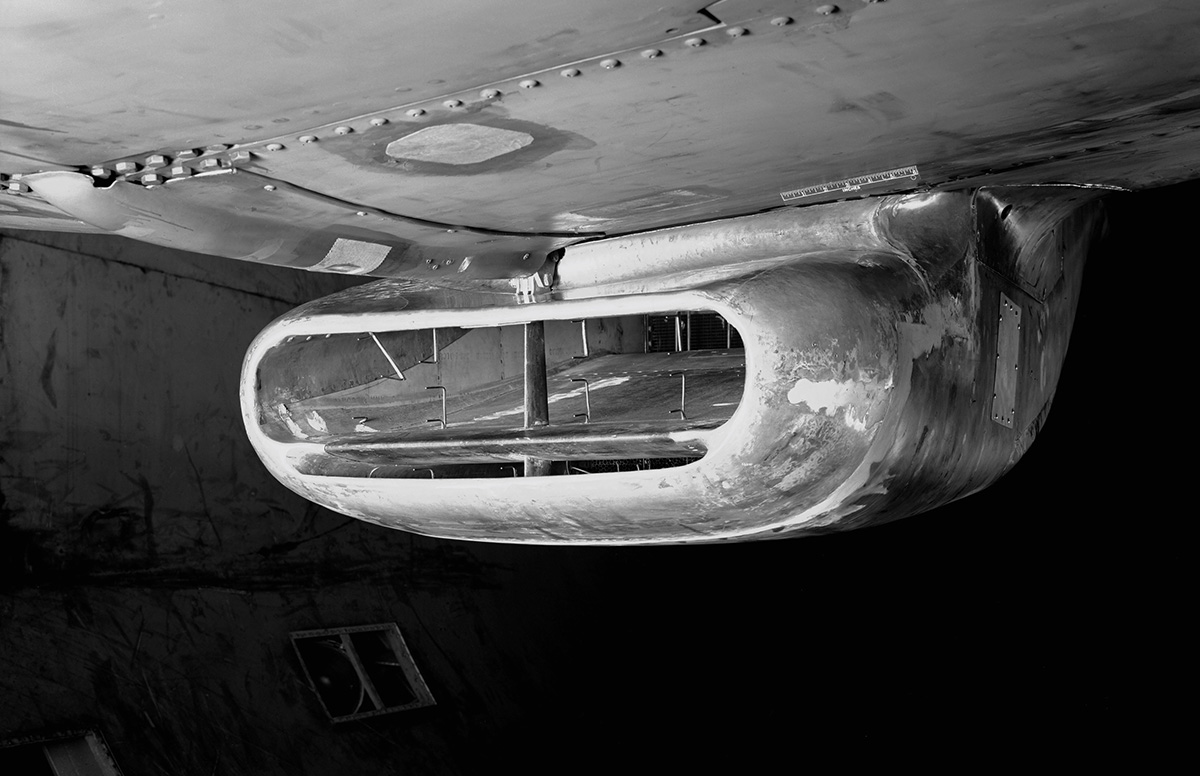
Ashkenas, in particular, put in long hours of wind tunnel research. He started by reworking original wooden NA-73 models and eventually took one of the complete XP-51Bs (with its outer wings cut off) to the 16-foot wind tunnel at Ames Aeronautical Lab, where tests could be conducted at speeds up to 500mph. The special adjustable scoop was moved by fractions of an inch at a time to find the point where it would capture an uninterrupted free stream with minimal drag penalty.
It turned out the magic number was just shy of one-and-a-half inches. And the rest, as they say…
You know what? That’s not the end either.
Overweight
The proverbial elephant in the room was still the Merlin itself. The new powerplant weighted in at 1,690 lbs (766.6 kg) dry – 365 lbs (165.6 kg) more than the Allison it replaced. What’s more, that weight came with a mountain of extra horsepower. Famously more at 25,000 feet than the Allison could give on the ground.
Unlike Supermarine, which repeatedly stretched the Spitfire and added tail ‘volume’ with each major engine advance, North American had kept the Mustang’s overall length and tail feathers.
The extra weight in the nose was partly offset by the larger and heavier radiator, then exacerbated by the massive new Hamilton Standard prop and its hard rubber cuffs.
In fact, the new model P-51 was categorically overweight.
To protect the airframe
The original NA-73 had been engineered around a combat weight of 8,000 lbs (3,628.7 kg). The much-modified P-51B now tipped the scales at 9,000 lbs (4,082.3 kg), meaning the Mustang’s original 12G maximum manoeuvre loading had to be reduced to 9G to protect the airframe.
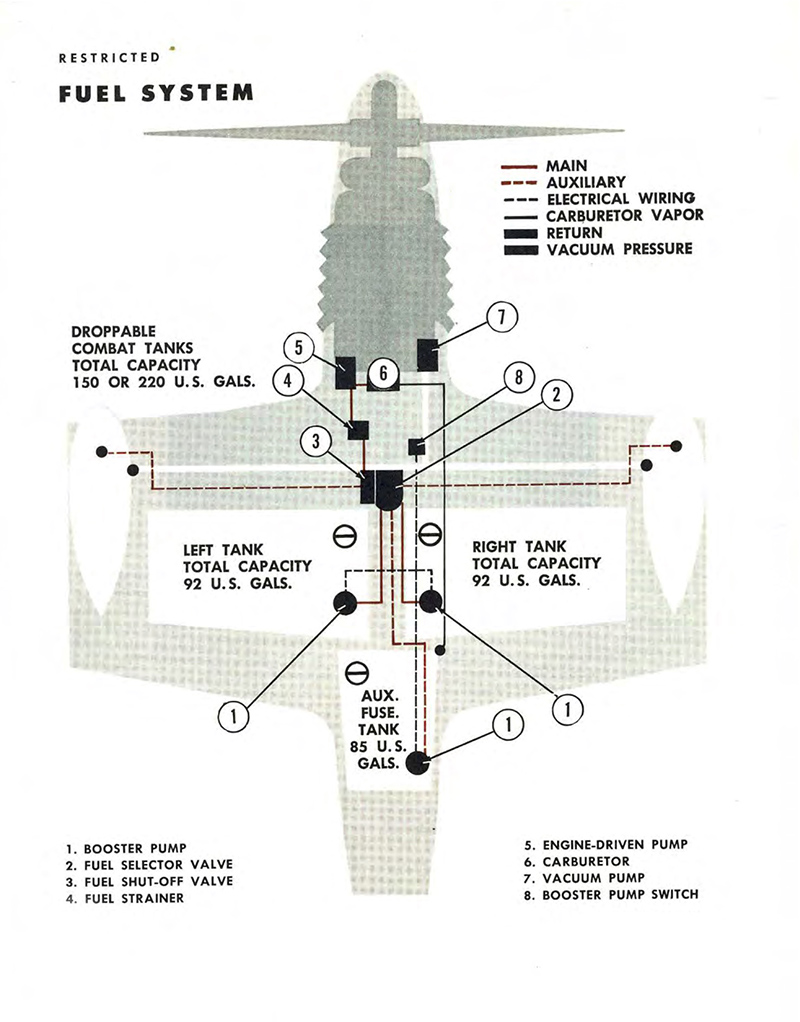
The later addition of an 85 gallon (321.8 L) fuselage tank made things much worse. Now the aircraft was overweight and loaded beyond its aft centre of gravity limit. Pilots could experience a nasty control reversal if they didn’t treat their fully loaded fighter with care, and sharp manoeuvres were forbidden until less than 25 gallons (94.6 L) remained in the tank. What’s more, the maximum loading with full fuselage and 110 gallon wing tanks was just 5G. Less than a Cessna 150 Aerobat.
Luckily, things improved as fuel was burned on the way to the Luftwaffe – and the wing tanks were always jettisoned at the first sign of trouble.
A source of weakness
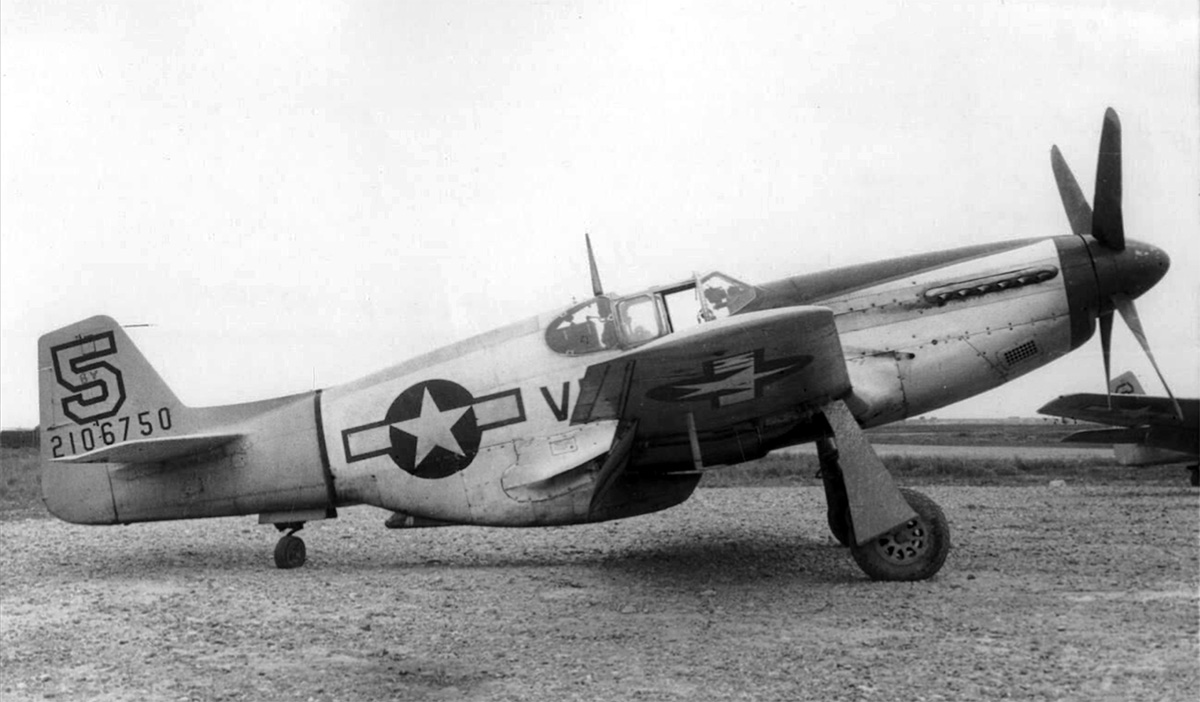
Loading aside, both the tail configuration and the bolts used in early engine mounts would be a source of weakness for some time to come. So while early P-51Bs were rushed to 8th Air Force fighter units in the UK with stern warnings about managing flight loads, some over-exuberant pilots still managed to break the tails or engines off – usually with fatal results.
Crew chiefs soon learned to conduct regular inspection the engine mounting bolts, until North American started delivering units with larger, stronger fasteners. The tail units would prove to be more of a problem. Well, multiple problems, as it turned out.
The most immediate issue was the strength of the tail unit itself. Instructions were quickly issued for a field modification hat added a doubler to the horizontal stabiliser’s spar. However, the bolts that attached the entire tailcone assembly were also marginal for the loads being experienced in flight. These were eventually strengthened but a subsequent isue with under-length and improperly installed tailcone attachment bolts that emerged in 1944 must have done little to rebuild the pilots’ confidence.
Snap roll or a spin
Far more insidious, however, was the diminished directional control resulting from a too-small tail and a too powerful engine coupled to an 11-foot (3.35 m) four-bladed steel propeller. Rudder forces would actually decrease as the yaw angle increased, dangerously misleading the pilot. The increasing skid angle would eventually lead to a snap roll or a spin and, at high speed, the forces proved more than enough to tear the tail clean off.
The effect was fixed by rigging the rudder trim tab to provide an opposite boost effect and eventually the tail structure was strengthened and a fin fillet would be added to later P-51B/Cs.
The problem lingered though, and resurfaced in the P-51D with its reduced fuselage area and more powerful V-16450-7 motor. Ultimately, this side-effect of the Merlin’s many benefits was only engineered away in the P-51H.
By then, however, the Merlin Mustang was an institution – loved by its pilots and the bomber crews it flew to protect.
Miracle workers
So the Mustang and the Merlin may have been a match made in heaven, but arranging the marriage was anything but simple.
We dishonour a small army of miracle workers when we say (or accept) that the making of the Mustang was “simply” switching its Allison’s V-1750 for a Merlin.
In fact, with a new engine, engine mount, cowling and belly scoop; strengthened forward fuselage members; a deeper fuselage overall; and wings re-engineered around the four .50 calibre Brownings and their ammunition; plus a new 85 gallon fuselage tank and a slew of weight and balance complications, the Merlin Mustang was virtually a new aircraft sporting the earlier model’s cockpit sides and tail surfaces.
All that engineering effort was completed under the exigencies of war and the need to continue legacy model deliveries, engineer the new prototype, change over production lines and expedite assembly and delivery while the development issues were still being solved…
And you can double that, because Packard had been through a similar process with the engine.
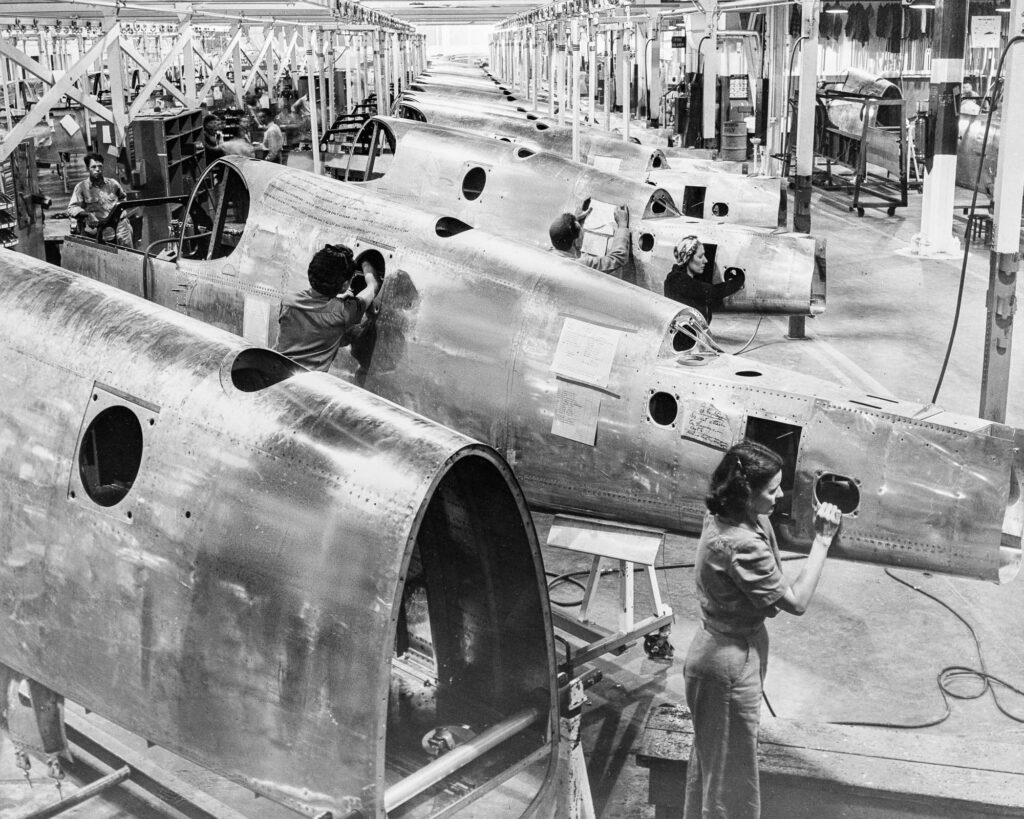
Mustang production would eventually top out at around 3,740 P-51Bs and P-51Cs. Production would peak at 763 deliveries in October 1944 – or more than 24 aircraft per day. These would be followed by an incredible 8,100 P-51Ds, 555 P-51Hs and 1,500 P-51Ks, plus another 200 Commonwealth Aircraft Factory CA-17 and CA-18 Mustangs built in Australia.
And the rest, as they say, is history.
 airscape Magazine