
As the western world heaved itself up from the trauma of World War II, the future must have seemed as bright as a new-polished silver cup.
True, nearly anything would be brighter than the six years of horror and heartbreak that had come before, but the world at large was far richer for the industry and innovation that had been marshalled to beat back the Axis.
Among those game-changing technologies tempered by war was the gas turbine engine, and it was about to change the face of aviation.
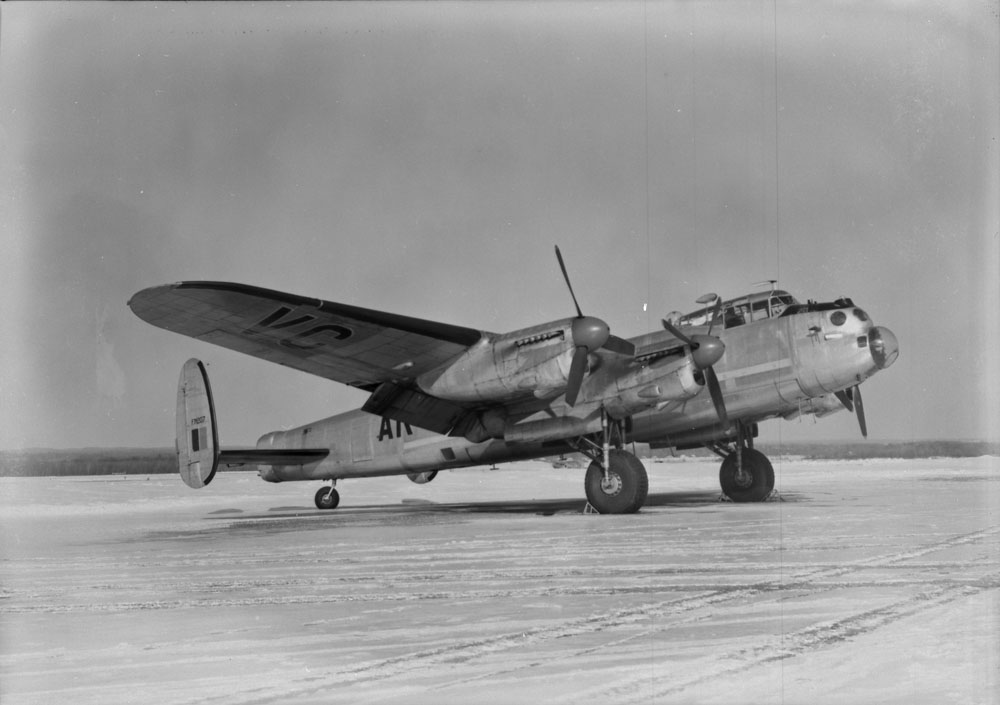
Canada began the peace with a particularly strong aircraft production sector. It may have lacked the scale of that in the United States, or the diversity of Great Britain’s, but years of building Tiger Moths, Harvards, Hurricanes, Mosquitoes and Lancasters belied Canada’s inventive spirit – not to mention its desirability to a cadre of top engineers and aviators seeking fresh opportunities in a country that was neither devastated nor torn in two by the conflict.
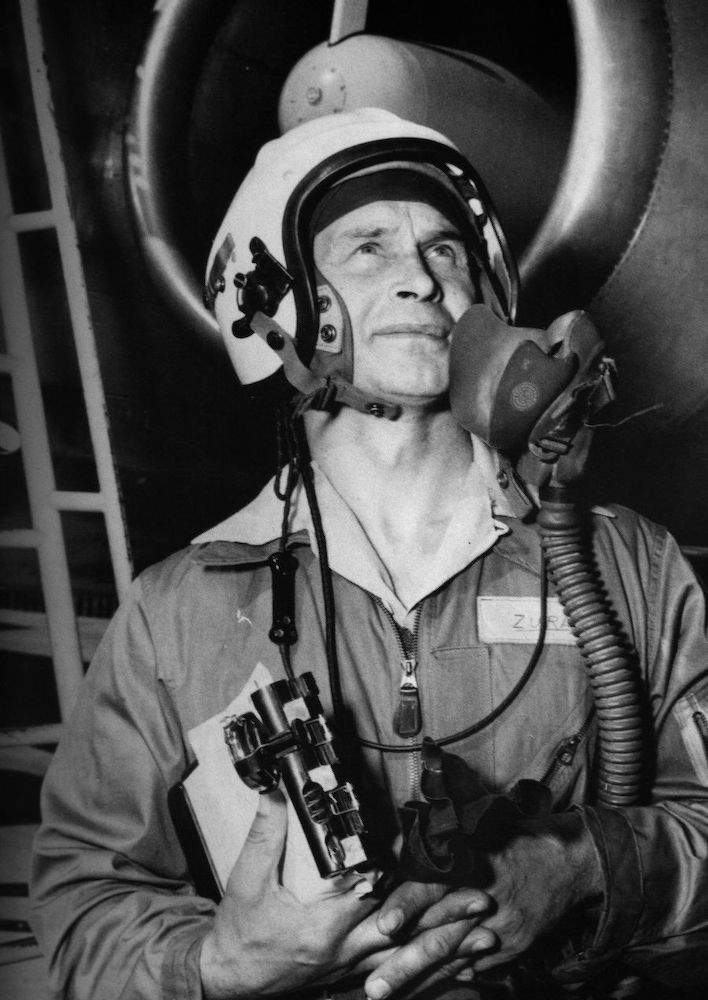
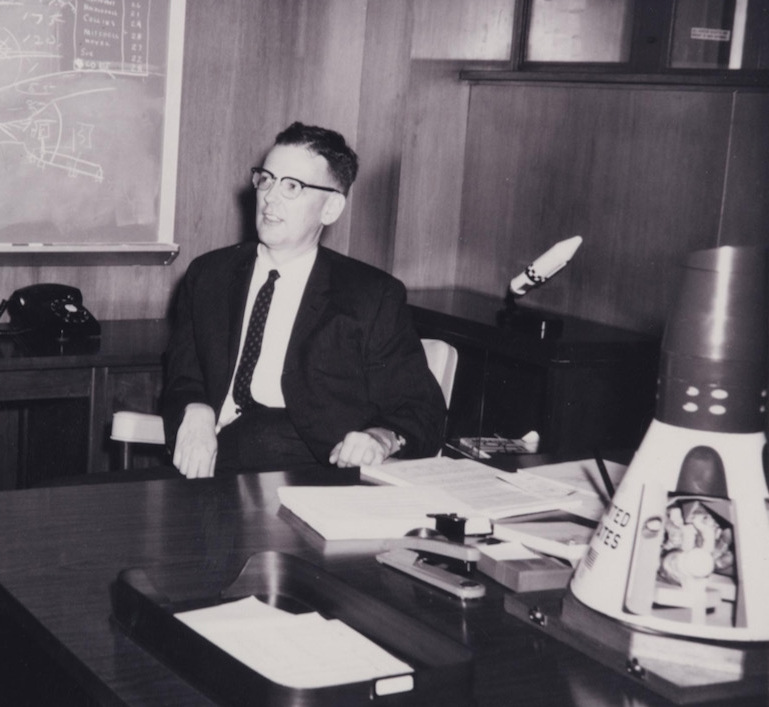
These included the superb Polish fighter – and now test – pilot Janusz ‘Żura’ Żurakowski; designer John Frost who (under Teddy Petter) had delivered the Westland Whirlwind and then moved on to the de Havilland Hornet, Vampire and Swallow; as well as aerodynamicist James Chamberlin, a Canadian who had done advanced work at Martin-Baker among others.
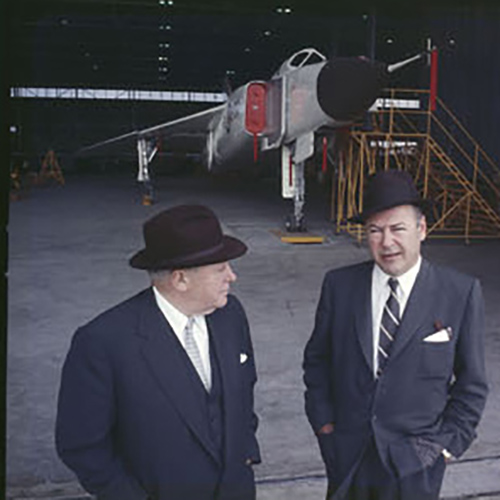
The epicentre of Canada’s aviation future was undoubtedly the Avro Canada plant (formerly Victory Aircraft) outside Toronto. Within a year of the war’s end, this remarkable enterprise had embarked on its own jet air superiority fighter design and its own turbine engine.
Canadian eagles…
And so we arrive at Screaming Jets.
This short production from Canada’s National Film Board deserves far more than the 3,900 YouTube views it has garnered so far. The first two seconds will give you your money’s worth – then the rest is free.
The film opens on a poster child for innovation in the jet age, the Armstrong-Whitworth AW52, a remarkable flying wing from England that airscape explored a long time ago, here.
A quick summary of the worldwide state of the art brings us home to Toronto and the leading lights of Canada’s domestic jet industry – the CF100 fighter and C102 Jetliner.
In an age when almost anything seemed possible, Avro Canada was making it a reality.
And Canadians were invited to feel proud.
As the film relates, the team at Avro Canada had developed one of the world’s first and most powerful axial flow jet engines in the 6,000 lbf (27 kN) Orenda TR5, and installed it into their prototype CF100 Canuck (‘Clunk’ to its friends). This contemporary of jets like the Gloster Meteor F8, Northrop F-89 Scorpion and Lockheed F-94 Starfire boasted a spectacular 2,000 mile (3,200 km / 1,700 nm) range and would serve with the RCAF through five major Marks, into 1981.
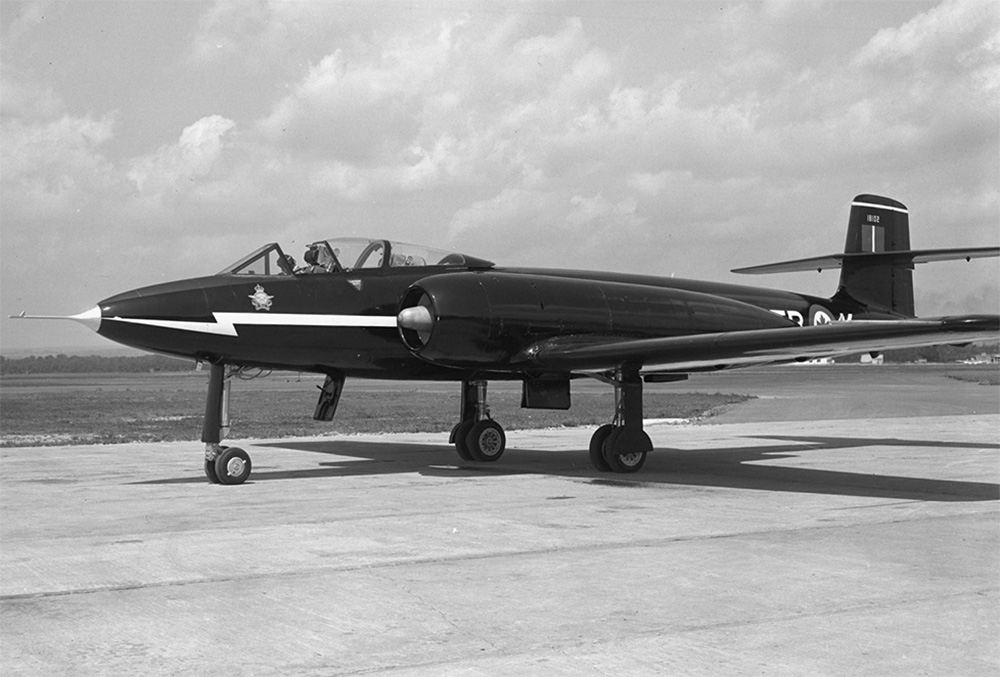
Canuck development was not without its problems, including the fatal loss of the second prototype and its test pilot Bruce Warren, which exposed procedural shortcomings at Avro Canada. However, the rate of progress seemed unstoppable.
Next out of the factory was the equally remarkable Avro Canada C102 Jetliner, which took to the air just 13 days after the UK’s much-celebrated De Havilland DH106 Comet. And that would be followed, seven years and several interim projects later, by the phenomenal CF105 Avro Arrow.
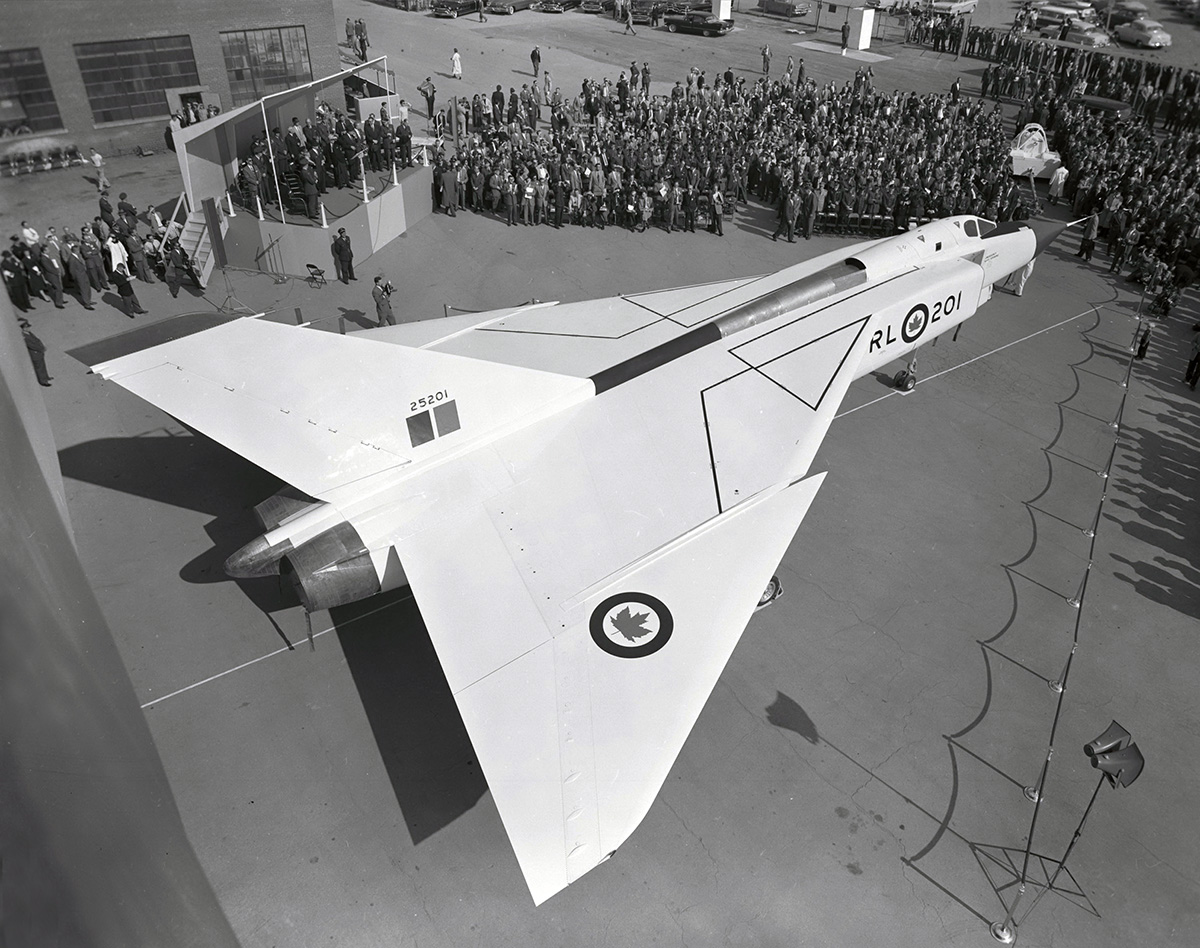
The fate of the Arrow is legend. Scratch that: It’s tragic. And the story of the Jetliner isn’t much prettier.
Sadly, this film wouldn’t mark the dawn of an exciting new age at all – more the high water mark of post-war Canadian aircraft production.
…led by dodos
Rather than accentuating the example of the CF100, Avro Canada’s groundbreaking Jetliner would be left to flounder, confounded by its primary customer and unsupported by its national Government, which seemed to have no concept of international technology promotion and even less interest in encouraging a domestic supporting domestic aviation.
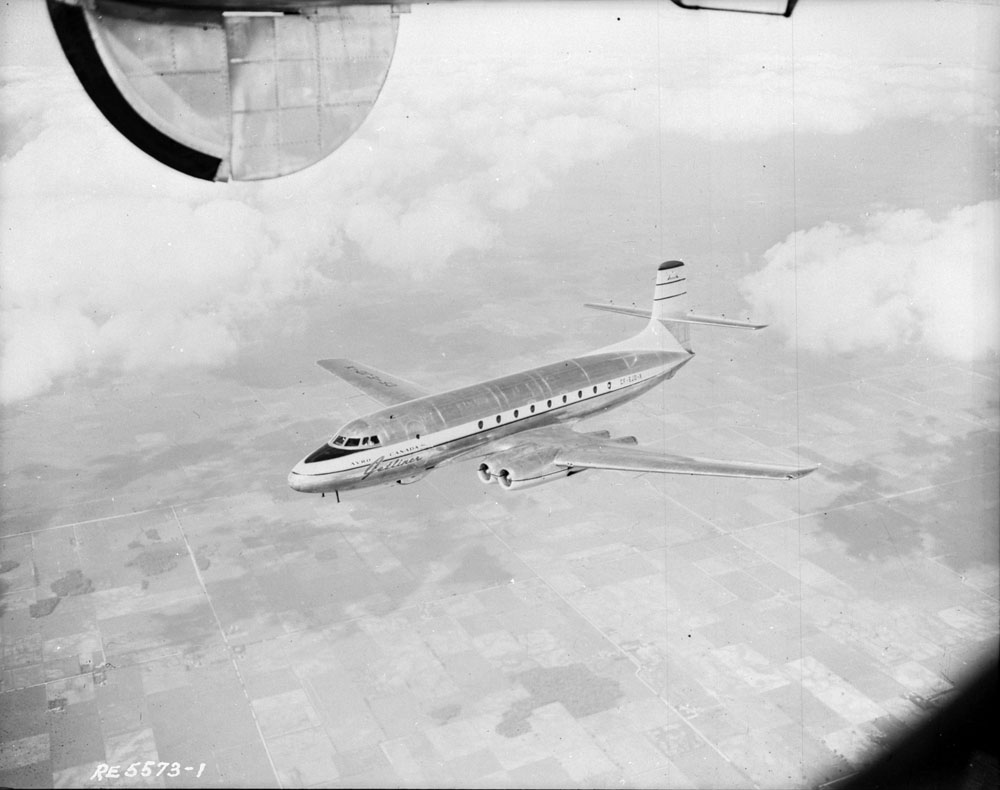
The C102 had seemed bound for glory – attracting interest from at least six US airlines plus the US Air Force and Navy. The prototype carried the world’s first jet airmail from Toronto to New York on 18 April 1950, to great fanfare. It would have entered production at least six years before the Boeing 707 and could not have been touched for short field performance until the arrival of the Boeing 727 in 1962.
Unfortunately, Trans Canada Airways (TCA), which had been party to the original Jetliner specification and subjected Avro Canada to draconian contract terms, continued to introduce impossible changes and new requirements. In fact, as early as 1948, company president Gordon McGregor had feebly declared that TCA didn’t want to be the first airline with a jet.
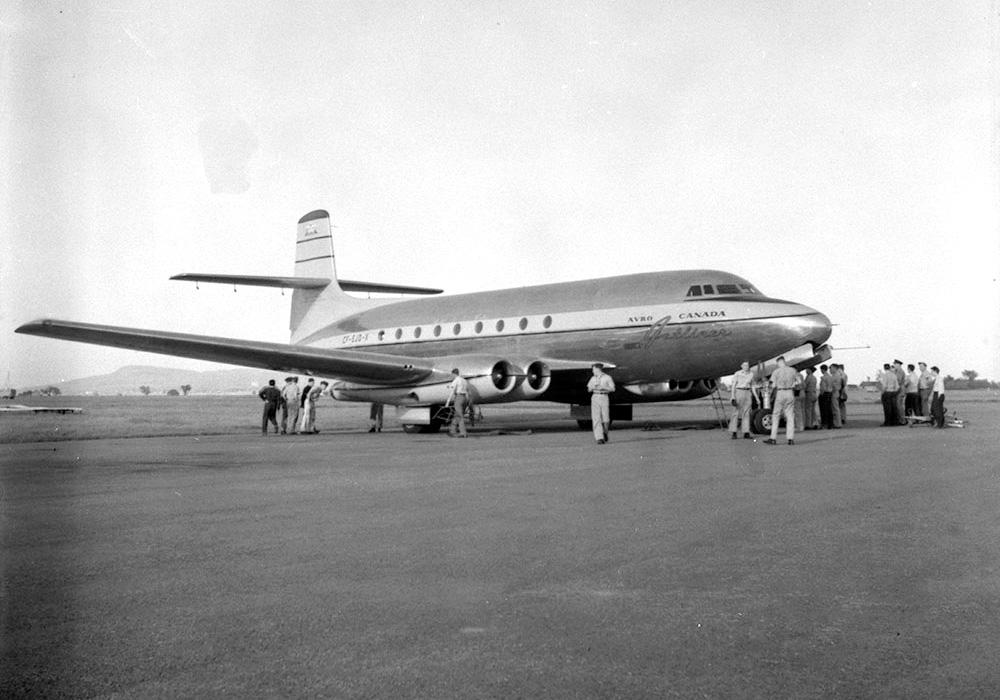
Such small-mindedness found friends in the government, most notably in cabinet minister CD Howe who seemed to be on a personal quest to drag Avro Canada down – and seemed incapable of imagining that an aircraft company could walk and chew gum at the same time. At Howe’s insistence, Avro Canada was forced to repeatedly rebuff orders from Howard Hughes for 30 aircraft to equip TWA and work exclusively on perfecting the CF100.
Ultimately, TCA, primary sponsor of the C102, would buy 51 Vickers Viscounts in 1955. The Jetliner prototypes were ordered grounded on 10 December 1956 and cut up for scrap three days later.
Two years later, the CF.105 Avro Arrow debacle would play out in all its devastating disappointment.
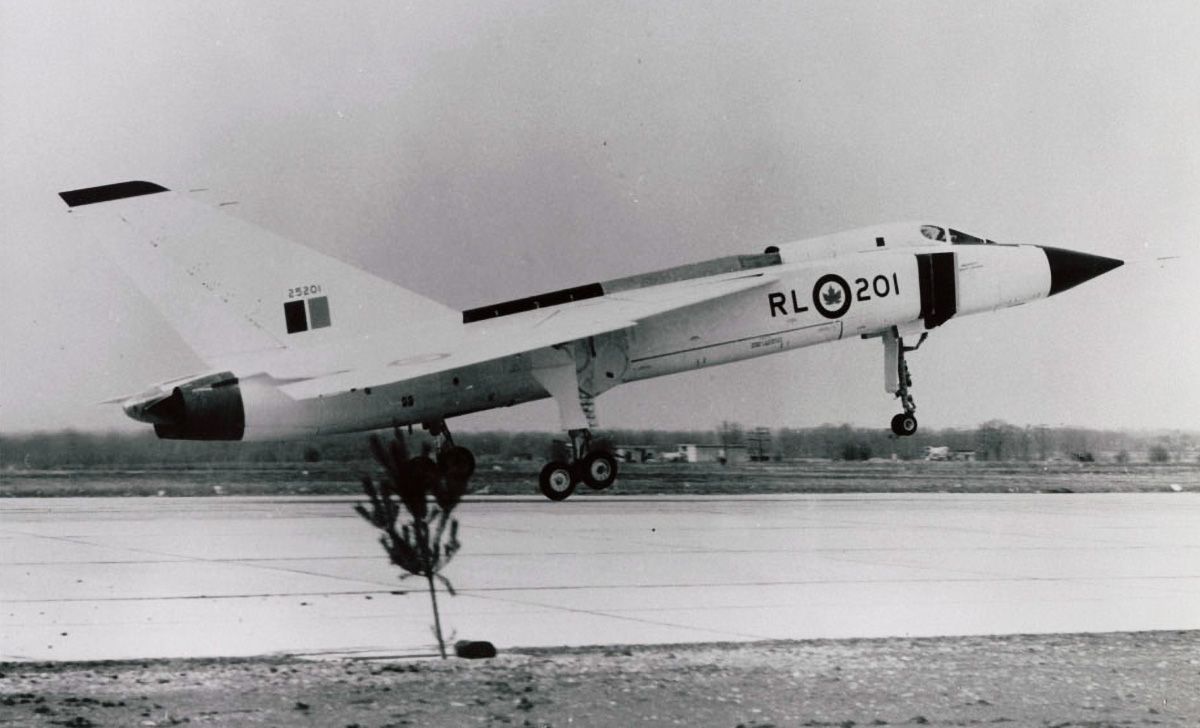
What followed Screaming Jets was the evisceration of a dream – not to mention whole towns, an entire industry and a priceless pool of engineering imagination.
Canada lost an opportunity, a small fortune in foreign earnings, an immeasurable aerospace future, and a wealth of talent that would go on to put men on the moon – among many other things.
If the country’s so-called leaders had shared a fraction of that vision, their legacy might have been vastly different.
Instead, all we have left is this brief, shining moment of optimism and patriotic self-belief.
So put blinkers on your hindsight for 11 minutes – and enjoy what might have been…
 airscape Magazine
I know bugger-all aboot [:-)] Canada’s political scene, but everything said above added up to one thing in my mind: these were Socialist or at best ‘left of centre’ governments. In fact I get the impression that Canadian governments since WWII have all been, if not left at least centre-left. Leftists have never been friendly towards aviation.
Hi Bob. As you might have guessed from the delay, this has been a difficult reply to put together. Airscape isn’t an economics or a politics blog and I want to keep it free of the divisive side-taking which the digital glue-sniffing that is social media seem to have made a prerequisite for any kind of discussion these days. I can see your logic though: The UK’s Wilson government of that famous 1966 Defence White Paper which killed TSR-2, the CVA-01 carrier class and, arguably, the diversity of Britain’s aviation industry was very left-leaning. However, the Diefenbaker administration that ended the CF-105 (and the intellectual wellspring behind it) was actually from the centre-right Progressive Conservatives.
I’m not sure either side hated aviation as such… they were looking for large line items on a national budget that was in big trouble. It’s no different from what countless large organisations have done with their R&D and staff development budgets over the last 50 years or so. In every case, the short term savings come with long-term costs. But with a few extremely rare exceptions, people are fundamentally good and I’m sure they were all trying to to the right thing (or at least the best thing) with the situation they had in front of them.
Criticism, and an appreciation of those long term consequences, is only available with hindsight. So there isn’t really a side to take. In the bigger picture the decisions were both right AND wrong, just as they benefited some and disappointed others. Mind you, none of that really explains the malice with which both governments demanded all the drawings, toolings and prototypes be destroyed. I’m at a loss there…
I agree about keeping politics out & Iâm quite happy for you to delete my post. It was just that there was a litany of cancellations during the period. The UK could be excused I guess â the war broke them financially but places like Canada didnât have that excuse.
Bob
PS I donât indulge in the sewer of any âsocial mediaâ either.