
One of the few responsibilities that are attached to my membership of the South Australian Aviation Museum (SAAM) is an “obligation” to help out on the front desk about once a quarter.
Behind the scenes
I say “obligation” in quotes because it is hardly a chore. Desk duty involves setting up, greeting visitors and processing their payments, then closing up afterwards. There are generally three of us on at a time, so it is really a day of looking at aircraft, talking about aircraft, welcoming other aircraft enthusiasts, more talking about aircraft and then going home.
All things considered, it’s not a bad day out.
However, seeing the exhibits and looking through the workshop are always personal highlights. The restoration projects are a brilliant chance to see how old aircraft go together, and to admire the deep skills that go into making it happen.
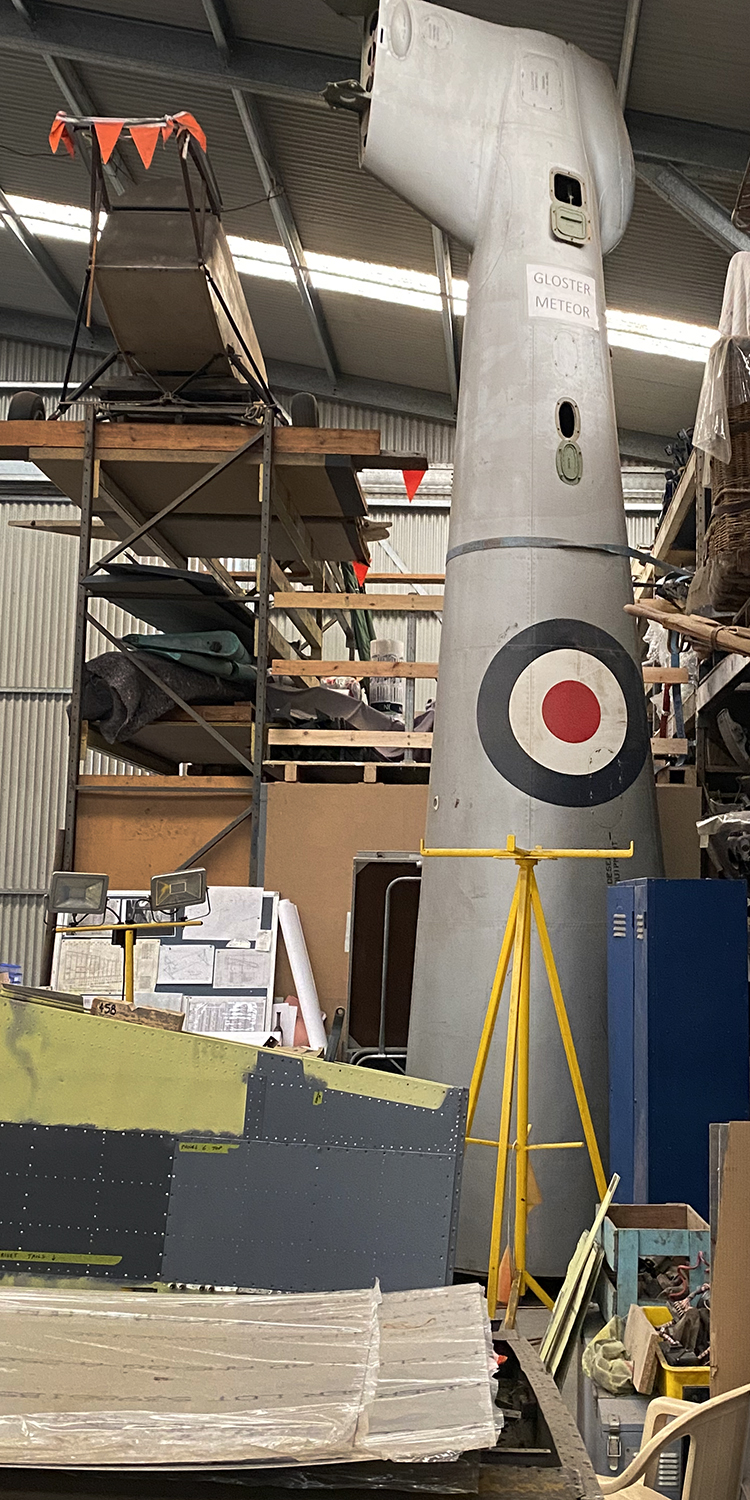
Mind you, just looking over the bits and pieces in storage is always fascinating too. There are airframes, wings, engine parts, a balloon basket and so much more.
Cutaways, continued
My most recent walkaround (and this post) began with the amazing display model of Singapore Airlines Boeing 747-312M ‘Big Top’ 9V-SKP (msn 23769/666) which is in the collection. I wanted to get some shots of it as a follow-on to the recent articles showing aircraft cutaways – as the physical manifestation of that long-standing marketing art.
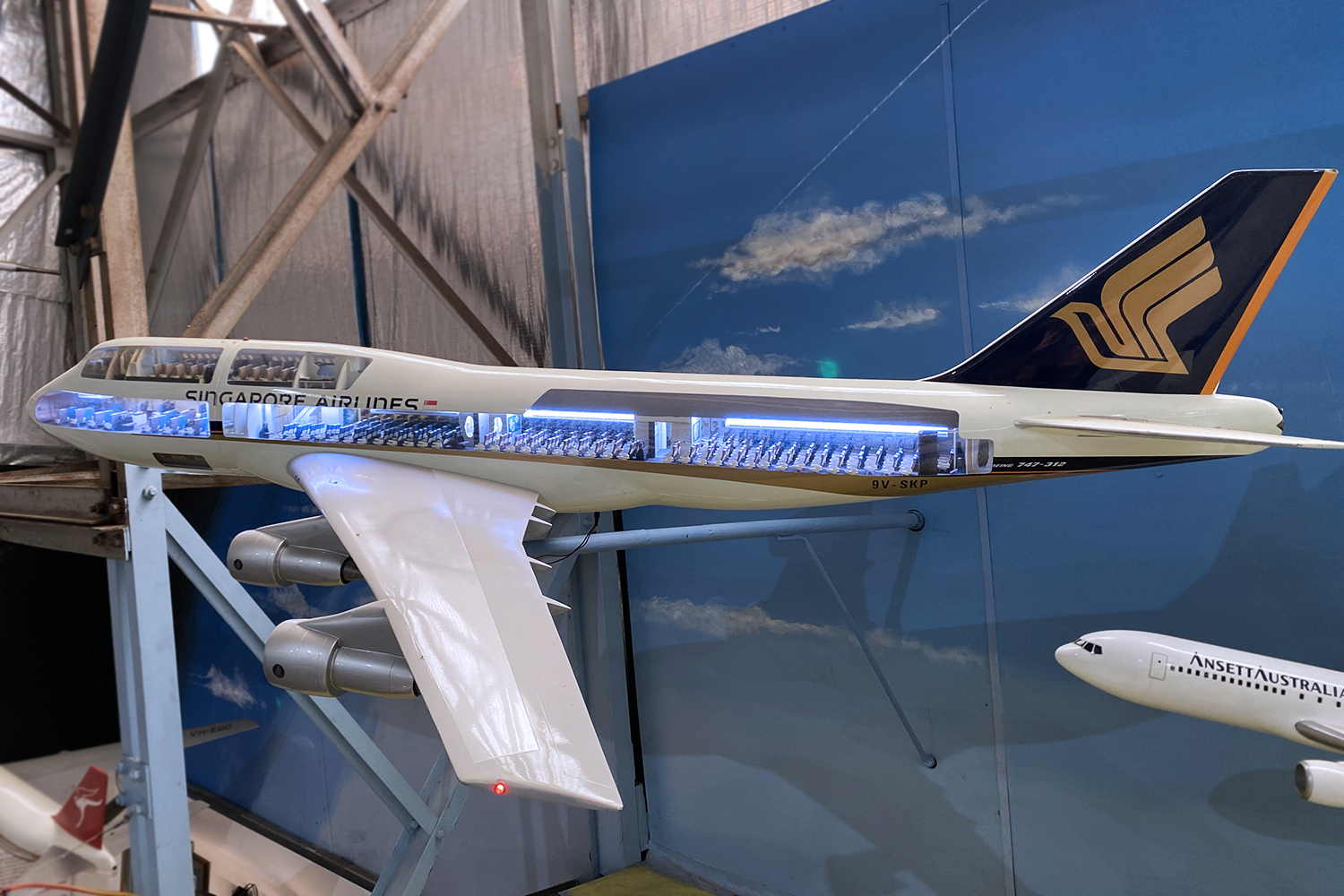
This incredible model is huge, internally lit and beautifully detailed. I can remember seeing it in a travel agency window for many years, and quietly wishing I’d be able to scoop it up when they inevitably finished with it. Having it at SAAM is an equally good and considerably less selfish outcome.
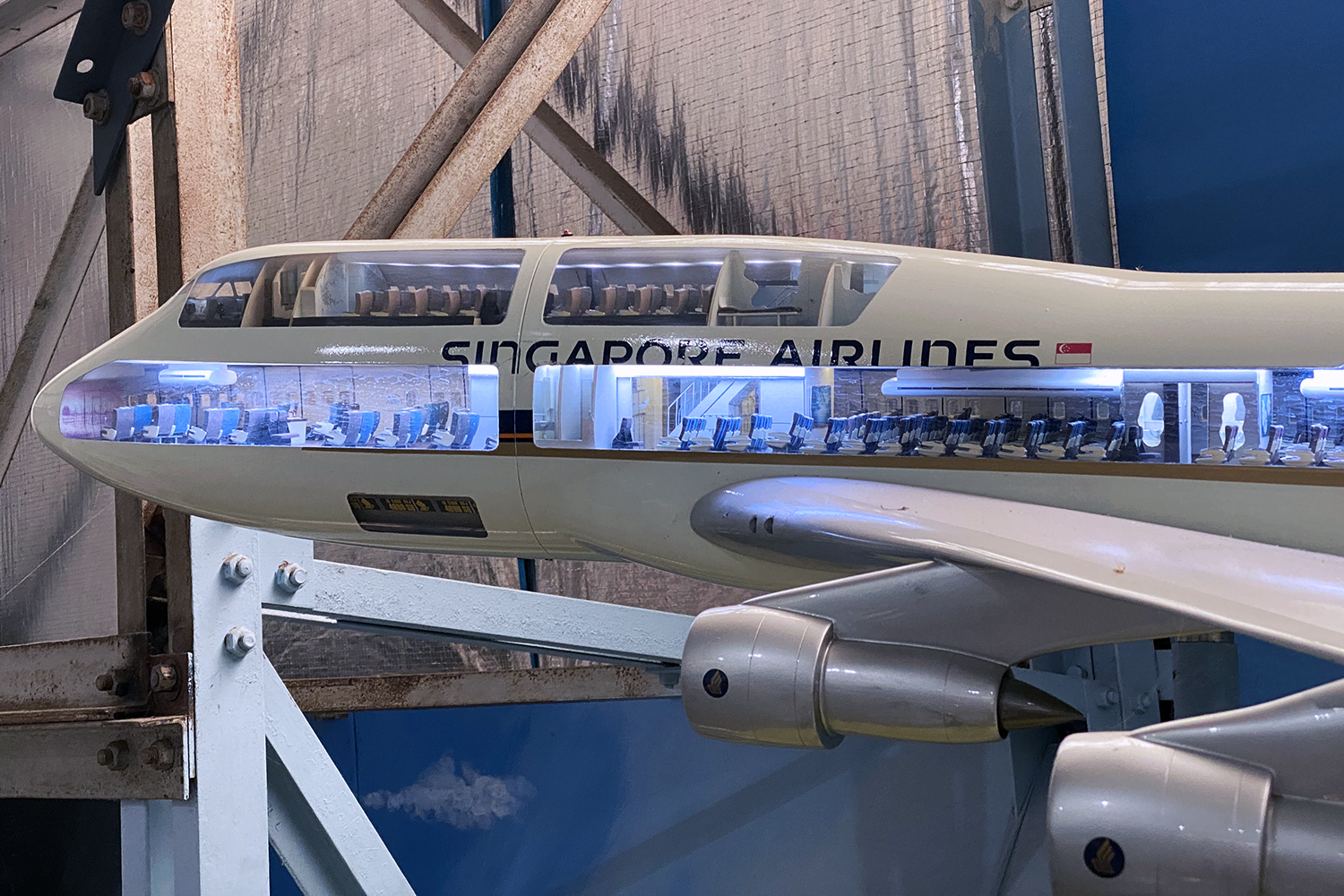
The real 9V-SKP was delivered new in 1987 and stayed with the airline until 1999. In September 2001 it was converted into a freighter for Dragonair and flew in that role for just under 7 years, before being scrapped. The 9V-SKP registration has now been reassigned to a SIA Airbus A380-841 (msn 76).
Battling on
Another of my regular stops is SAAM’s long-term Fairey Battle project. The Museum has published a comprehensive history of this particular aircraft, a Mark 1 that served briefly with the RAF before quickly being declared obsolete. It was shipped to Australia in 1941 and used for gunnery training in South Australia as N2188.
In May 1943, a broken connecting rod punctured the oil sump while four aircrew were on a training mission, and the aircraft was safely, if permanently, crash-landed in a mangrove swamp.
The corrosive effects of the salt-and oxygen rich environment and South Australia’s hot climate meant that SAAM recovered little more than an aluminium-oxide sieve with data plates attached 32 years later.
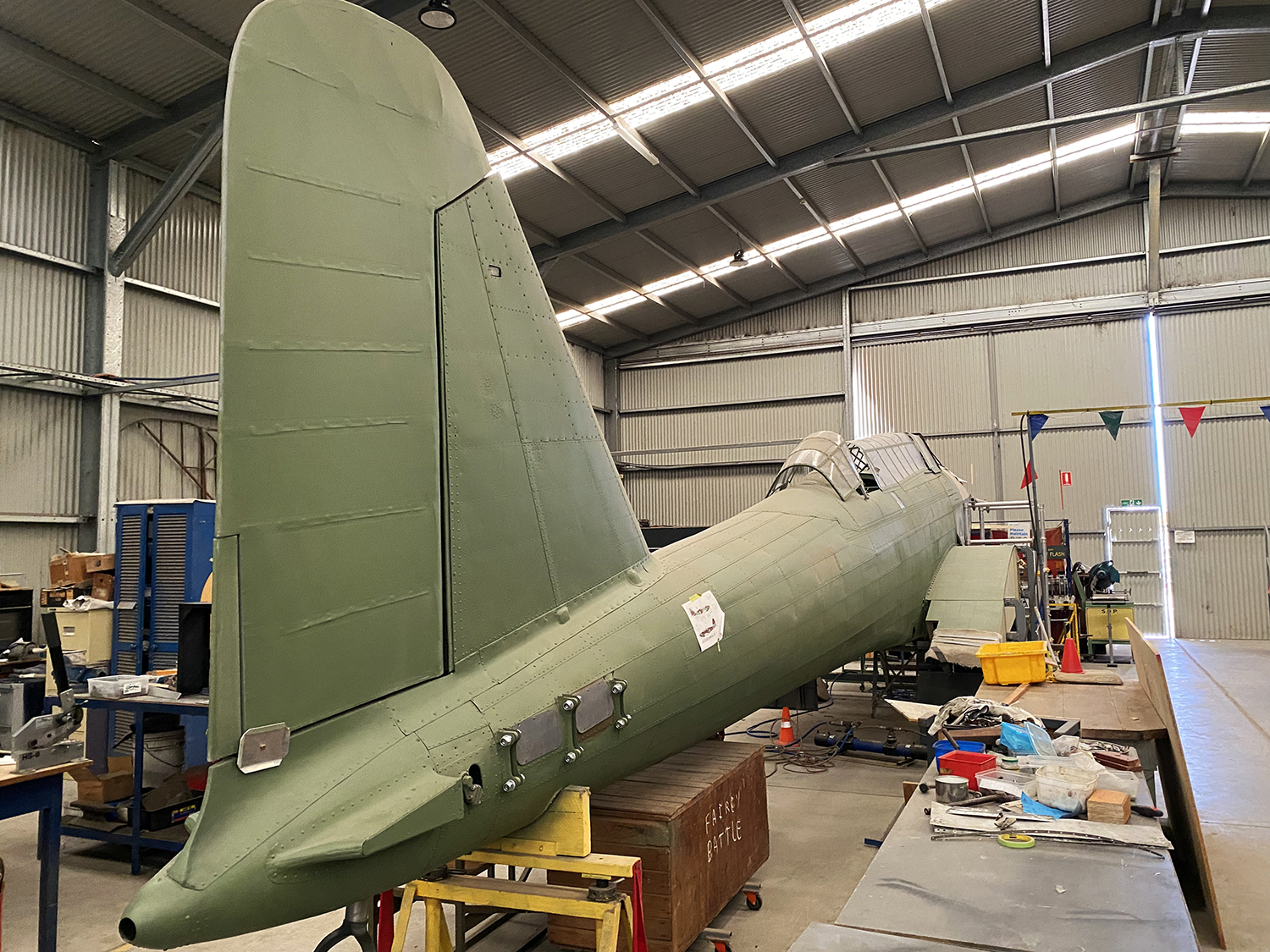
As such, the restoration is actually more of a full Battle build, with the dedicated team of ‘Battlers’ putting in countless hours to recreate the aircraft as close as possible to its original build standards. A Packard Merlin has been obtained to fill the nose.
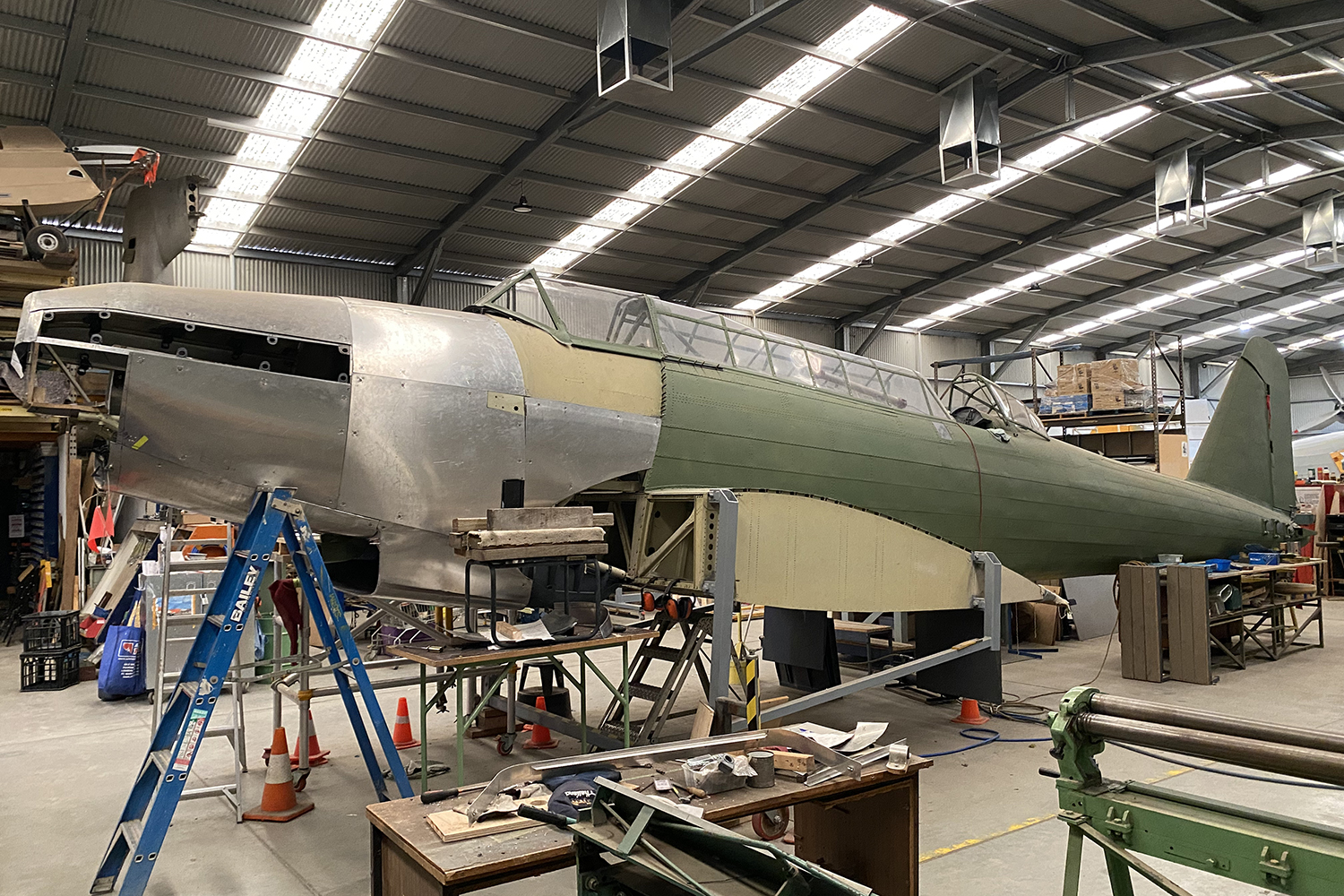
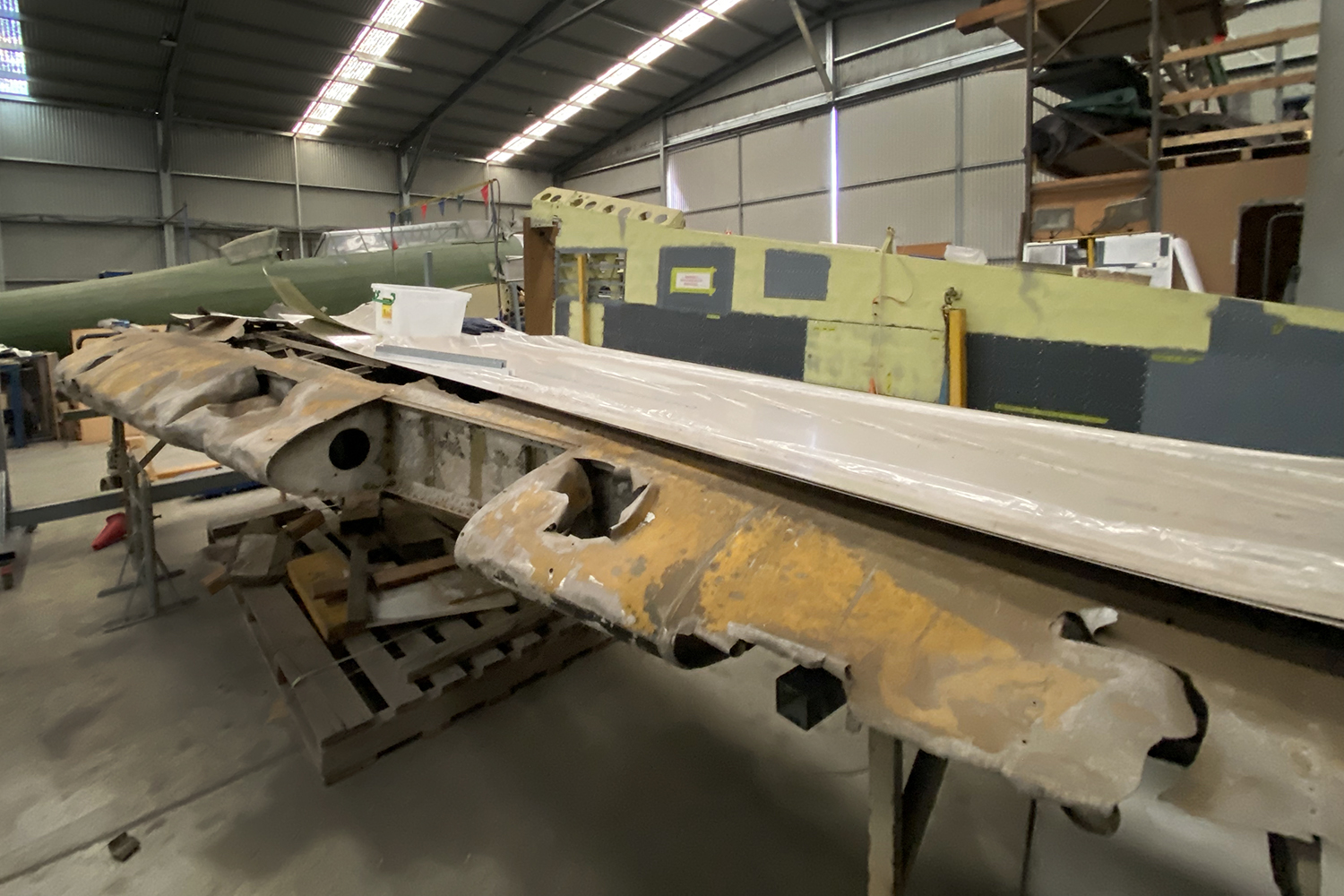
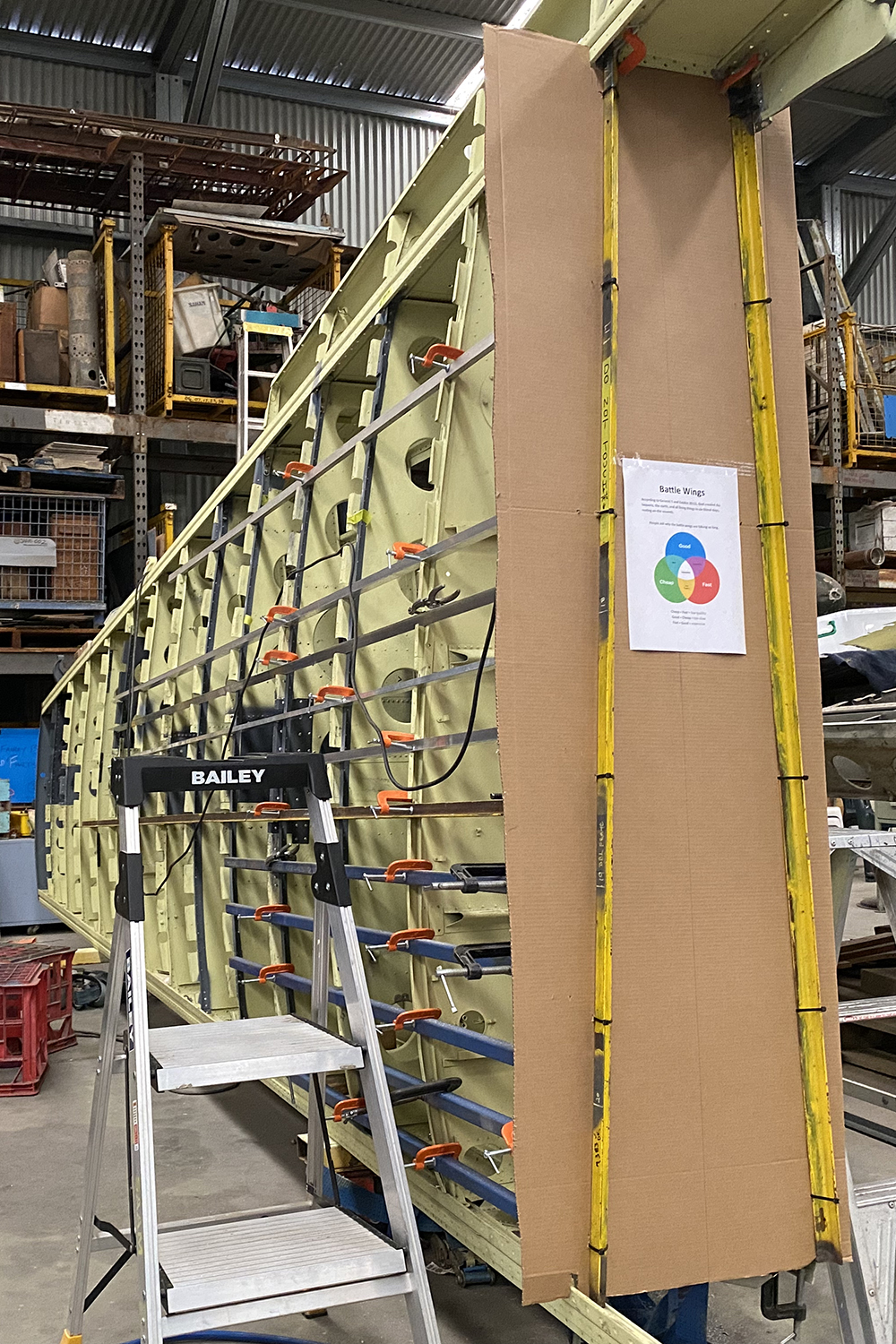
With the lion’s share of the fuselage looking like a new aircraft, including the distinctive clinker-style skin, attention is shifting to the build (not rebuild) of new wings. The originals had corroded beyond all hope. Building entirely new wings would give a professional restoration shop pause, so these will be a fitting monument to the dedication of SAAM’s workshop volunteers. It will be amazing to see on display.
Big Orphan Annie
A little closer to full display is the workshop’s other major restoration project, Avro Anson Mk.1 EF954. This has been another decades-long project, having been donated in May 1984 – a month before SAAM’s formal establishment in June of the same year.
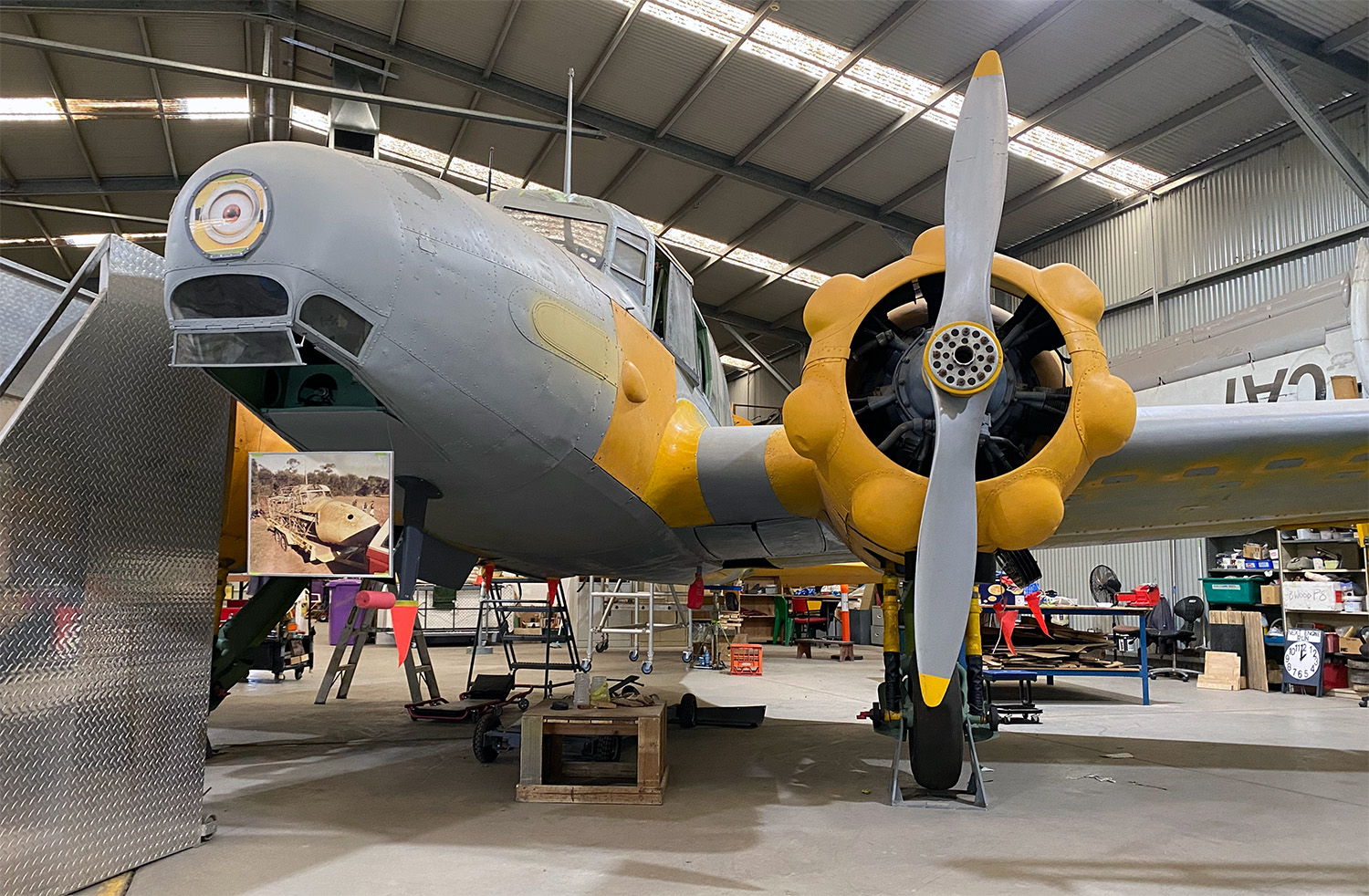
More than a thousand Ansons were used to train multi-engine pilots, navigators , wireless operators, air gunners and bomb-aimers in Australia during World War II. Afterwards, they were sold off to the public – generally going to farmers as a convenient source of quality hardware. EF854 was one of those, although it has since been joined by parts from AW965 which was flown in civil service as VH-FIA, for Flinders Island Airlines. You can read more here.
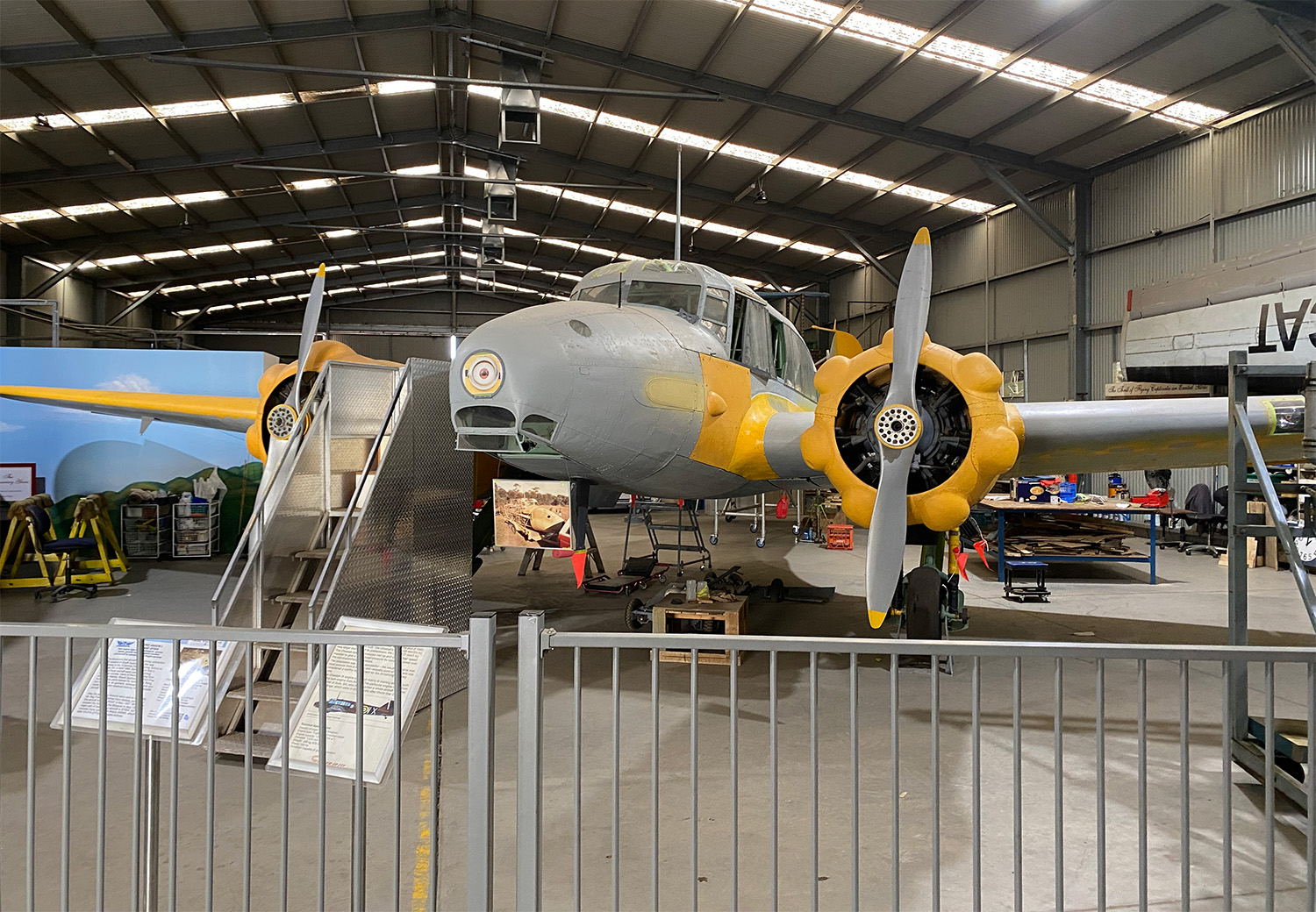
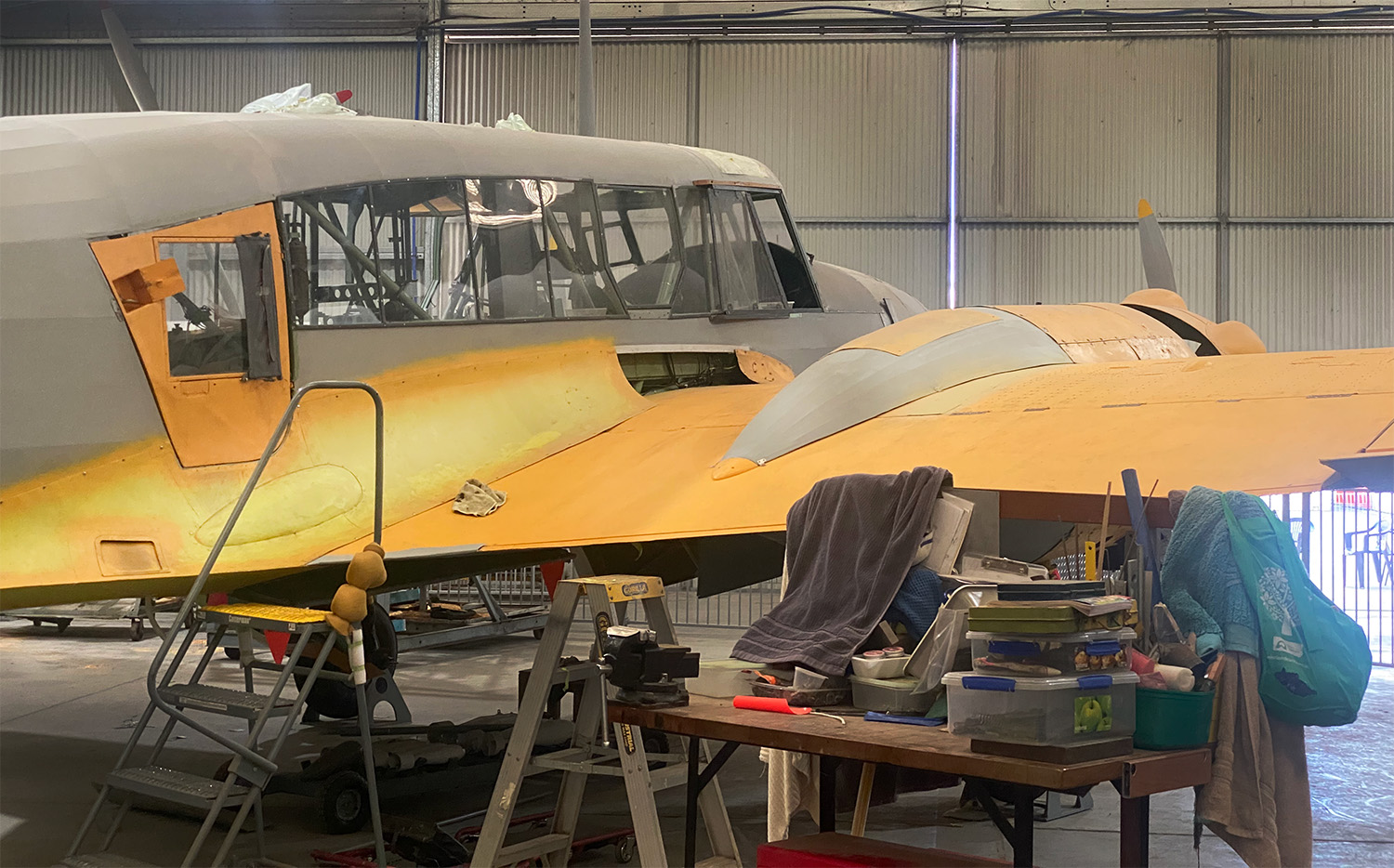
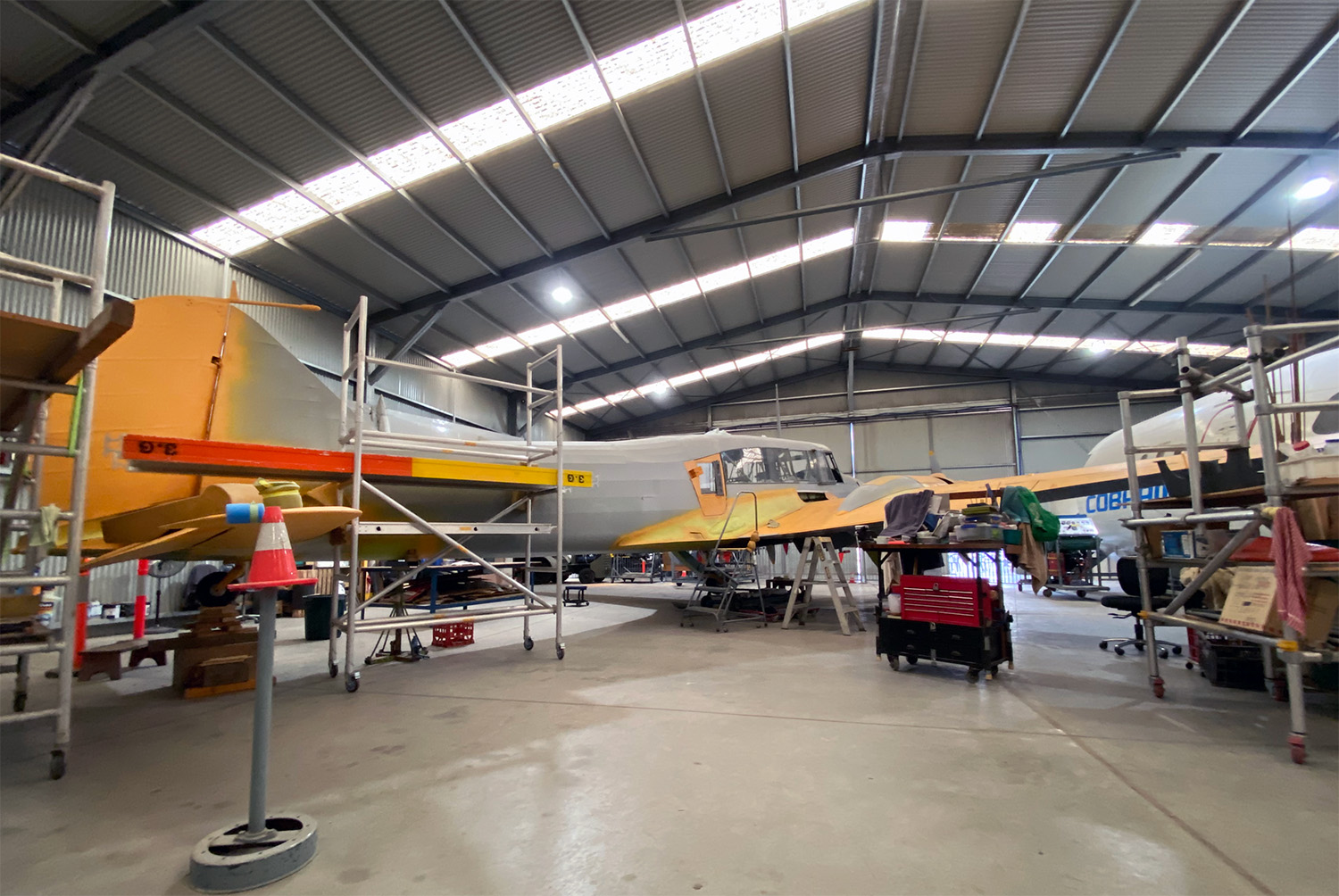
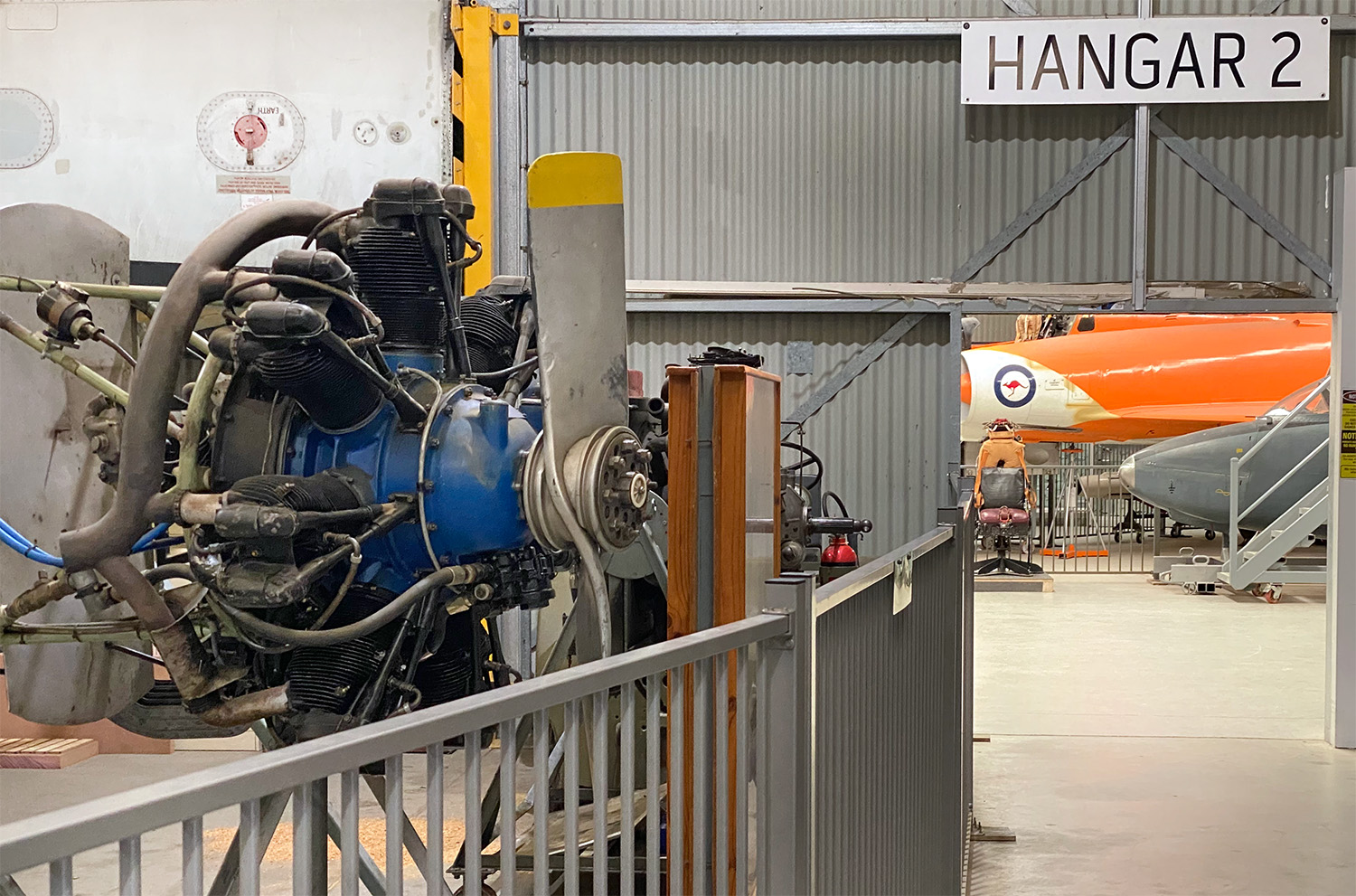
This was the first time I had seen the aircraft with both of its wings attached, and she is positioned at the front of the restoration hangar where she makes a great impression as visitors pass through the Restoration Hangar on their way to Display Hangar 2.
Along with the two Armstrong Siddeley Cheetah radials on the Anson’s wings, the museum has a third, operating example, which is given song on periodic engine run days. The 834 cubic inch (13,65 litre) 7-cylinder radial was in production from 1935 until 1948, and still gives as sweet a rumble as any radial I’ve heard.
Southern aspect
SAAM focuses its collection on aircraft, artefacts and people with a clear South Australian connection. The State has certainly made a generous contribution to the country’s aviation history and achievements, so those guard rails come with with plenty of latitude baked in.
Virtually all of Australia’s rocket and missile research (along with a fair bit of Great Britain’s) was conducted at the Woomera range in South Australia, while RAAF Edinburgh is located just north of Adelaide.
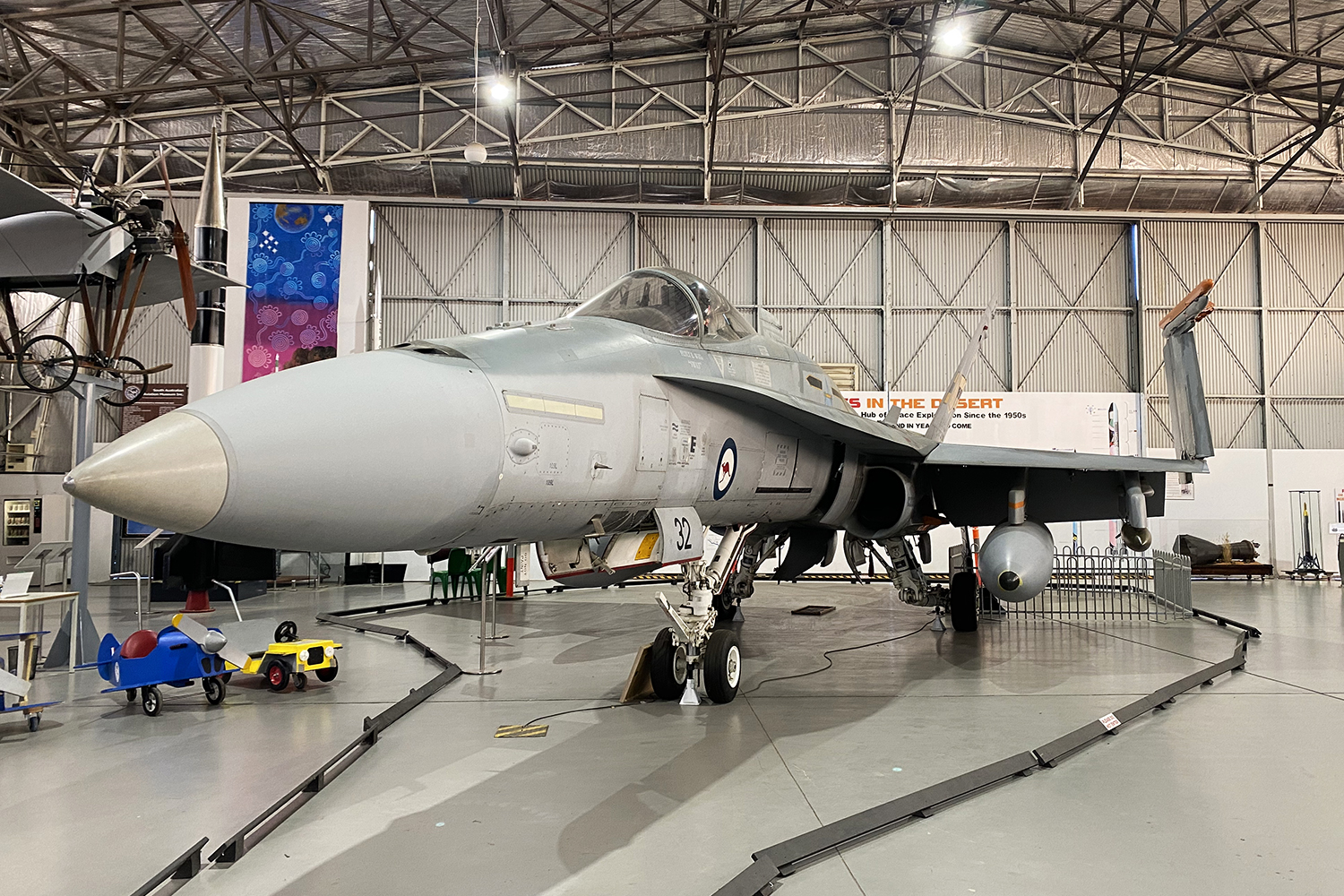
The base is home to the long-range maritime patrol No. 92 Wing, currently equipped with P-8 Poseidons, No.9 squadron flying MQ-4C Tritons and No.10 Squadron which is equipping with the brand new Gulfstream G550-based MC-55A Peregrine intelligence, surveillance, reconnaissance and electronic warfare (ISREW) aircraft.
Looking sharp
Every bit as importantly, Edinburgh is also the centre of operations for the Aircraft Research and Development Unit (ARDU), which meets all of the RAAF’s development and flight test needs – covering everything that needs to be carried, dropped or do the carrying for the Air Force.
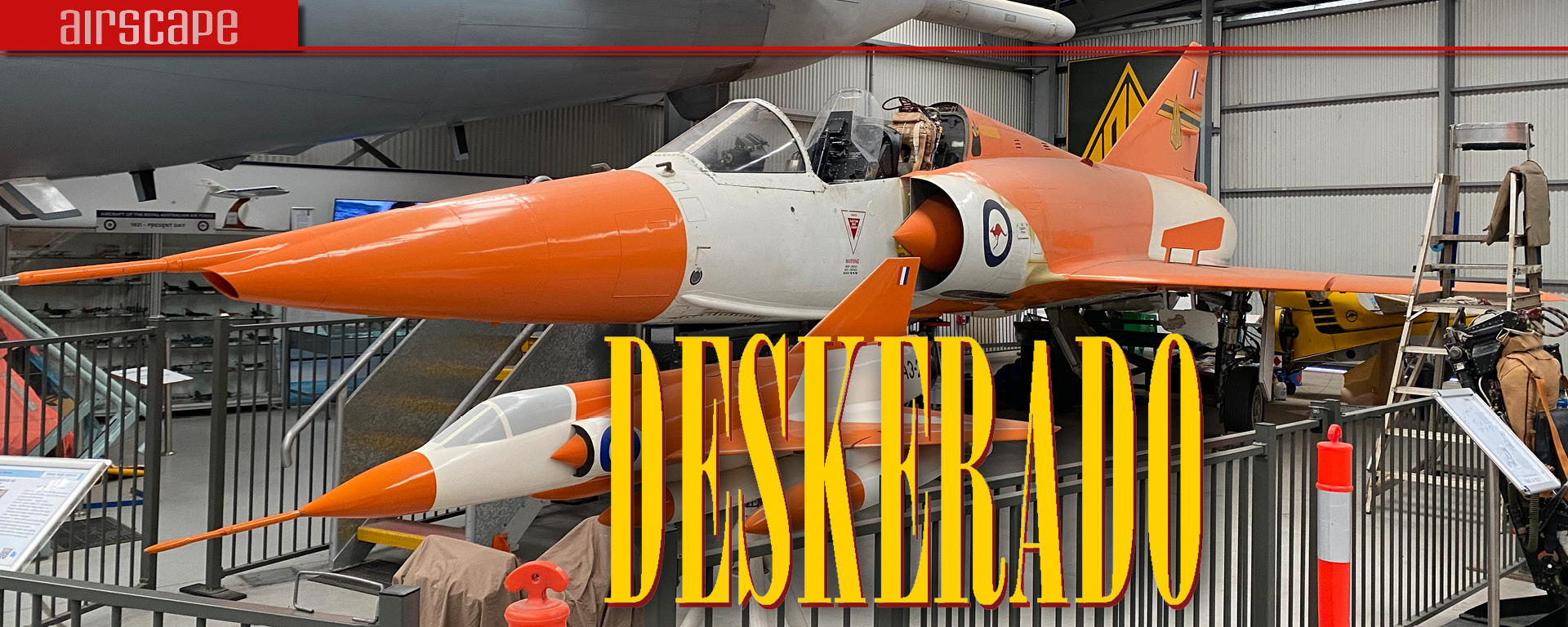
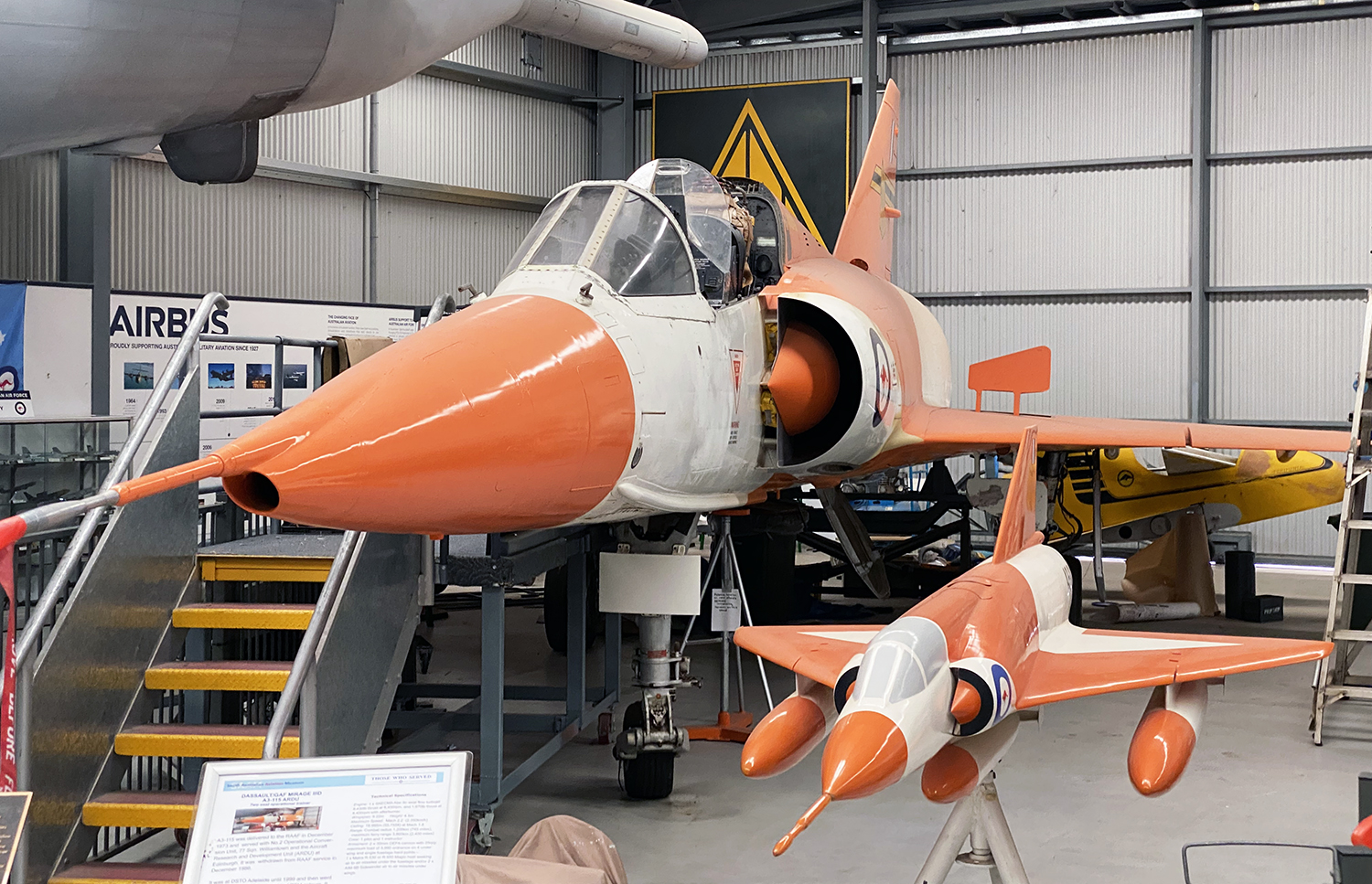
The Museum enjoys an excellent relationship with its military neighbours and this closeness has resulted in some superb acquisitions. One is a two-seat flight test example of the beloved Dassault Mirage FIIID delta wing fighter, in distinctive high-viz orange.
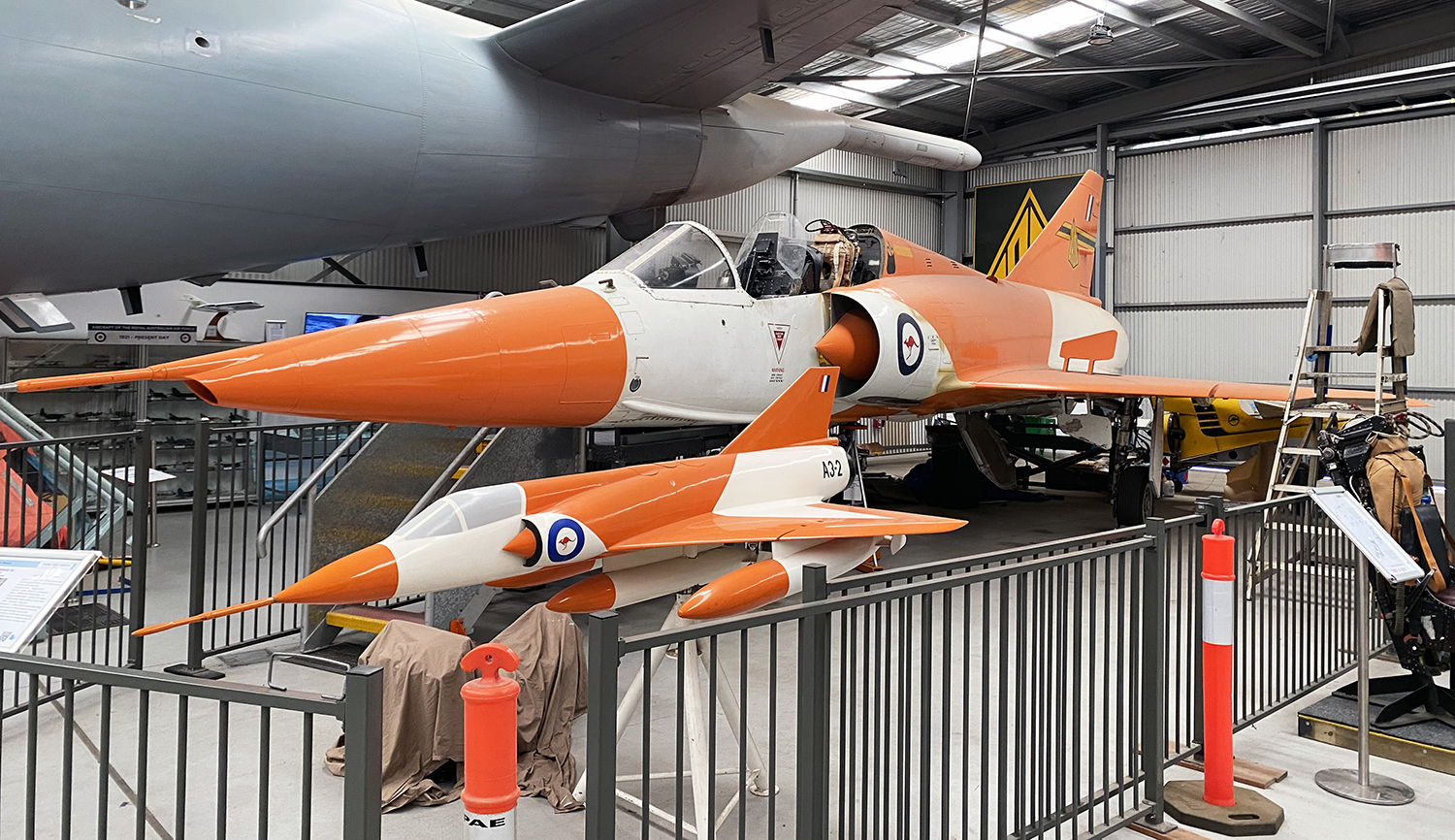
The eye-catching interceptors were flown by the RAAF from 1965, with the final one being retired in February 1989. Most of the Australia’s 116 examples were built locally, under licence. It still looks fast, even standing in a hangar and partly disassembled!
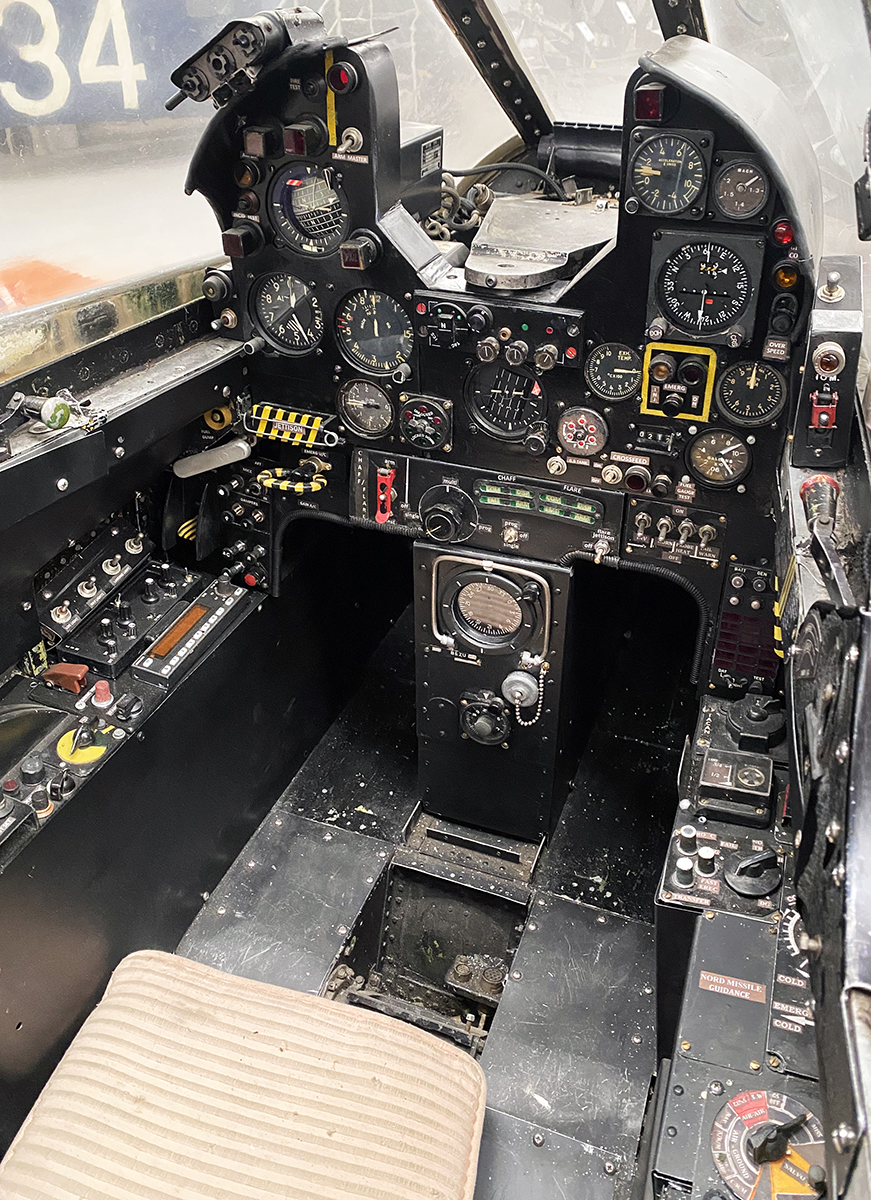
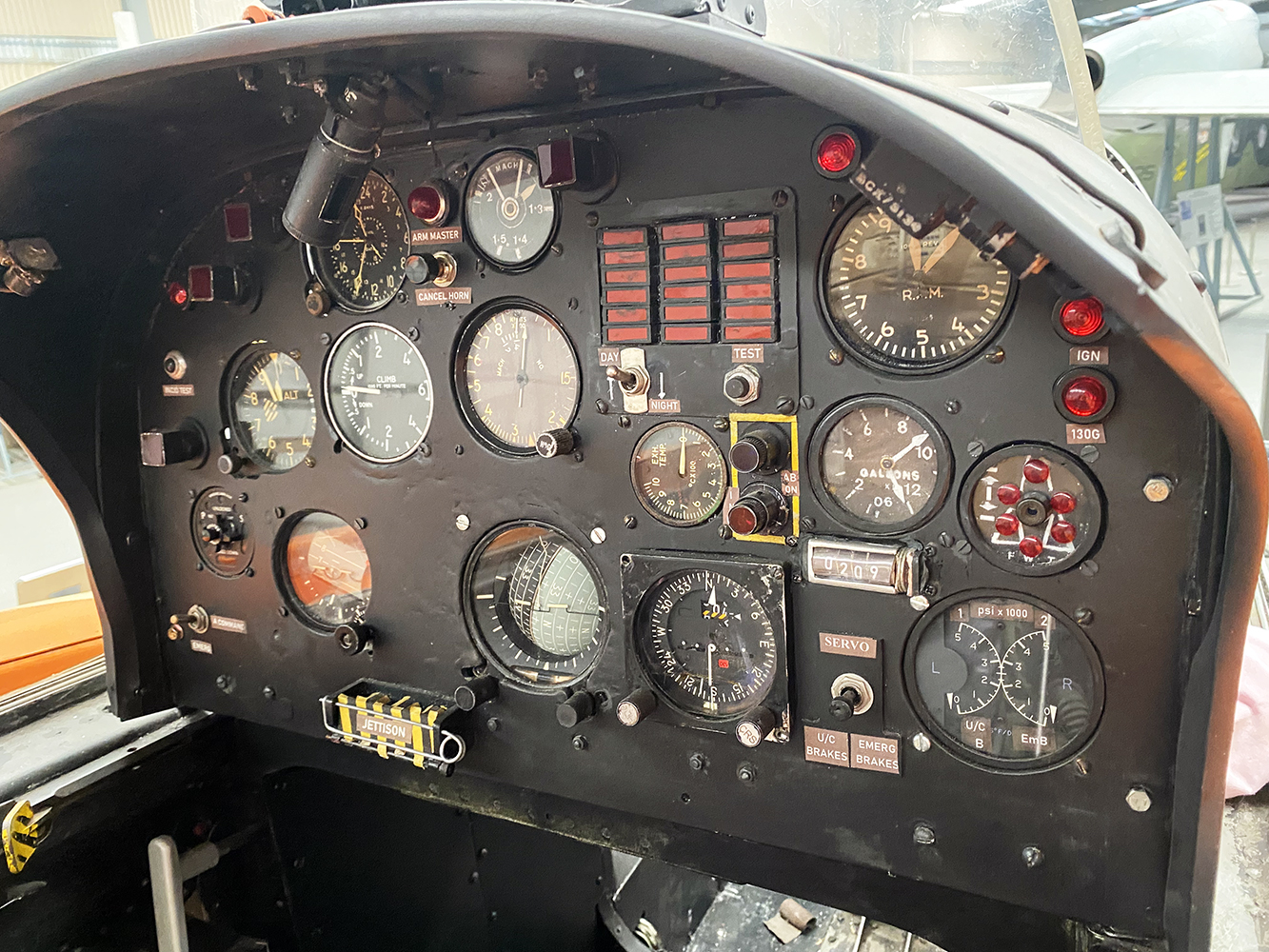
A3-115 was a gate guardian at RAAF Edinburgh after its operational retirement in 1987. That’s a punishing role for any airframe, and the Mirage was dismounted in 1999 and restored for static presentation by RAAF engineers. It was gifted to SAAM in 2018 and is currently having its cockpits restored while on show to the public.
More than Goodenough
Finally – and bear in mind that this is only the briefest sampling of a fabulous collection – no day at the museum is complete without paying your respects to Supermarine Spitfire UP-O.
This Mk. Vc Spitfire was built by Westland Aircraft in 1942 and assigned to the RAF as EE-853. It was then shipped to the RAAF in 1943, where it was enlisted as A58-146. The aircraft was then flown into the Pacific to serve with No.79 Squadron on Goodenough and Kiriwina Islands, off the coast of Papua New Guinea.
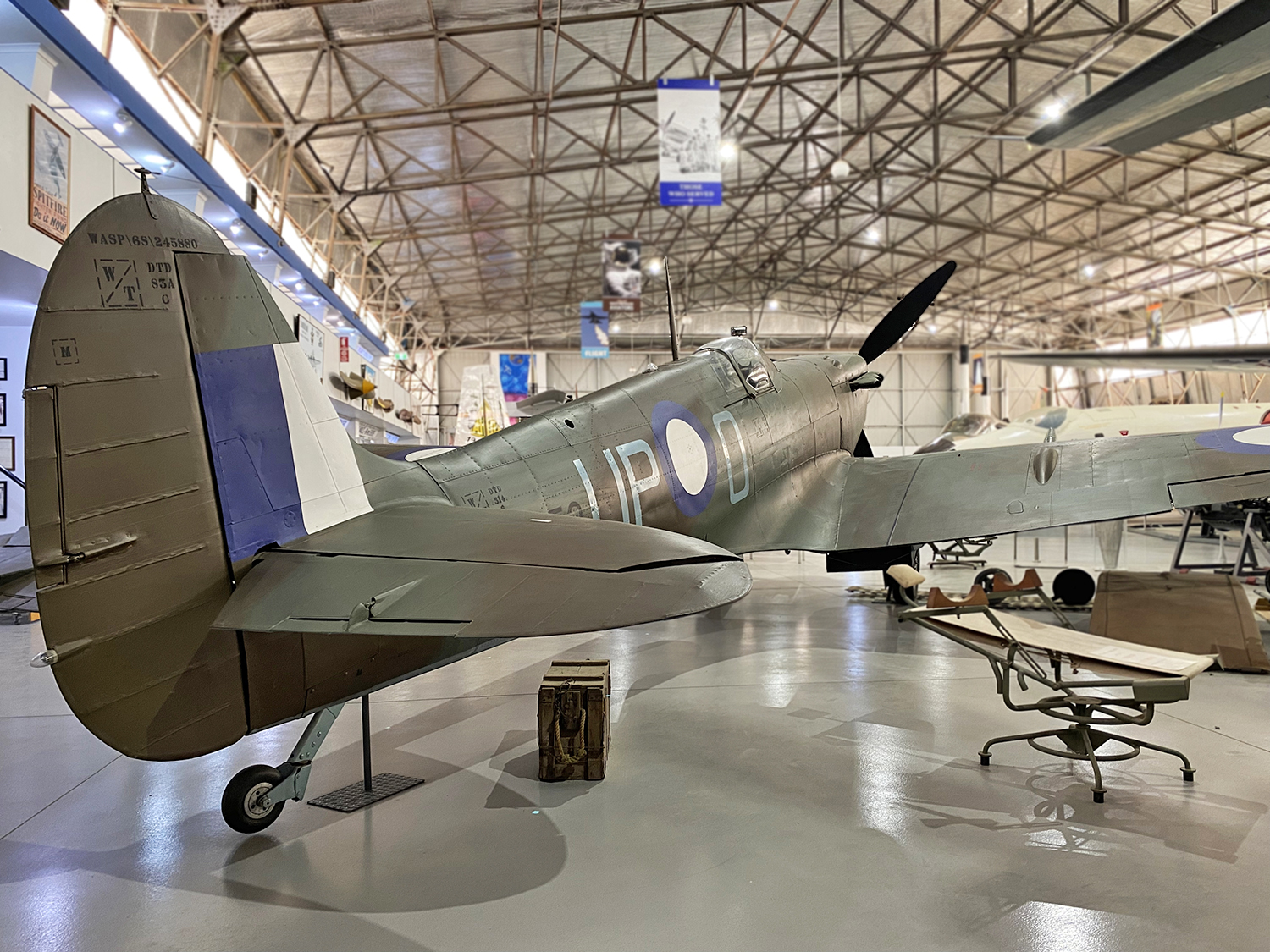
After a landing accident on Kiriwina, it was recovered back to Goodenough and tapped for parts before being abandoned when the Squadron moved on.
UP-O was recovered from Goodenough Island in the 1970s and lovingly restored by the late SAAM Lifetime Member, Langdon Badger. It is on long-term loan to the museum, through the generosity of the Badger Family Trust. You can read more about it here.
Get your share
All I can add is that I feel lucky, and privileged, to be rostered onto the SAAM front desk with a bunch of other great people every three months.
Apart from the amazing aircraft, conversations and friendships (shout-out to Nick Meikle) that come with the job, there is no end of joy in welcoming kids and families to the display – especially that first reaction as they walk through the hangar doors and see what’s waiting for them.
If you want a taste for yourself, I urge you to seek out your nearest aviation museum and put up your hand. You can bet they’ll be looking for volunteers.
I’m generally time poor – but I will always have time for this.
 airscape Magazine
Sounds like you’ve got a real gem of a museum there! There are quite a few in my neck of the woods, but the closest is the Lyon Air Museum at KSNA. I don’t think it’s quite the size and scope of what you’ve got down under, but it’s still worth a visit if you’re ever in the area. I think one of its great attributes is that most, if not everything, in their collection still flies. It started as a personal collection and morphed into a museum. I suppose that’s how many of them start. I miss the days of the Tallmantz Museum at SNA…
I aspire to volunteer at one of these places. Work and kids make it a challenge, though. Plus, if I have free time, I’d rather be flyings (as the license plate frame says). 🙂
–Ron
It is a sweet museum – well organised, well supported and, well, easy for me to get to. The collection is completely not flying, although the restoration work is generally done to an aviation standard rather than just ‘for appearances’. But it’s surprising just how many small aviation museums – and collections, as you say – are out there in towns across the country.
Given the choice, I’d rather be flying too but my relationship with active flying is “it’s complicated” at the moment. I need to order spruce for the M1C, for one thing. (Gold would be cheaper, but it weighs too much!) And I aspire to do a lot more than I have time for. In the meantime, a day on desk duty feels like a sanctuary where none of those other demands can reach me for 7 hours.
Nigel Daw is in the aviation email group I’m in. I used to work weekends in the small ‘museum’ at Archerfield until the owner/operator found it necessary to step away for a while at Her Majesty’s Pleasure. Still, though it’s too far for a regular visit, I’m a foundation member of the Queensland Air Museum and remain a member to this day.
I’ve done several stints on the desk with Nigel and always enjoy his company. He is an extraordinary planespotter.
I used to hope I’d get up to QAM on the occasions that I hung out with Andrew at the TAVAS Museum in Caboolture, but never quite made the extra distance to Caloundra. I hear it’s excellent though. As TAVAS shows, the museums/collections landscape is constantly moving and, unfortunately, the movement doesn’t always go our way. Volunteers, members and visitors keep it moving in our favour!