
Click here for previous chapters
Shortly thereafter we learned that our Jinrai Butai would be deploying to Clark Field in the Philippines on December 20.
In preparation for their move to the south the squadron’s petty officers told us they were getting mosquito nets and portable rations from the storehouse. For whatever reason, I didn’t think the redeployment would actually take place.
Nevertheless, our spacious airfield soon became a very busy and dusty place, as increasing numbers of Type 1 bombers thundered from the sky and set themselves down. Clearly, something was afoot. There were rumours that seventy bombers from Iwakuni were also due to arrive.

Ever more crowded
With every passing day the skies above Kōnoiké became ever more crowded with flights of bombers. Before long the field was filled with neatly arranged rows of aircraft resting their massive wings, their canopies sparkling so brightly in the winter sunlight that they hurt the eyes.
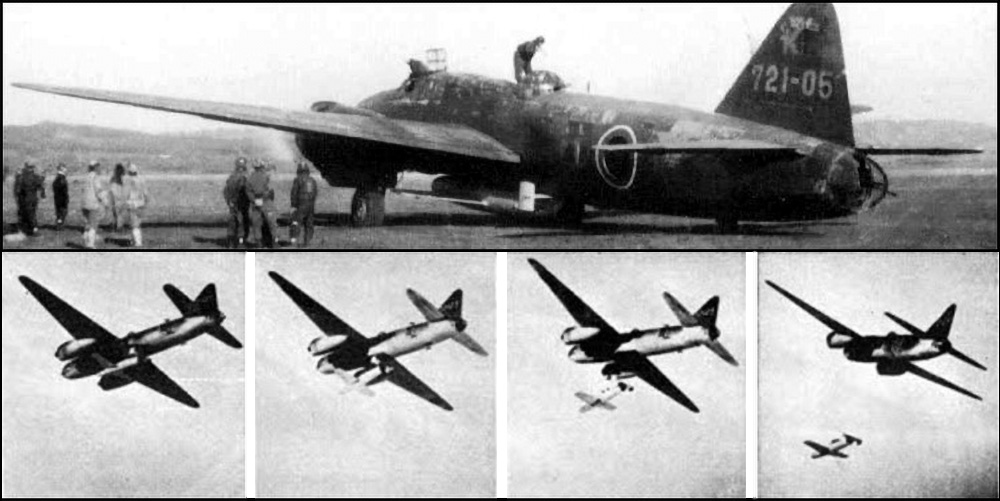
As soon as the planes arrived their dark-green fuselages were adorned with freshly painted red hinomaru symbols, and on their vertical fins and rudders were painted yellow lightning bolts and the number 721 followed by the airplane’s number.
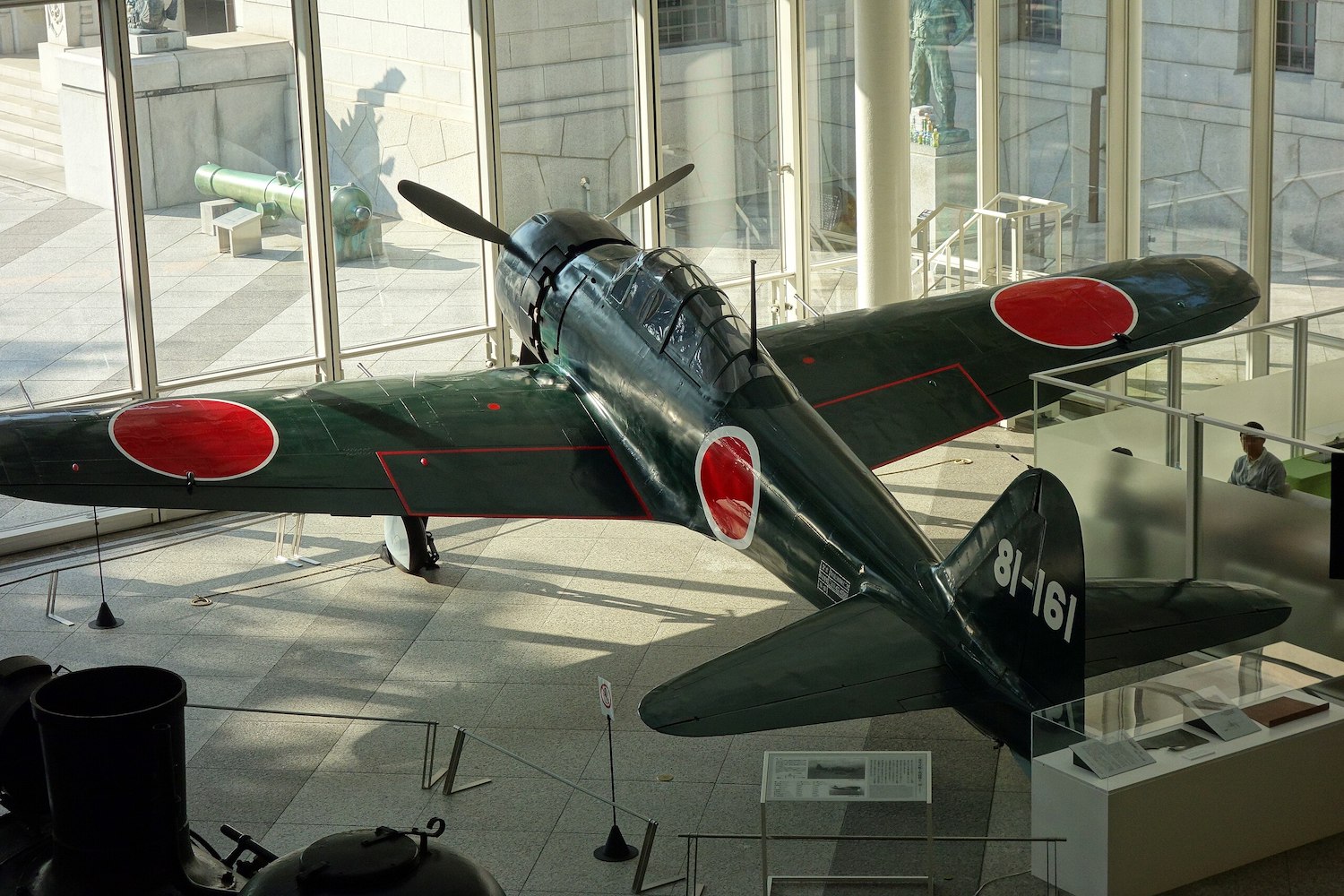
The freshly painted hinomaru symbols on the wings and fuselages were outlined in white, making them stand out sharply against the overall olive-green.

The field was also very noisy and dusty as the maintenance crews ran up the engines and the prop wash kicked up clouds of swirling dust. The armourers were busy fussing with the bombers’ machine guns. Amid all this organised chaos new flights were constantly entering the pattern and touching down.
So, that’s what it’s come to
It was astonishing to think that Japan really had so many warplanes. Seeing all the bombers lined up in neat rows, the propellers flashing and clouds of dust being kicked up as the ground crews ran up the engines, was awe-inspiring.
Bombers were not the only aircraft arriving at the field. There were also many of the latest Model 52 Zeros. These had the individual, rear-facing ‘rocket’ exhaust stacks poking out from underneath the cowling that provided a slight increase in thrust. This exhaust layout also made the engine look bigger and the staccato exhaust note sounded great.

“These days, it’s pretty rare to get this many aircraft together in the same place, even in Japan,” said Lt. Masahisa Tanaka to me in passing.
So, that’s what it’s come to, I thought.
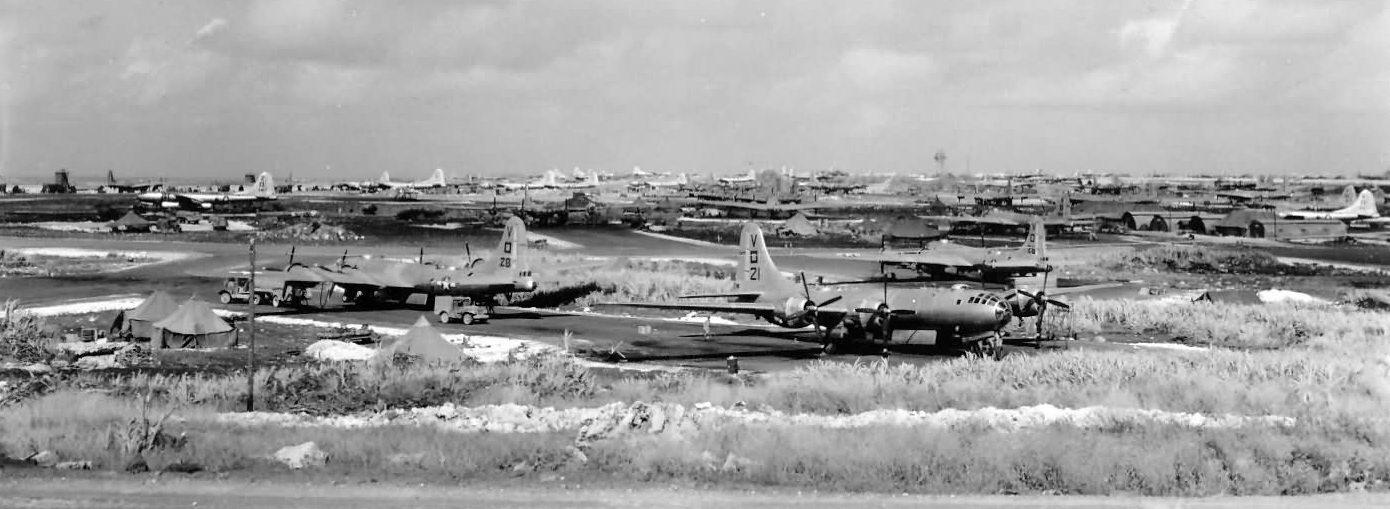
It may have looked like a lot but wasn’t even 150. If gathering this many at our field here in Japan was an accomplishment, what to make of the swarms of B-29s on Saipan and Tinian.
This sobering thought again reminded me of America’s industrial might.
Like winged arrows from the sky
It was around this time that the drop training began.
The first to go were those pilots from the Ohka unit, as they’d arrived sometime before us. With the peach-coloured training K-1 hanging from their bellies, the bombers would take off, climb to 3,000 meters (about 10,000 feet) then release the K-1s on a southerly heading. We watched in fascination as the tiny craft fell like winged arrows from the sky and swooped down for a landing.
“They let another go!” We’d yell.
Like bird poop, a small dark object would fall from the bomber and shortly thereafter begin to glide. The tiny objects would weave slightly while descending to line up their approaches then disappear from view behind the pine forest just before landing.
The number of new squadron members was also increasing steadily. Like us, they too were sitting around the field, faces upturned, watching the proceedings. These men weren’t part of our group but were part of the second wave of pilots.
Very entertaining
Those pilots waiting to begin their drop training took the Zeros up to 2,000 meters (about 6,500’) to practice gliding and to refine their crash-diving technique by aiming at a defensive trench at the side of the field.
At 1,000 meters (~ 3,300’) they’d fly offshore of Kashima over the ocean, then descend gradually at a 30° angle directly at the trench, pulling out at 100 meters (~ 330’) above the ground.
However, because there was a certain amount of lag in the altimeter readings one had to start the pullout before then. The airspeed when pulling out was probably around 200 kts.
During these pullouts the pilots were subjected to significant G forces. Observing all this from the ground was very entertaining, as it clearly revealed the skill level and personalities of the various pilots.
One of the pilots was so daring that he’d pull out so low we were terrified he’d slam into the ground. We noted the plane’s tail number then matched it to the pilot’s name on the blackboard. To our surprise he turned out to be one of the most unassuming pilots in our group.
Watching the experts
Sometimes a member of our group would come blasting over the tent in front of which we were watching, do a sharp pull up and blast us all with his prop wash.
Watching the experts was a treat. They’d fly graceful attack runs, pulling out so late and so aggressively that their planes would mush out on the verge of an accelerated stall and level out just above the planes lined up on the runway.

NEXT TIME: That carrier is the target >
These extracts are from the diary of Masa’aki Saeki, trainee Yokosuka MXY-7/K-1 Ohka pilot, 721st Kōkūtai Jinrai Butai, Imperial Japanese Navy.
Translated by Nicholas Voge and shared with permission.
Nicholas Voge is a retired Pt. 135 airline pilot who spent his younger years living in Japan where he worked as a translator, copywriter and riding model for the Japanese motorcycle manufacturers. His translations include The Miraculous Torpedo Squadron, The Inn of the Divine Wind and Kaiten Special Attack Group, A Story of Stolen Youth.
 airscape Magazine