
The ruler-straight coastline of Kashima is broken only by the man-made port that offers ships their only protection from the mighty waves rolling in from the Pacific. Adjacent to the port is the famous Kashima marine industrial area marked by a forest of chimneys symbolizing Japan’s economic power.
Until 1945, Kashima was the home of 721st Kōkūtai, the navy’s Jinrai Butai (‘Thunderclap’ corps) equipped with the Ohka (Cherry Blossom), the Imperial Japanese Navy’s first rocket plane. It was here that a carefully selected group of elite pilots trained non-stop from dawn to dusk to master this fearsome new weapon.

One of the few survivors
I am one of the few survivors of the 721st. And although many years have passed, my memories of that period are so clear that it seems like only yesterday. A few years ago, on a winter’s day, I visited the site of our former airfield. When I discovered that not the slightest trace of it remained, I felt that I had lost my home. They should’ve left it as it was, a silent reminder of events that should never be forgotten.
There we trained intensively, preparing for the day when we would achieve great victories by slamming ourselves against enemy ships in the Ohka, the secret weapon that would carry us to certain death. Of the 180 aircrew and pilots in our squadron almost all fell in the battle for Okinawa. Only a few of us remain alive today. The ground beneath the buildings of the Kashima marine industrial area is soaked in the blood, sweat and tears of my comrades in arms.
In those days it was called the Kō-no-Iké Naval Air Base, a mysterious place that only a few people today remember. This manuscript, consisting of my notes from that period, is one of the few accounts that breathe life into those now distant memories. I wrote down my experiences there because I wanted to keep the memories fresh in my own mind until the day I die.

A poem for posterity
The notes begin with my assignment to Kō-no-Iké and end on the day the war ended. The seven navy notebooks I filled are my record of what it was like to stare death in face during my time as a member of the navy’s Jinrai Corps. Actually, there were eight notebooks originally, but one was incinerated during an air raid.
Although my diary forms the core of this manuscript, I have since added to it and prefer to think of it as a living posthumous manuscript — a poem I leave to posterity.
The navy’s development of the Ohka rocket plane has been comprehensively covered elsewhere so I won’t cover it here, as its story is widely known. Instead, I want to describe what it was like to actually train for and fly the Ohka, because there is little information on this topic. Many aspects of the program have never been revealed, and these must be recorded for posterity.

Before being assigned to the 721st I was a navy pilot flying reconnaissance seaplanes. The navy had quite a variety of different aircraft and pilots couldn’t possibly master them all. The pilots specialized in fighters, torpedo bombers, dive-bombers, and so on. Each of those aircraft had its own unique characteristics and required a distinctive skill set. The wheeled aircraft launched from carrier decks and were called carrier planes, while those aircraft too large for carriers were called land planes. Thus, the navy’s air arm was very different from the army’s.
So, why was a seaplane pilot like me assigned to fly the Ohka? And how difficult is it to switch from a float-equipped plane to one with wheels? The answer to that question is much more complicated than it seems.
A suitable candidate
After completing the basic training curriculum – a prerequisite before actually learning to fly – we were asked about our preferred position: pilot, navigator, radioman, etc. However, even if one wanted to become a pilot one had to have the requisite ability. Fortunately, I was deemed a suitable candidate for pilot training.
We were then asked what aircraft we wanted to fly, as the navy had both land planes and seaplanes.
Ever since childhood I’d been enamored with the navy and fascinated by warships. I was an avid reader of illustrated navy magazines and young person’s novels such as ‘Showa Attack Squadron’. I could imagine nothing more exciting than being catapulted in a seaplane from the deck of a warship, so I of course made seaplanes my first choice.
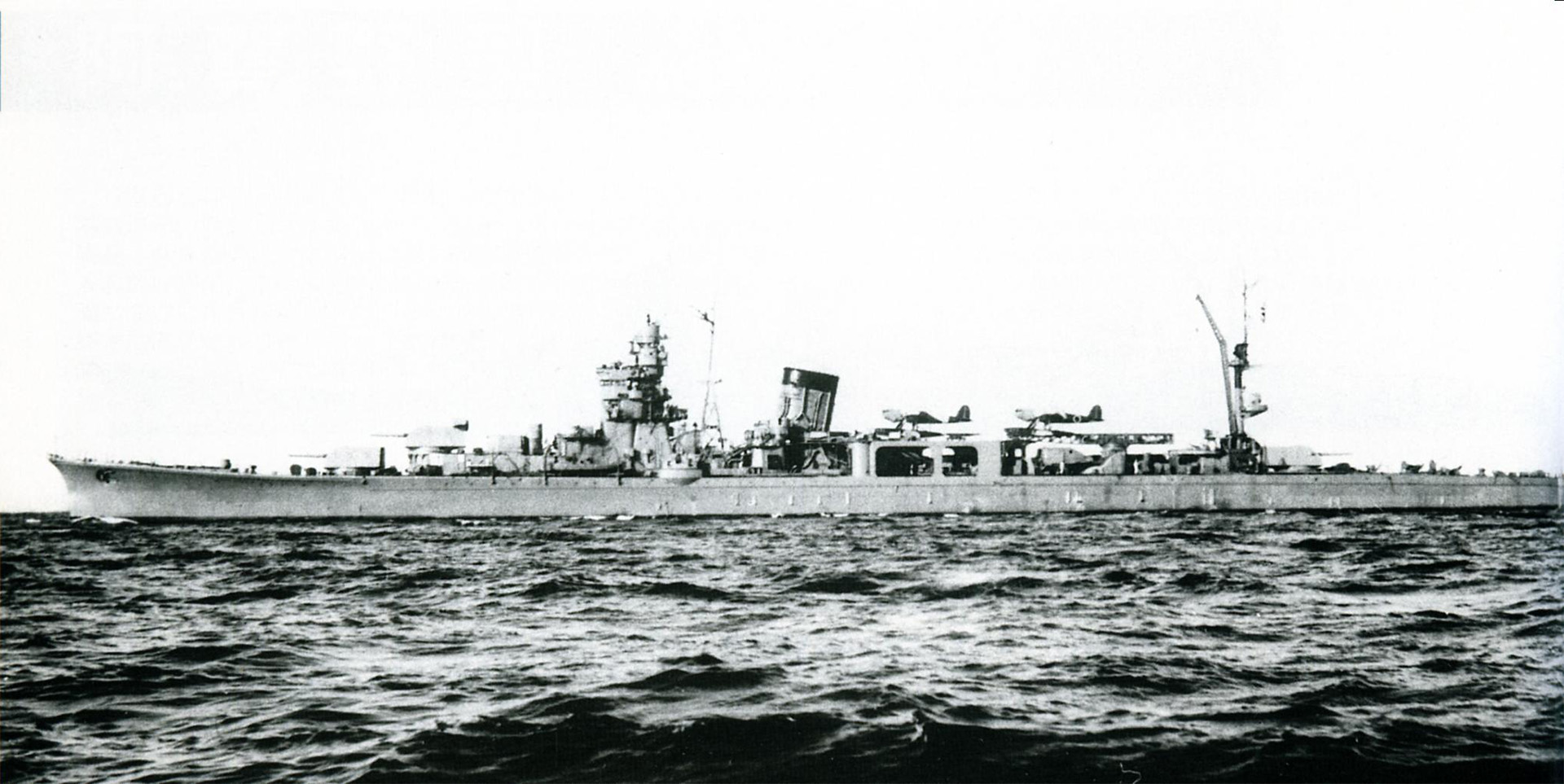
To my great joy I was accepted. For navy pilots there was no greater sense of satisfaction than to be selected for training in the aircraft of one’s choice.
I was thrilled beyond words because this meant that I would soon be flying and be assigned to a warship in a fleet. The innocent dreams of my youth had come true.
However, flying boats were also classed as seaplanes, and those who were selected for them did not join the fleet. But that possibility never crossed my mind.
A pilot
So, with my basic studies completed I was sent to the Kitaura Kaigun Kōkūtai at Ohmura in Ibaraki Prefecture, part of which is today the Ibaraki University Marine Studies Center.
It was there that I first flew the Red Dragonfly, the Type 93 intermediate trainer. This plane was immortalized in the navy song that went: ‘I was born a man but learned to fly like a bird’. And it was on the lake at Kitaura where my life as a pilot began.

Life seldom goes as planned.
To skip ahead a bit, after getting my wings and being assigned to a group, my dreams of serving with a fleet never materialized. Instead, in the summer of ’44 I was posted to the seaplane group at Amakusa in Kyūshū as a flight instructor. And this is where the gods of fate took a hand in my life, for it was shortly after arriving there that I heard about the Ohka.
By this time the war situation was steadily deteriorating. Saipan fell that summer, the Battle of the Philippine Sea was a failure, and Japan’s war-fighting ability was seriously degraded.
NEXT: Another guy died >
These extracts are from the diary of Masa’aki Saeki, trainee Yokosuka MXY-7/K-1 Ohka pilot, 721st Kōkūtai Jinrai Butai, Imperial Japanese Navy.
Translated by Nicholas Voge and shared with permission.
Nicholas Voge is a retired Pt. 135 airline pilot who spent his younger years living in Japan where he worked as a translator, copywriter and riding model for the Japanese motorcycle manufacturers. His translations include The Miraculous Torpedo Squadron, The Inn of the Divine Wind and Kaiten Special Attack Group, A Story of Stolen Youth.
 airscape Magazine
It’s one thing to tell a person story, and something completely different to read their own recollections and thoughts just as they remember them. Thanks for publishing this.
That’s suicide rocket brings to light the desperation they must have felt at that point in the war. You can actually see it in the way things were designed.
I agree. It’s fascinating – but also important – to venture into the minds of these pilots. Generally, we tend to happy with the broad sweeps of history and individual stories are usually only used as props for on that stage.
Saeki-san doesn’t talk about his feeling s a whole lot, but you’ll see as this story unfolds is that any desperation was really only felt in the upper levels of command. Even the training program for the rocket attacks was suicidally dangerous, and yet the pilots themselves addressed it all with courage, gallows humour and a soldier’s acceptance of the final destination.
Turns out they simply loved flying, loved their country and wanted to do their duty.
The most surprising thing about our enemies is always how much we have in common.